 Save
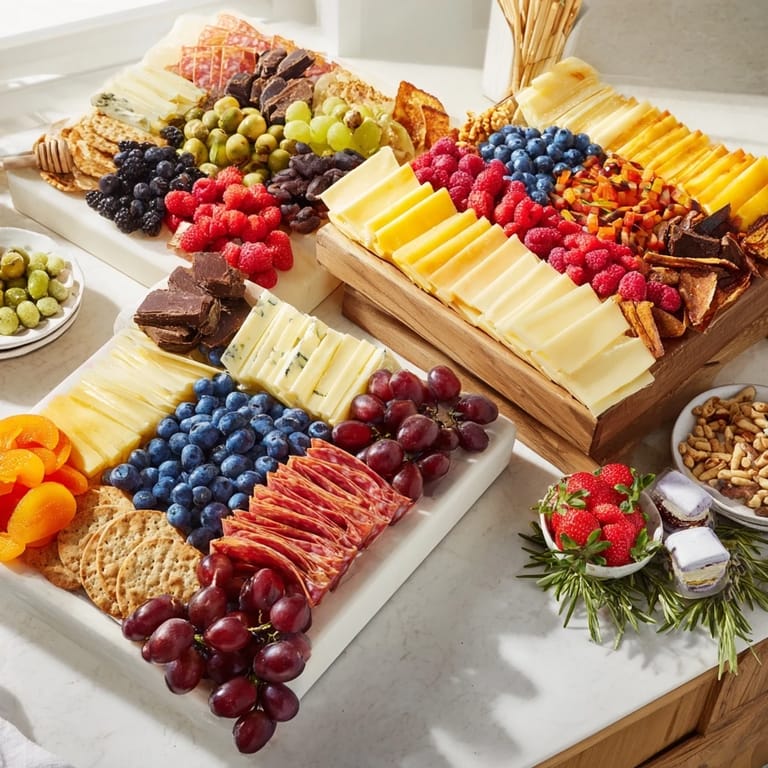
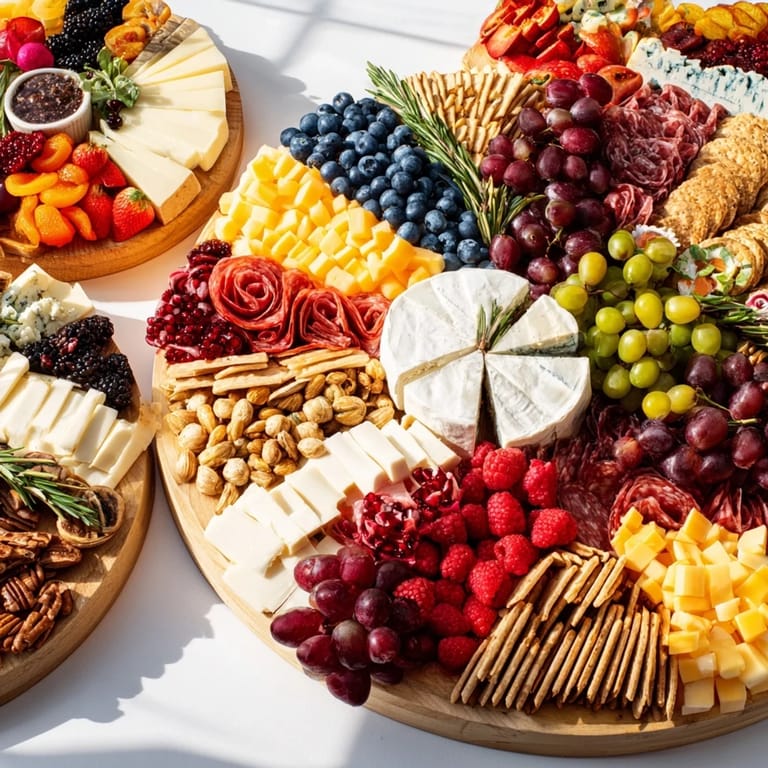
Save I'll never forget the moment my daughter gasped when she saw the Nutcracker Suite board at a holiday party last year. The way the colors cascaded down those tiered stands reminded us both of the grand stage sets from the ballet we'd watched together that December. Right then, I knew I had to recreate that magic in our own home—something theatrical, unexpected, and absolutely show-stopping that would make everyone pause before they even tasted a single bite.
When I first made this for our annual holiday open house, I watched my sister-in-law—who's usually skeptical about my kitchen experiments—actually take a step back and smile at the sight of it. Then her youngest asked if she could help arrange things, and suddenly we had this beautiful moment of three generations standing around the board, debating which color block should go where. That's when I realized this wasn't just about food; it was about creating an experience.
Ingredients
- Brie, 150 g white block: This is your creamy anchor—it melts beautifully on crackers and its pale color creates that essential white tier. Let it sit at room temperature for 20 minutes before serving so it's soft enough to enjoy.
- Aged cheddar, 150 g yellow block: I learned the hard way that aged cheddar has so much more flavor than mild. The golden-yellow color is naturally stunning, and it tastes even better than it looks.
- Blue cheese, 150 g blue block: This is your bold statement. If blue cheese isn't for your crowd, swap it for gorgonzola or even a blue-veined chevré. The color is what matters here.
- Gouda, 150 g orange block: Smooth, slightly sweet, and that gorgeous burnished orange color is pure magic on a tiered board. I usually cut one wedge and leave the rest in a block for visual impact.
- Cranberry goat cheese, 100 g red/pink block: This is the secret weapon that ties the whole board together. The tartness of the cranberries against the tangy goat cheese is exactly what your palate needs between bites.
- Prosciutto, 100 g pink/rose block: Drape it loosely so it catches the light—that's half the appeal. The paper-thin texture makes it look more abundant than it actually is.
- Salami, 100 g red block: Choose a good quality salami with visible fat marbling. Slice it thickly and fold it casually so it fans across the board with real presence.
- Soppressata, 100 g deep red block: This is the deeper, richer counterpoint to the salami. I arrange them near each other so the color gradation is noticeable.
- Red grapes, 1 cup: These are clusters, left on the vine if possible, for height and visual softness against the rigid cheese blocks.
- Green grapes, 1 cup: The bright green brings freshness and acts as a color bridge between sections. I nestle them right against the pistachios for a monochromatic moment.
- Blueberries, 1 cup: Use fresh, plump ones. They catch light like tiny jewels, especially around the blue cheese section.
- Strawberries, 1 cup: Slice some in half lengthwise to show the gorgeous interior and leave some whole for impact. The red is non-negotiable on this board.
- Dried apricots, 1 cup: These add texture and a subtle sweetness that balances the salty cheese. I stack them slightly overlapped for height.
- Pomegranate seeds, 1 cup: Add these last, right before serving, or they'll dry out. Their jewel-like translucence is pure magic under good lighting.
- Marcona almonds, 1/2 cup white block: These are softer and more luxurious than regular almonds—worth the extra cost for a board like this.
- Pistachios, 1/2 cup green block: Their vibrant green is irreplaceable. Shell some and leave others in their shells for texture variety.
- Candied pecans, 1/2 cup brown block: Make your own if you can—the ones with just a hint of heat from cayenne are transcendent with the cheeses.
- Mixed olives, 1/2 cup green/black block: Put these in a small bowl so they don't roll around. A mix of Castelvetrano and Kalamata gives you color and flavor contrast.
- Assorted crackers, 1/2 cup neutral block: I use water crackers, seeded crisps, and maybe one fancy flavored variety. Keep them in small clusters so they look intentional, not like you ran out of space.
- Baguette, 1/2 sliced into neutral block: Slice it at an angle about a quarter-inch thick. Toasting it lightly keeps it crisp and gives it a slight golden tone that photographs beautifully.
- White chocolate bark, 150 g white block: Break it into irregular pieces so it looks artisanal. If you have the time, make your own with fleur de sel on top—it elevates the entire board.
- Dark chocolate, 150 g black block: The richness of real dark chocolate (70% cacao or higher) is what makes this feel sophisticated, not sugary.
- Colorful macarons, 12 various colors: These are your final flourish. If you can't find macarons, substitute with quality bonbons or even small cookies that match your color scheme.
- Petit fours, 12 pastel block: These tiny, delicate cakes add that 'patisserie' moment. Find ones with a variety of flavors so there's real discovery in each bite.
- Fresh rosemary sprigs: Beyond garnish, these add a subtle fragrance to the board. Break them gently as you arrange so the oils release their Christmas-morning scent.
- Edible flowers: Pansies and violas work beautifully and add unexpected color pops. They're optional but they're what makes someone say 'wow, that's next level.'
Tired of Takeout? 🥡
Get 10 meals you can make faster than delivery arrives. Seriously.
One email. No spam. Unsubscribe anytime.
Instructions
- Gather your stage:
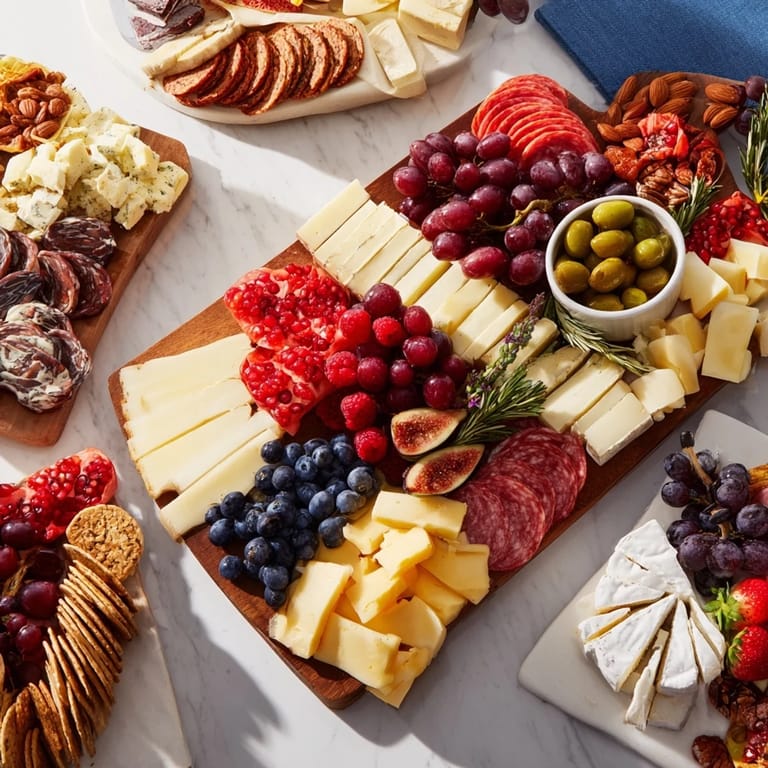
- Start by choosing your board or boards. I use a large wooden board as the base and then add cake stands and small pedestals to create different heights. Think of yourself as a set designer—you want dramatic elevation so the whole thing reads as a sculpture from across the room, not just food laid out.
- Build your foundation:
- On the base tier, arrange your neutral elements: crackers fanned slightly, baguette slices standing at angles, nuts in small casual heaps. This is your anchor. It needs to feel abundant but organized, like you know exactly what you're doing even if you're just figuring it out as you go.
- Create color story by section:
- Now comes the part that makes this board special. Decide where each of your color blocks will live. I usually put white at one corner, then move through the spectrum. Imagine you're telling a story with color. Keep your color sections clear and distinct—don't let the reds bleed into the pinks. Let each color have its moment.
- Place your cheese architecture:
- Cut your cheeses with intention. Some you'll leave as blocks to show off their color and shape. Some you'll cut into wedges so you can see the interior color—especially that beautiful aged cheddar. Arrange them prominently because they're the backbone of this board. Leave just enough space between them that you can tuck other things into the gaps.
- Drape and position the meats:
- Here's where you get to be an artist. Don't just lay the prosciutto flat. Fold it, let it curve, create peaks and valleys. Do the same with the salami. These look alive when they're arranged with movement, not just laid out in neat rows. Let each slice overlap the next slightly, and arrange them so the colors create a subtle gradient from rose to deep red.
- Distribute the fruits for shimmer:
- Now you fill in the spaces with fruits. Cluster grapes together so they have impact. Layer strawberry halves so you see that gorgeous interior. Put blueberries right next to the blue cheese so the colors echo each other. The dried apricots and pomegranate seeds are your jewels—place them where light will hit them. This is where your board moves from 'nice' to 'incredible.'
- Anchor with nuts and accents:
- Tuck your nuts into the spaces between cheeses and fruits. They should look like happy accidents, not like you measured them. Put the mixed olives in a small bowl so they're contained but still visible. The nuts add texture and that sense of abundance you're after.
- Finish with sweets and fragrance:
- Arrange your white chocolate, dark chocolate, macarons, and petit fours in their own small sections. These are the surprise and delight—the thing people reach for after they've had cheese and cured meat. Add your rosemary sprigs and edible flowers. Break the rosemary slightly between your fingers as you tuck it in—the aroma will be part of the experience. Scatter edible flowers for color surprise and that final 'this is special' moment.
- Step back and adjust:
- Take a step back and look at your board. Are there any big gaps? Fill them with something colorful. Does it feel balanced, or is all the color on one side? Adjust accordingly. Does it look like you spent 45 minutes on it, or does it look effortless? That's your sweet spot. Nothing should look too precious or too casual.
- Serve with presence:
- Bring this board out with intention. Put it somewhere it can be seen and appreciated. Put small plates nearby, cheese knives beside the cheeses, small forks by the olives. The whole moment matters, not just the taste.
 Save
Save I think about my neighbor's face when she saw this board at our holiday party. She's the kind of person who usually stands at the edge of food tables, polite but hesitant. But something about the theatrical presentation of this board made her actually lean in, actually touch it, actually take her time choosing. She came back three times that evening. That's when I understood—presentation isn't shallow. It's actually an act of hospitality.
The Color Philosophy
The magic of this board is that it's not random. Every choice is about color creating mood and visual movement. White speaks of elegance and beginning. Yellow and orange bring warmth. Red and pink are the heart of the party. Blue and green are the cool counterpoints that make the warm colors sing. And black? Black is your punctuation mark, your sophistication, your finale. When you understand that the colors are doing the heavy lifting, everything else falls into place.
Making It Your Own
The beauty of this framework is that it's endlessly adaptable. Going vegetarian? Add marinated artichokes, roasted vegetables, and more nuts—the color blocking still works perfectly. Want to match it to your party theme? Lean into the colors that matter and swap everything else. I once made a pink-and-gold version for a baby shower and a deep-jewel-tone version for a winter wedding. The structure stays the same; the details change. You're not following a recipe so much as learning a language for creating boards.
The Pairing Game
Serving this board without thinking about what to drink with it is leaving half the pleasure on the table. Sparkling wine is the obvious choice—the bubbles and acidity cut through the richness beautifully. A light red works too if you want something warmer. But my secret weapon is herbal tea, slightly chilled. The mint or chamomile cleanses your palate perfectly between a bite of salty cured meat and creamy brie. It sounds strange until you try it, and then it becomes your favorite part.
- Sparkling wine lets the board be the star while adding celebration to the moment
- A slightly chilled herbal tea bridges flavors better than you'd expect and lets people who don't drink alcohol feel equally included
- Have small plates ready and scattered around the board—people will be more likely to take time with each bite if they have somewhere to put food while they consider their next move
 Save
Save This board taught me that food is never just about taste—it's about the moment you create around it. That's the real recipe.
Recipe FAQs
- → How do I create distinct color blocks on the board?
Group ingredients by color—cheeses, meats, fruits, and sweets—and arrange them in clear, separate sections to emphasize each hue and create visual appeal.
- → What are good alternatives for a vegetarian-friendly board?
Omit meats and increase quantities of cheeses, marinated vegetables, roasted nuts, and olives to maintain abundance and variety.
- → How can I add height and drama to the presentation?
Use cake stands, pedestals, or overturned bowls beneath platters to build multiple tiers, providing a tall and layered effect.
- → What garnishes enhance the festive look?
Fresh rosemary sprigs and edible flowers add color pops and a fresh, aromatic finish to the board.
- → What beverages pair well with this board?
Sparkling wine, light red wine, or herbal teas complement the flavors and maintain a festive atmosphere.