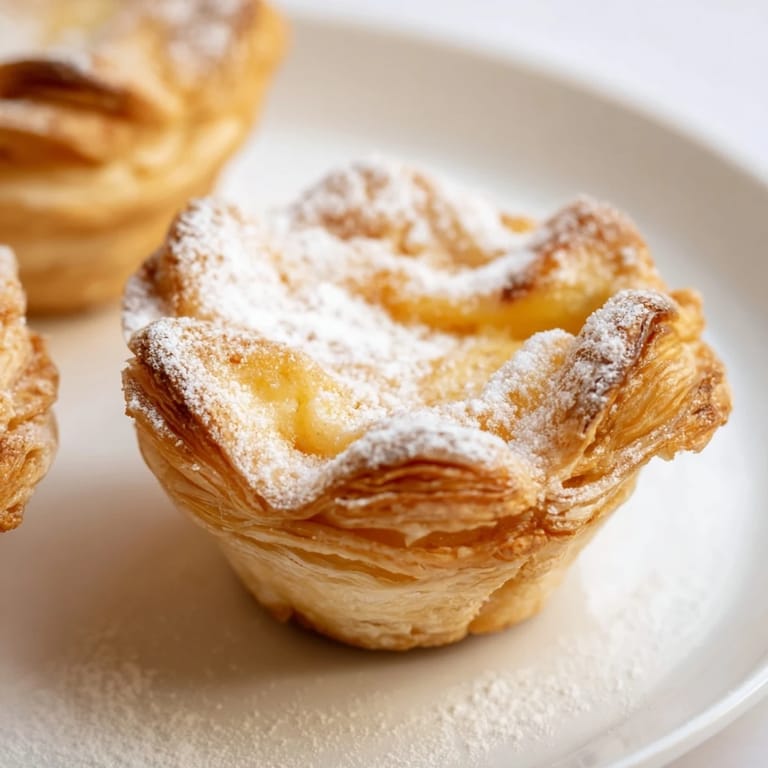
 Save
Save My grandmother kept a tin of these in her kitchen drawer, and I'd sneak them whenever I visited Lisbon. Years later, standing in my own kitchen with phyllo sheets that kept cracking despite my best efforts, I finally understood why she made them look so effortless—it was pure practice. The moment I nailed the custard temperature and watched it set into silky perfection, I became obsessed with recreating that exact memory in my own home.
I made these for a Portuguese friend's birthday brunch last spring, and watching her face when she bit into one—that split second of recognition mixed with surprise—made me realize these tarts were more than just dessert. They were edible nostalgia, a shortcut to someone's childhood kitchen thousands of miles away.
Ingredients
- Phyllo pastry sheets: Buy them frozen if you can't find fresh, and let them thaw overnight in the fridge so they unfurl without tearing.
- Unsalted butter, melted: Melted, not softened—it soaks into the sheets evenly and creates those golden, paper-thin layers.
- Whole milk: The foundation of your custard; don't skip to condensed milk or it'll be cloyingly sweet.
- Cornstarch: This is your safety net, keeping the custard from breaking or becoming grainy when you heat it.
- Heavy cream: It rounds out the milk's sharpness and gives you that luxurious mouthfeel that makes these taste restaurant-quality.
- Granulated sugar: Mix it into the cold cream first so it dissolves completely and doesn't grit between your teeth.
- Egg yolks: Use the freshest eggs you can find; they'll emulsify better and give you a custard that's pale yellow and silky.
- Pure vanilla extract: Not the imitation stuff—real vanilla brings warmth and depth that cinnamon alone can't achieve.
- Ground cinnamon: A whisper in the custard, then a dusting on top; it's the signature note that makes people ask what that spice is.
Tired of Takeout? 🥡
Get 10 meals you can make faster than delivery arrives. Seriously.
One email. No spam. Unsubscribe anytime.
Instructions
- Prep your oven and pastry:
- Preheat to 200°C (400°F) and let your phyllo thaw if frozen. Have your muffin tin ready within arm's reach because phyllo dries out fast once unwrapped.
- Layer and brush the phyllo:
- Lay one sheet flat, brush it lightly with melted butter, then stack two more on top, brushing between each one. The butter should glisten but not pool—that's the difference between crispy and soggy. Cut into rough squares and gently nestle them into your muffin cups, letting the edges puff up slightly over the rim.
- Blind bake the shells:
- Bake for 8–10 minutes until they're pale gold and you can smell the butter toasting. They'll crisp up even more as they cool, and that's exactly what you want.
- Build your custard base:
- In a saucepan, whisk milk and cornstarch until you can't see any lumps, then add cream, sugar, egg yolks, vanilla, cinnamon, and salt. The cornstarch prevents scrambled eggs; it's nonnegotiable.
- Cook the custard gently:
- Over medium heat, whisk constantly for 5–7 minutes. You're looking for the moment when steam rises and the mixture thickens just enough to coat the back of a spoon—don't overshoot or you'll get scrambled custard. The second it's thick enough, pull it off the heat.
- Fill and bake:
- Pour warm custard into each phyllo cup until nearly full. Bake for 8–10 minutes until the tops are barely golden and the custard still jiggles slightly in the center when you give the tin a gentle shake.
- Finish with a flourish:
- Cool for a few minutes so the tarts set, then dust generously with cinnamon and a light snow of powdered sugar. Serve warm while the pastry is still crackling.
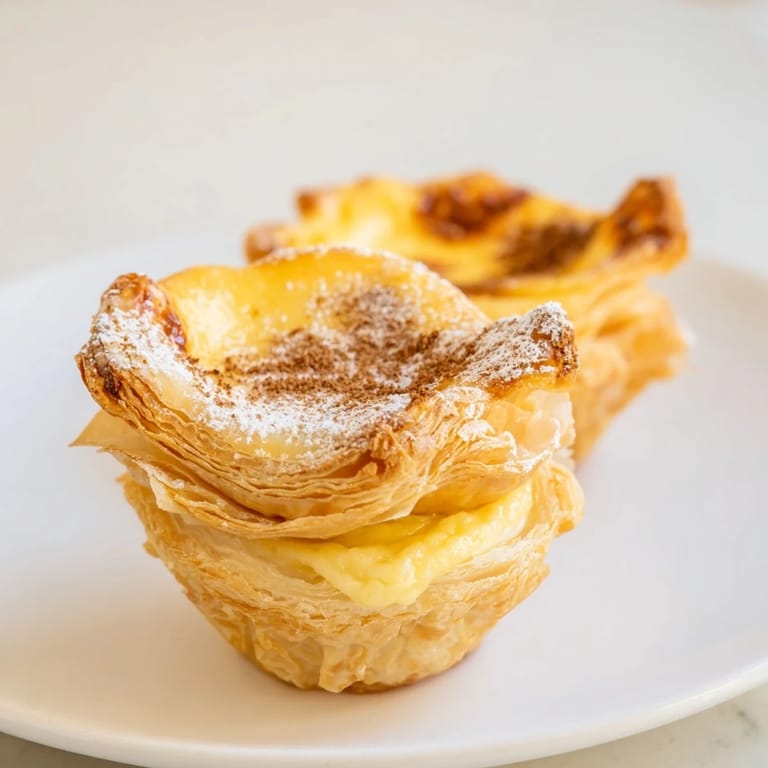 Save
Save The best moment was when my partner took a bite without asking questions and then immediately reached for another—no words, just action. That's when I knew I'd finally captured what made those Lisbon afternoons so special.
The Phyllo Question
Fresh phyllo is wonderful if you find it, but I've made these dozens of times with frozen sheets and honestly, nobody has ever noticed the difference. The key is patience: let it thaw in the fridge overnight so it cooperates, and keep your working surface cool by laying a cold damp towel underneath. If a sheet tears, don't panic—layer it anyway and butter covers a multitude of sins.
Temperature Timing
Serve these warm, not hot. The custard will still be slightly soft, the pastry still has a whisper of steam rising from it, and the flavors haven't collapsed into a single flat note yet. If you make them ahead, reheat them at 160°C for just a few minutes until they're warm to the touch—longer and the phyllo loses its crack.
Flavor Variations That Work
Once you nail the basic version, you can play. A tiny pinch of lemon zest brightens the custard like sunshine. A couple of cardamom pods steeped in the milk add an unexpected floral note. Some people add a splash of dark rum or even a scrape of nutmeg on the very top. The structure stays the same; only the whispered flavors change.
- Lemon zest transforms the custard into something brighter and more Mediterranean.
- A pinch of cardamom or nutmeg adds spice depth without overpowering the delicate cinnamon.
- Try pairing them with a glass of chilled white port wine for an authentic Portuguese experience.
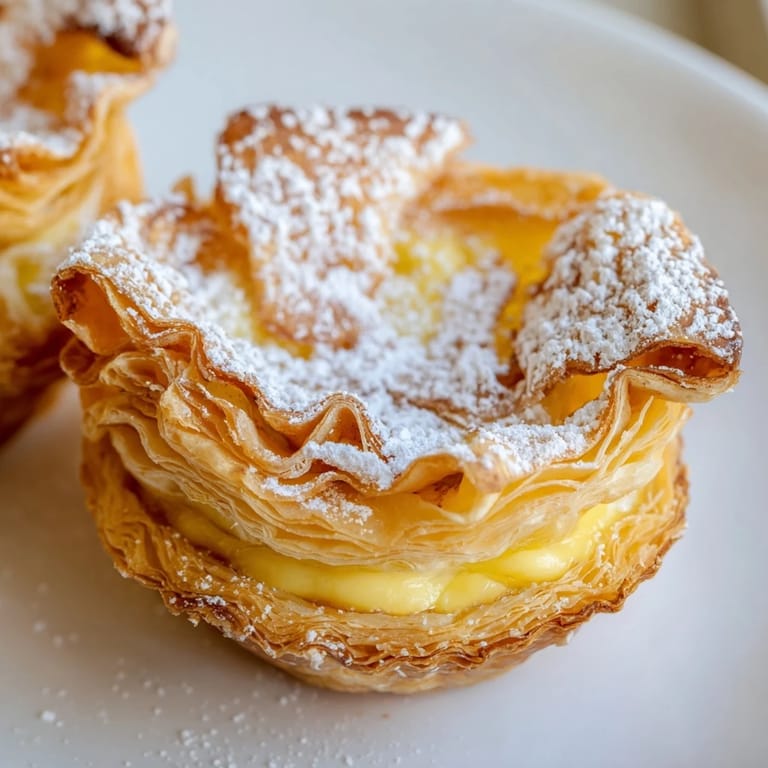 Save
Save These tarts have become my go-to when I want to feel like I'm cooking something difficult but actually have time to sit down and enjoy the moment. They're proof that you don't need complicated to make something memorable.
Recipe FAQs
- → How do I make the phyllo cups crisp?
Brush each phyllo sheet with melted butter and bake the layered cups until lightly golden before filling for the best crispness.
- → What gives the custard its cinnamon flavor?
Ground cinnamon is added both to the custard mixture and sprinkled on top, providing a warm, aromatic touch.
- → Can I prepare these tarts ahead of time?
Yes, you can bake them and then store chilled. Briefly reheat in the oven to restore the crisp texture.
- → What type of milk works best for the custard?
Whole milk is recommended for its richness, enhancing the smooth texture of the custard.
- → Are there variations to add a citrus note?
Adding a pinch of lemon zest to the custard brings a subtle brightness that complements the cinnamon nicely.