 Save
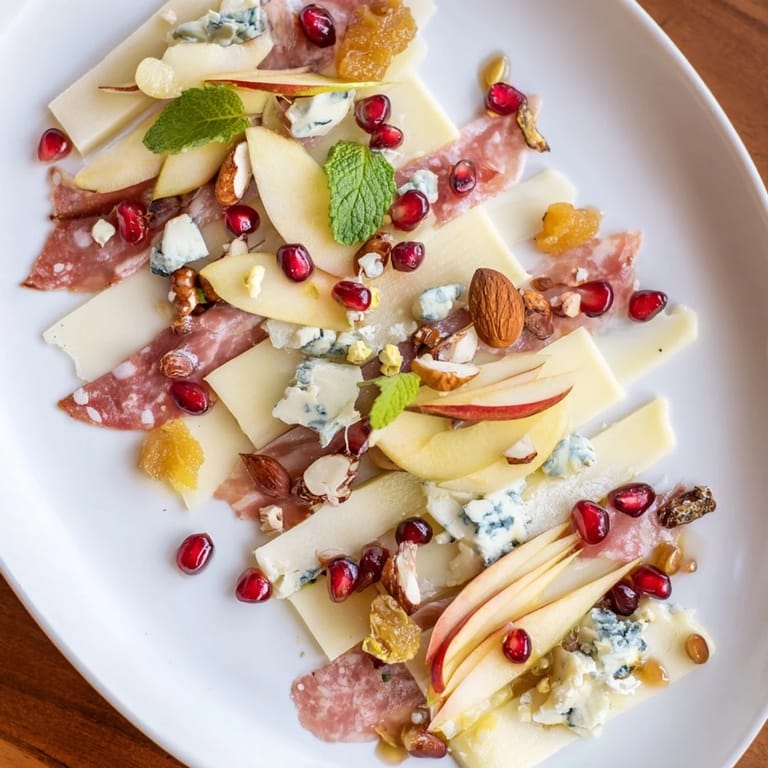
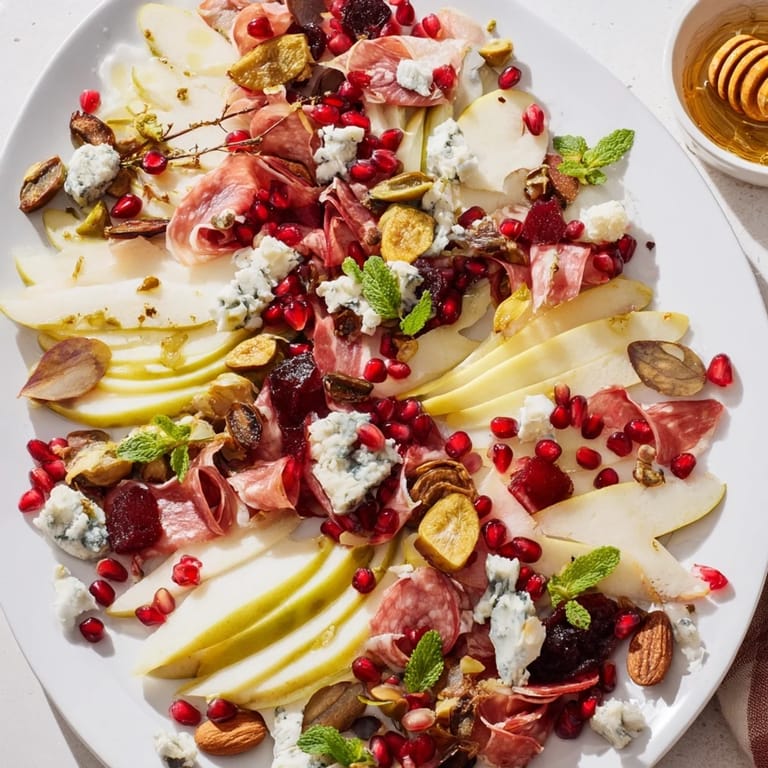
Save I'll never forget the first time I arranged a cheese board that made my guests actually pause before eating it. It was at a dinner party where I wanted to impress, and instead of my usual haphazard scatter of cheeses and crackers, I decided to create something that felt like edible art. That's when I discovered the magic of the Pomegranate Jewel Cascade—a linear arrangement where jewel-like pomegranate seeds catch the light and guide your eye in one flowing line of color and flavor. Now, whenever I set this board down, people reach for their cameras before they reach for the cheese.
I remember hosting my sister's engagement party and worrying about the appetizers. When I unveiled this board, the pomegranate cascade caught the afternoon sunlight streaming through the windows, and the whole room seemed to glow. My sister said it was almost too beautiful to eat—almost. Within minutes, that gorgeous diagonal line had turned into happy chaos as people discovered their favorite combination of cheese, meat, and fruit.
Ingredients
- Creamy goat cheese, 100 g sliced: This is your tangy anchor. Its soft, spreadable nature makes it the first piece guests often reach for, and it pairs beautifully with both the pomegranate and fig jam.
- Aged Manchego, 100 g sliced: This Spanish beauty has a nutty, slightly sweet edge that grounds the board with sophistication. I learned to slice it just thick enough that it doesn't crumble but thin enough to melt on your tongue.
- Blue cheese, 100 g crumbled: The bold one at the party. It's sharp, it's unapologetic, and it makes everything around it taste better by contrast.
- Prosciutto, 80 g thinly sliced: Paper-thin and salty, these delicate folds are like flavor confetti scattered throughout. Never skimp on quality here—it makes all the difference.
- Spicy salami, 80 g thinly sliced: For those who like a little kick. The heat plays beautifully against cool, creamy cheese.
- Large pomegranate, arils only: These are your jewels, your showstoppers. Fresh pomegranate seeds burst with tart juice that cuts through the richness of the cheeses. If you're seeding a pomegranate for the first time, do it over a bowl of water—the white pith floats and the seeds sink.
- Red grapes, 1 small bunch halved: Sweet little orbs that bridge the gap between fruit and texture. Halving them exposes the inside, catching light just like the pomegranate.
- Ripe pear, 1 thinly sliced: Delicate and subtle. Slice it just before assembling or toss with a tiny bit of lemon juice to prevent browning.
- Small apple, 1 thinly sliced: I usually choose a tart variety like Granny Smith to echo the pomegranate's brightness.
- Dried apricots, 50 g halved: Chewy, sweet, and slightly floral. They add depth and a hint of golden color to the cascade.
- Dried figs, 40 g sliced: These have an almost honeyed quality that feels luxurious. Slicing them shows off their beautiful interior.
- Toasted pistachios, 40 g: The crunch factor. Toasting them yourself makes them taste fresher, and their pale green color adds another layer of visual interest.
- Roasted almonds, 40 g: Texture and mild flavor. I like to scatter these throughout rather than clustered, so every section of the board offers something to bite into.
- Honeycomb piece, 1 small: Liquid gold in solid form. This is the finishing touch that makes guests say wow.
- Fig jam, 1 small jar: Sweet, complex, and the perfect companion for cheese. I learned to warm it slightly so it's easier to spread.
- Crusty baguette, 1 sliced: Your blank canvas for cheese. Toast it lightly if you want it to hold up better to the weight of toppings.
- Artisan crackers, 80 g: Variety is your friend here. I mix different shapes and flavors—seeded, whole grain, water crackers—so there's something for every preference.
- Fresh mint leaves: The final flourish. Mint's bright color and aroma wake up the whole board and add a whisper of freshness.
Tired of Takeout? 🥡
Get 10 meals you can make faster than delivery arrives. Seriously.
One email. No spam. Unsubscribe anytime.
Instructions
- Visualize your diagonal line:
- Before you place anything, imagine a diagonal line flowing from the top left to the bottom right corner of your board. This is your guide, your artistic north star. It helps you stay focused as you arrange and prevents the scattered, chaotic look.
- Begin with the foundation of cheese:
- Start at one end of your diagonal and lay down your cheese slices and crumbles along this line, alternating types as you go. The goat cheese's creamy white, the Manchego's pale gold, and the blue cheese's rich veining create a visual rhythm that draws the eye along your diagonal. Let some pieces slightly overlap.
- Weave in the cured meats:
- Now gently fold your prosciutto and salami between the cheese sections, letting the edges ruffle and overlap in a way that looks effortless but intentional. These delicate folds add movement and dimension—they're not flat, but rather creating little pockets of texture.
- Scatter the fresh and dried fruits along the cascade:
- This is where the board starts to feel alive. Arrange pear and apple slices, grape halves, apricots, and figs along the diagonal, nestling them between cheeses and meats. Let some pieces overlap, let some stand alone. You're painting with color here.
- Shower the pomegranate arils:
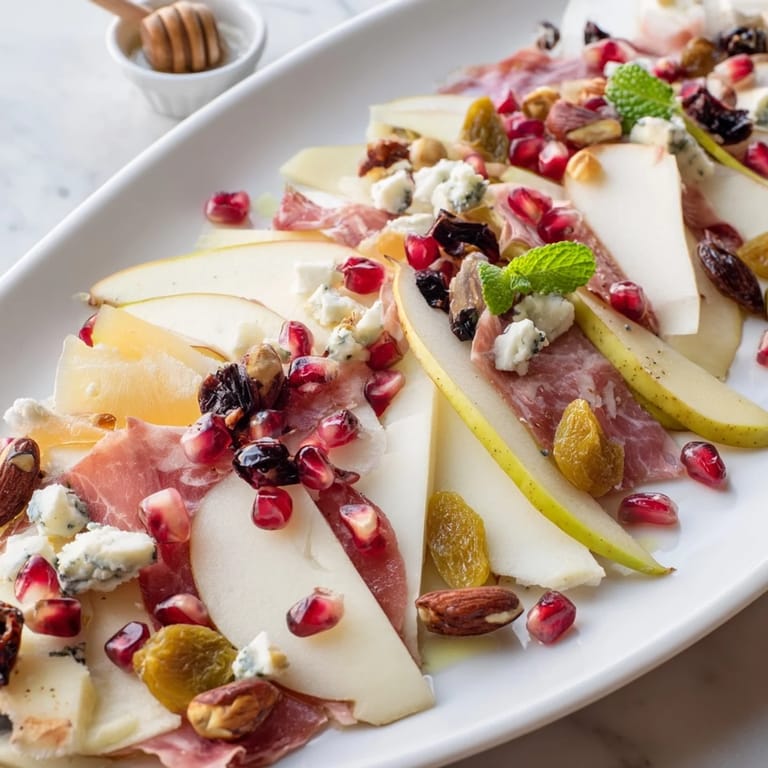
- Now comes the magic moment. Generously sprinkle pomegranate arils across the entire diagonal, but especially cluster them in a few spots so they catch and hold the light. These jewels are the heart of the board—let them shine.
- Add nuts for crunch:
- Tuck pistachios and almonds throughout, creating little pockets of texture. Don't crowd them; let them be discovered as people explore the board.
- Set out the condiments:
- Place your honeycomb and fig jam in small bowls at either end of the cascade, positioning them like bookends that frame your creation.
- Fan out the bread and crackers:
- Arrange baguette slices and crackers along both sides of the diagonal, making them easy to grab. This is practical but also part of the design—they frame and complete the composition.
- Finish with mint:
- Scatter fresh mint leaves across the board, focusing on areas where they'll catch the light. The aroma will tell guests before the taste does that something special is happening here.
- Serve immediately at room temperature:
- A cheese board is best when the cheeses are soft enough to spread, the fruits are fresh and crisp, and everything tastes like the care you put into it. Bring it straight from your hands to the table.
 Save
Save The moment that truly changed how I approach entertaining was watching my usually-picky nephew study this board like he was reading a treasure map, then carefully select a piece of prosciutto, a curl of goat cheese, and a pomegranate seed all in one bite. He closed his eyes and smiled. That's when I understood that a cheese board isn't really about the ingredients—it's about creating a moment where people slow down and experience food as something joyful and intentional.
The Art of the Diagonal
I learned the power of linear arrangement by accident. I was setting up a board when my daughter asked why everything had to be scattered. That question made me think differently about the space, about flow, about how to guide someone's eye and their palate through an experience. The diagonal line became my answer. It's not just pretty—it actually helps your guests navigate the board, discovering new flavor combinations as they follow the line. It also makes the board feel intentional, curated, like you spent hours planning when really you spent 25 minutes organizing your instincts.
Cheese Pairing Wisdom
Every cheese tells a story. The goat cheese is about simplicity and tang. The Manchego carries the warmth of Spanish hillsides and late afternoons. The blue cheese is bold and uncompromising. Together, they create a conversation. I've learned that the best boards aren't about having the most expensive cheeses—they're about understanding how different flavors talk to each other. A sharp cheese needs something sweet nearby to balance it. A mild cheese benefits from a salty neighbor. Think of your board as an orchestra, and you're the conductor making sure every section has something interesting to play.
Making It Your Own
The beauty of this formula is that it works with whatever you have on hand and whatever your guests actually enjoy. I've made this board with Brie instead of Manchego, with walnuts instead of pistachios, with fresh berries instead of dried fruits. The cascade stays elegant, the pomegranate still shines, and the magic is still there. Some of my favorite memories have come from improvising this board for unexpected guests, discovering which cheeses my friends actually love, and learning that the perfect board is the one that reflects your pantry and your personality.
- Choose cheeses that span creamy, sharp, and bold so every palate finds something to love.
- Mix textures intentionally—if everything is soft, add something crunchy; if everything is sweet, add something salty.
- Don't feel trapped by the ingredients list—this is your starting point, not your finish line.
 Save
Save Every time I set out this board, I'm reminded that the best meals are the ones where people linger, taste, talk, and discover something new. That's what the Pomegranate Jewel Cascade gives you—not just a beautiful appetizer, but an invitation to slow down and savor.
Recipe FAQs
- → What cheeses work well for this board?
Creamy goat cheese, aged Manchego, and blue cheese provide a balance of mild, nutty, and sharp flavors. Brie, aged Cheddar, or Camembert can be used as substitutes.
- → How should the pomegranate arils be arranged?
Sprinkle the arils generously along the diagonal cascade for a vibrant jewel-like effect that draws attention and adds freshness.
- → Can this board be made vegetarian-friendly?
Yes, omit the cured meats and increase nuts or add roasted vegetables for a satisfying vegetarian-friendly spread.
- → What are good drink pairings for this board?
Crisp rosé, sparkling wine, or a refreshing non-alcoholic pomegranate spritzer complement the flavors beautifully.
- → Are there allergy considerations to keep in mind?
This board contains dairy, tree nuts, gluten, and possible sulfites. Always check ingredients to accommodate dietary restrictions.