 Save
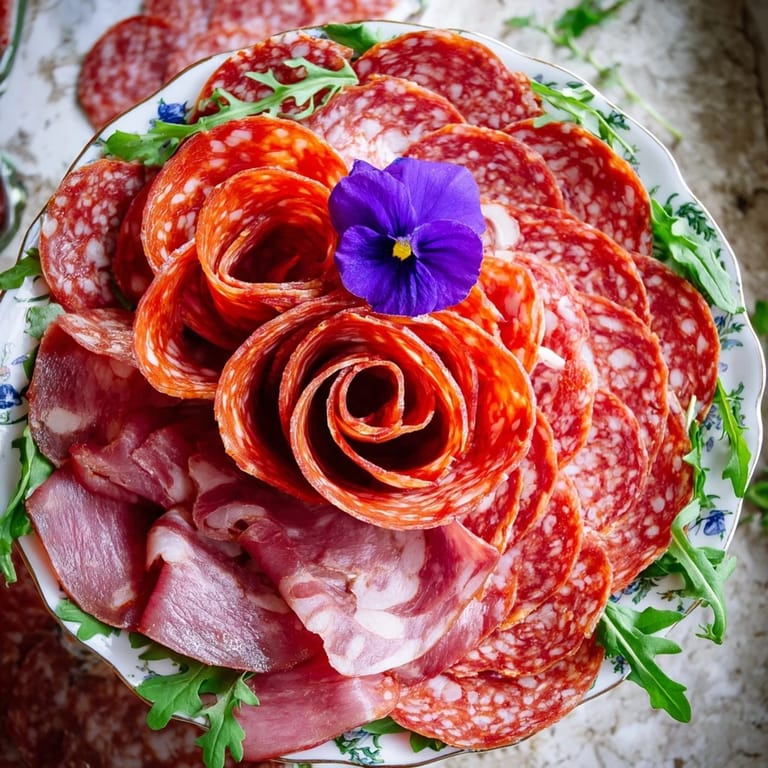
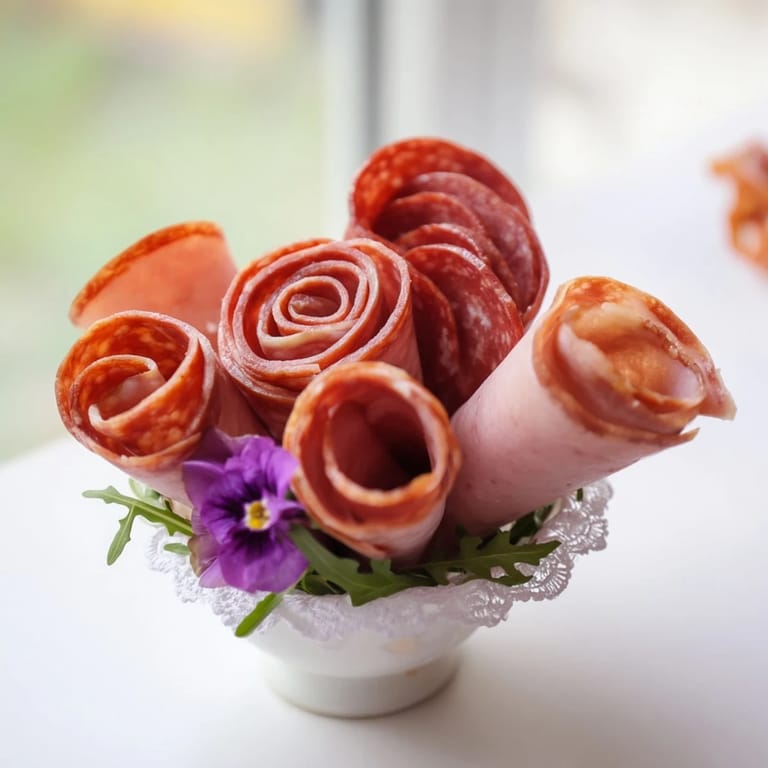
Save The first time I folded salami into a rose shape, I was convinced I'd lost my mind. There I was, hunched over my kitchen counter at midnight, arranging cured meat like I was assembling some elaborate craft project, when my partner walked in asking if I'd finally lost it. But watching those thin slices spiral into something genuinely beautiful—petals unfurling like they'd bloomed right there in my hands—I realized I'd discovered something magical. It wasn't complicated, just patient, and suddenly those porcelain teacups I'd been hoarding made perfect sense. This Victorian Tea Rose became my favorite way to prove that simple ingredients can feel like luxury.
I made these for my mother's birthday brunch last spring, and something unexpected happened—my usually quiet dad asked for the recipe. Not to make them himself, but to understand how something so elegant could come from meat he'd been eating plain for forty years. That moment shifted how I think about food presentation; it's not pretension, it's permission to see familiar things differently. The roses sat in their little teacups catching the morning light, and suddenly appetizers felt like an actual art form.
Ingredients
- Salami slices: You need eighteen large, thin slices—ask the deli counter to slice them paper-thin, thinner than you'd normally order, because those delicate sheets are what make the petals curl naturally without cracking.
- Pepperoni slices: Another eighteen slices, same thickness as the salami; the slight flavor difference between the two keeps things interesting when you layer them together.
- Porcelain teacups: Six small cups are your stage, and they do half the visual work for you; hunt for ones with actual character, not the generic kind everyone has.
- Fresh basil or baby arugula: These are optional but absolutely worth the effort—they soften the richness of the meat and add a whisper of green that makes the roses pop.
- Edible flowers: Pansies and violets are delicate enough not to overpower, and they're the final touch that makes people actually gasp.
- Supporting cast: Crackers, cheeses like brie or havarti, and fresh grapes round out the board and give your guests choices without stealing focus from your roses.
Tired of Takeout? 🥡
Get 10 meals you can make faster than delivery arrives. Seriously.
One email. No spam. Unsubscribe anytime.
Instructions
- Prepare your stage:
- Clear your work surface completely and lay out six salami slices in a slightly overlapping line, each one covering about a third of the one before it. Think of it like shingles on a roof—there's a rhythm to the overlap that matters.
- Create the spiral:
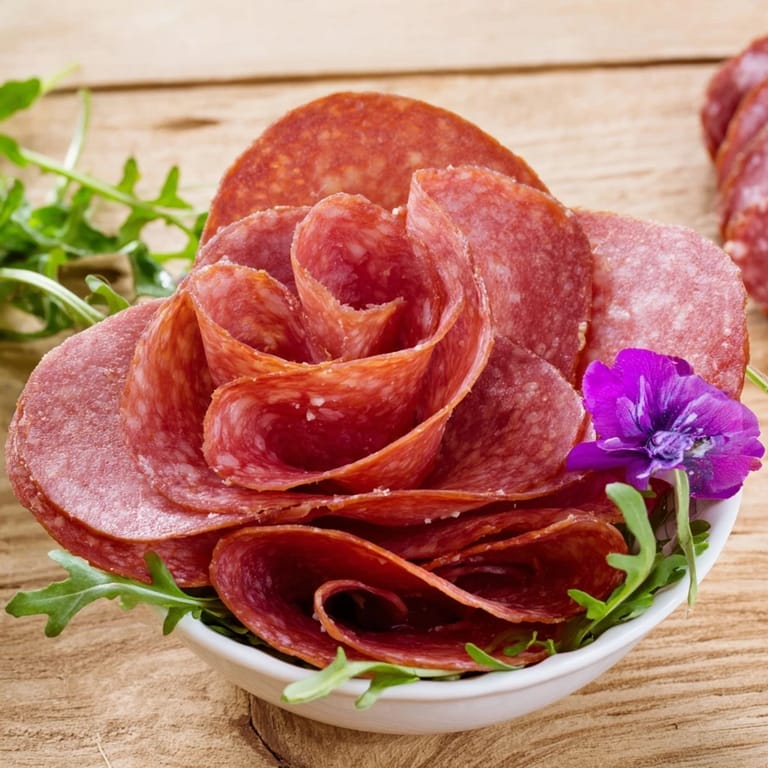
- Starting at one end, gently roll the line of salami toward you, keeping the pressure light and even so the slices stay together without tearing. When you've rolled it all up, stand it upright—this is where the magic happens.
- Coax out the petals:
- Using your fingertips, very gently loosen each outer slice from the spiral, pulling it outward just enough to create the illusion of a bloomed rose. Don't force it; the slices know how to look beautiful if you're patient with them.
- Repeat the pepperoni rose:
- Do the exact same process with six pepperoni slices, and you'll notice how the deeper color gives it a different personality than the salami version.
- Build your collection:
- Make a second set of both roses so you end up with three of each kind total; this gives you six serving pieces and lets you play with color combinations on your board.
- Line the cups:
- If you're using basil or arugula, tuck a small handful into the base of each teacup—it's both functional and beautiful, cushioning the roses while adding visual interest.
- Nestle the roses:
- Carefully place each rose into a teacup, adjusting those petals one more time so they look full and naturally unfurled, like they're greeting the world.
- Final flourish:
- If you have edible flowers, tuck one delicately into the side of each rose where it looks intentional but casual.
- Arrange and serve:
- Set your teacup roses on a board with crackers, cheese, and fruit scattered around them; they create a focal point while the accompaniments invite people to build their own bites.
 Save
Save There's a quiet confidence that comes from placing something you made yourself in front of people, especially when it's beautiful enough to photograph. I watched guests at my last dinner party hesitate before picking up a rose, uncertain if they were allowed to eat something so deliberately arranged—and that split second of delight, when they realized it was meant to be enjoyed, became my favorite part of serving these.
Flavor Building and Variations
The beauty of this recipe is that it invites play—once you've made it the classic way, you'll start seeing possibilities everywhere. I brush mine lightly with black pepper-infused olive oil before rolling, which adds a whisper of heat that complements the salt of the cured meat. Other cured meats like prosciutto or coppa work beautifully; I've even experimented with soppressata, which has a different spice profile that's worth exploring. The petals themselves remain neutral enough that the meat's natural flavors shine, but that's also your permission to get creative with what surrounds them on the board.
Timing and Make-Ahead Strategy
The absolute best thing about this recipe is that it rewards preparation without requiring last-minute stress. You can roll and assemble your roses up to two hours ahead, refrigerate them in their teacups with the edible flowers tucked in place, and they'll actually improve as the flavors settle and the petals relax into their final shape. I've learned that pulling them out ten minutes before guests arrive gives them time to warm up just slightly, which actually makes the flavors more pronounced. The crackers, cheese, and fruit can be arranged ahead too—only the final garnish details need your attention when people start arriving.
Presentation Secrets
What transforms this from a nice appetizer into something people remember is the intentionality of how you present it. The teacups do so much work—they signal that this is special, slightly whimsical, and definitely approachable. I've noticed that when the roses are the undeniable focal point of the board, with supporting players gently arranged around them, the entire moment shifts. Lighting matters too; these are genuinely stunning in natural light or soft evening glow, less so under harsh overhead lights. The small details—choosing teacups with personality, selecting edible flowers that actually complement the colors of the meat, even the way you arrange the crackers—all whisper that you cared about more than just feeding people.
- Choose teacups that match your personal style, not what you think looks Victorian—your actual taste shows more than any period-specific detail.
- If you can't find edible flowers easily, skip them entirely rather than use sad grocery store flowers; basil petals or a single microgreen leaf works just as well and looks intentional.
- Serve these at actual room temperature, not straight from the cold; they'll release their flavors more generously and feel less like you're serving someone else's idea of fancy.
 Save
Save This dish taught me that impressive food doesn't require complicated techniques or rare ingredients—just patience, attention to detail, and the willingness to see something familiar in a completely new way. Every time I make it, I'm still a little amazed that something this beautiful took less time than it would to order takeout.
Recipe FAQs
- → What meats are used to create the rose shapes?
Thin slices of salami and pepperoni are carefully layered and rolled to form the rose shapes.
- → How can I enhance the flavor of the meats?
Lightly brushing the slices with olive oil and freshly ground black pepper before rolling adds subtle flavor.
- → Can I use other types of cured meat?
Yes, prosciutto or coppa can be substituted to create variety while maintaining the visual effect.
- → What is the purpose of lining the teacups with basil or arugula?
The greens provide a fresh base and contrast color, enhancing both flavor and presentation.
- → How far in advance can this appetizer be prepared?
It can be assembled up to two hours ahead and kept refrigerated to maintain freshness.