 Save
Save There's something about late August when the farmers market overflows with tomatoes in shades you didn't know existed—deep burgundy, pale yellow, that striped green-and-red kind that catches your eye. I grabbed a pile of them one afternoon and realized I had nothing fancy planned, just a craving for something that tasted like summer itself. The basil oil came later, almost by accident: a handful of leaves I refused to waste, a pour of good oil, and suddenly the whole dish transformed into something that felt both effortless and special.
I made this for a small dinner party during a heat wave, when nobody wanted anything cooked, and the simplicity of it—just plates and flavors, no fuss—somehow made the evening feel both luxurious and relaxed. My friend asked for the recipe afterward, convinced it was more complicated than it was. The best part was watching people slow down and actually taste things, which doesn't happen as often as it should.
Ingredients
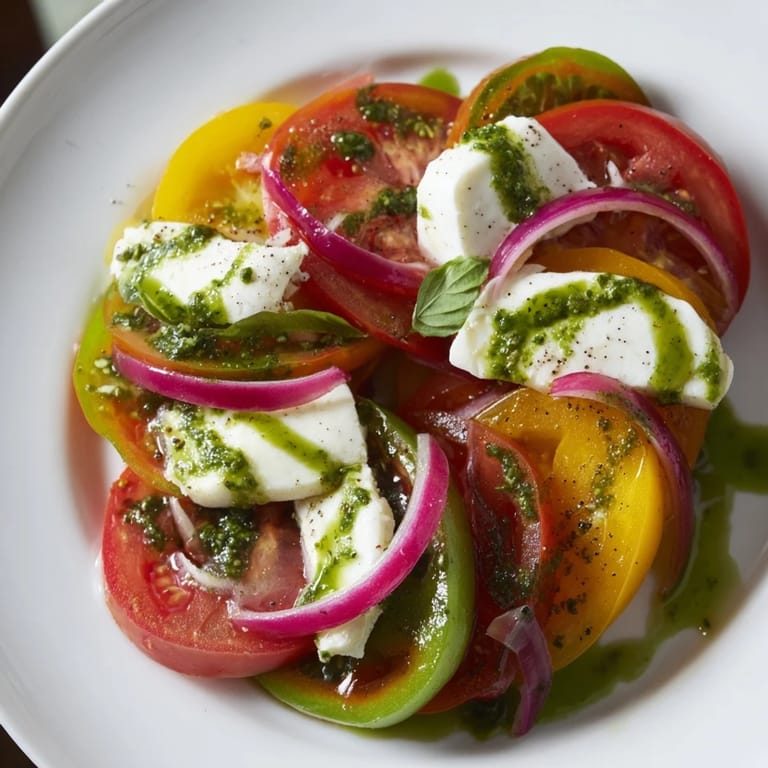
- 4 large heirloom tomatoes, assorted colors, sliced: The whole recipe lives and dies by tomato quality—choose ones that smell fragrant and yield slightly to pressure, never the mealy supermarket kind.
- 200 g fresh mozzarella, sliced or torn: Cold, creamy mozzarella against warm tomato creates a small temperature contrast that makes every bite interesting.
- 1 cup fresh basil leaves: Use tender leaves if possible; mature or bruised basil turns bitter when blended, which I learned the hard way.
- 60 ml extra-virgin olive oil: This isn't a background ingredient—it should taste like something on its own, peppery and grassy.
- 1 tablespoon white balsamic vinegar or red wine vinegar: The vinegar wakes everything up at the last second, so save it for serving.
- Sea salt and freshly ground black pepper: Don't skip the grinder; pre-ground pepper tastes tired by comparison.
- 1 small red onion, thinly sliced (optional): A thread or two adds sharp brightness, but some people find raw onion too aggressive on an otherwise gentle plate.
Tired of Takeout? 🥡
Get 10 meals you can make faster than delivery arrives. Seriously.
One email. No spam. Unsubscribe anytime.
Instructions
- Blend the basil into oil:
- Pulse the basil and olive oil together until the leaves break down into the oil—it should look almost bright green, and smell intensely herbal. If you prefer crystal-clear oil, strain it through a fine mesh sieve; if you're okay with small flecks of basil (which I often am), you can skip this step.
- Build the salad on a platter:
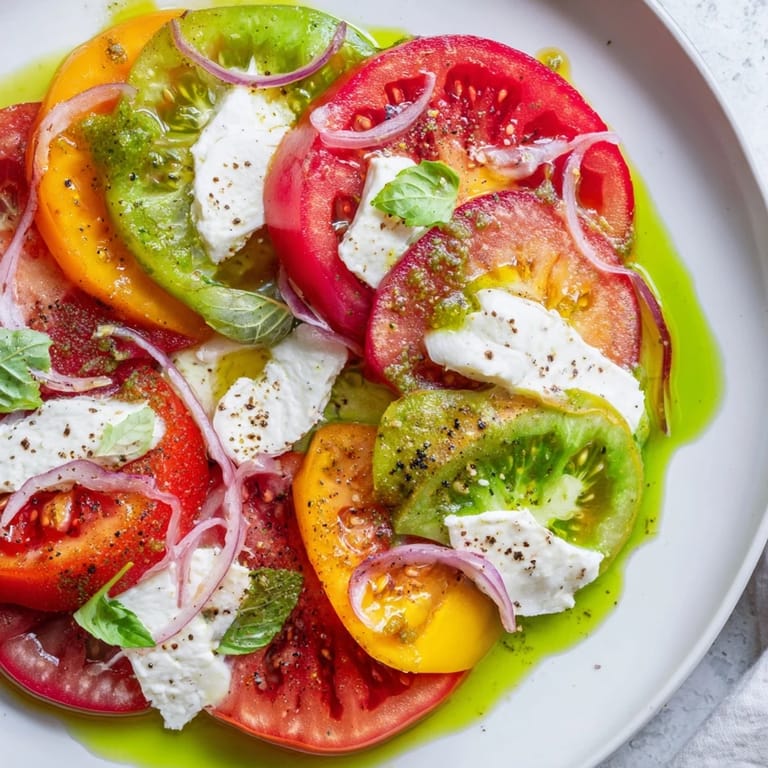
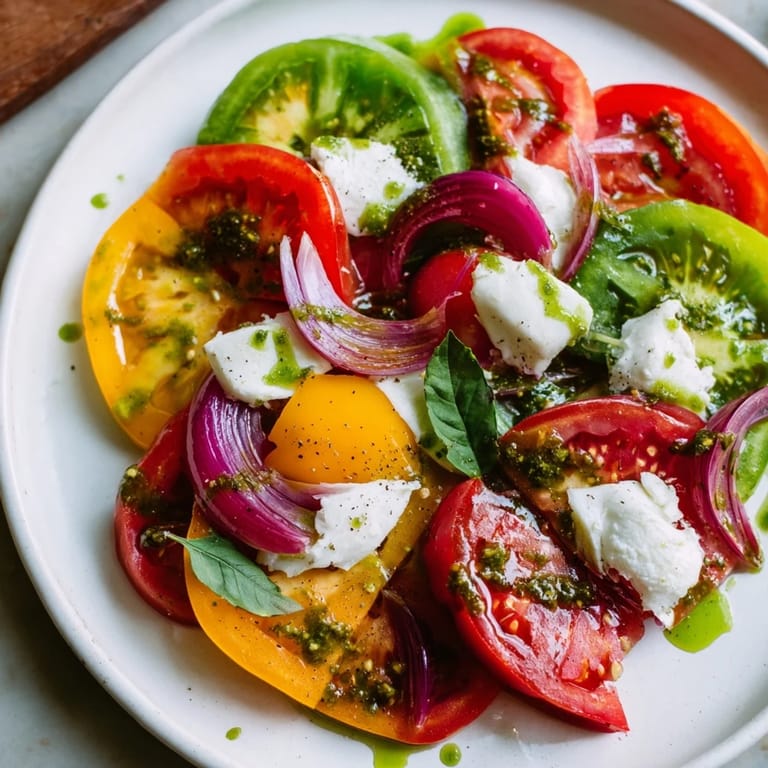
- Arrange tomato slices loosely, overlapping them just enough that they tell a color story. Tuck torn mozzarella pieces between the slices so they get discovered as people eat.
- Season and dress:
- Drizzle the basil oil across the whole platter with a generous hand—this is where the flavor lives. Scatter salt and pepper evenly, tasting a piece if you're unsure about balance.
- Finish with vinegar and serve:
- Just before bringing it to the table, add a thin drizzle of vinegar; if you do it too early, it'll sit in puddles and overpower the delicate flavors. Serve immediately while the mozzarella is still cool and the oil is still fragrant.
 Save
Save My partner brought a friend from out of town who claimed not to like tomatoes very much, and watching them go back for seconds of this salad was one of those small kitchen moments that reminded me how much good ingredients and honest cooking matter. Sometimes a dish doesn't need to be complicated to feel generous.
On Choosing Tomatoes
The difference between a forgettable salad and one you think about weeks later often comes down to tomato selection. Look for weight relative to size—that density means juice and flavor, not water and air. Heirloom varieties tend to have thinner skin and more seeds, which sounds like a flaw until you bite into one and realize that's where most of the taste lives. Don't worry about perfect circles or uniform sizes; imperfection usually tastes better anyway.
Making the Basil Oil Sing
The basil oil is the quiet showstopper here, and getting it right takes one small consideration: don't over-blend. If you pulverize it to complete smoothness, the basil bruises and oxidizes, turning darker and slightly bitter. A few pulses until the leaves surrender to the oil is enough—you want flecks of green visible, not a homogeneous slick. Some people blanch the basil first to preserve its brightness, but I find that step unnecessary unless you're making it hours ahead.
When Summer Tomatoes Aren't Available
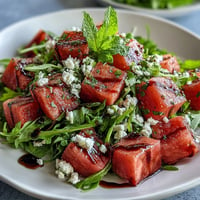
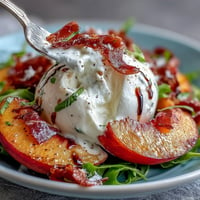
There's honest wisdom in eating this salad only when tomatoes are in season and actually taste good—which is maybe four months of the year depending on where you live. But if you're craving it in March and the tomatoes look sad, try substituting thin slices of ripe peach or nectarine for half the tomato; the sweetness plays beautifully against the mozzarella and basil. Burrata is another elegant swap if mozzarella feels too ordinary, though it's softer and works better mixed gently on the platter rather than arranged.
- Grilled or toasted bread alongside turns this from a side into a full meal.
- A chilled glass of crisp white wine or dry rosé makes the whole experience feel intentional.
- This salad is best served within an hour of assembly, before the vinegar and oil settle or the mozzarella softens too much.
 Save
Save This salad is proof that summer cooking doesn't require complexity, just respect for good ingredients and the willingness to let them speak. Make it when the tomatoes are singing.
Recipe FAQs
- → What types of tomatoes work best?
Heirloom tomatoes of assorted colors provide sweetness and texture that elevate the dish's freshness.
- → Can I substitute mozzarella?
Burrata adds extra creaminess, while fresh mozzarella keeps it light and balanced.
- → How is the basil oil prepared?
Blend fresh basil leaves with extra-virgin olive oil until smooth, then strain for a clear, aromatic dressing.
- → Is red onion necessary?
Red onion is optional but provides a mild sharpness that complements the sweetness of tomatoes.
- → What vinegar enhances the dressing?
White balsamic or red wine vinegar adds a subtle acidity that brightens the flavors.
- → Can this dish be paired with other foods?
Serve alongside grilled sourdough or light wines such as Sauvignon Blanc or rosé for a complete meal.