 Save
Save I'll never forget the first time I made these Champagne toasts for my best friend's engagement party. I wanted something that felt as special as the moment we were celebrating, something that tasted like celebration itself. That's when I discovered that the simplest combinations—creamy cheese, a burst of prosecco-soaked grape, a whisper of edible gold—could capture the magic of a toast in a single, elegant bite. Now, whenever I arrange these on a platter, I'm transported back to that evening, to the joy on everyone's faces as they reached for that first toast.
I remember standing in my kitchen the night before hosting a dinner party, feeling a little overwhelmed by all the preparations ahead. Then I thought of these toasts—something elegant but achievable, something that would make my guests feel special without exhausting me before they even arrived. I made a batch, arranged them on my grandmother's vintage platter, and watched them disappear within minutes. That's when I realized: the best appetizers aren't about complexity; they're about generosity and thoughtfulness.
Ingredients
- Creamy white cheese (Brie or Camembert), 120g, rind removed and sliced: This is your foundation—the luxurious base that melts slightly under the weight of the other toppings. I learned the hard way that removing the rind matters; it keeps the toast from feeling gummy and lets the pure creaminess shine.
- Fresh goat cheese (chèvre), 60g, softened: This tangy, silky layer adds sophistication and prevents the toast from becoming too heavy. Softening it first makes spreading effortless—just leave it on the counter for a few minutes while you toast your bread.
- Seedless green grapes, 18: These are your flavor bomb. The prosecco soak transforms them into something jewel-like and unexpected—no longer just fruit, but a flavor accent that ties the whole toast together.
- Prosecco, 120ml (or Champagne): This is non-negotiable for the magic. The bubbles and subtle sweetness soak into the grapes, creating little pockets of celebration in every bite. If you're making a non-alcoholic version, sparkling white grape juice works beautifully.
- White baguette or gluten-free bread, 12 thin slices, lightly toasted: Toasting is essential—it gives structure so the cheese doesn't make everything soggy, and it adds a subtle nuttiness. Don't over-toast; you want them crisp but still elegant, not hard.
- Edible gold dust or glitter: Here's the honest truth: this ingredient is entirely about joy. It doesn't change the flavor, but it changes how people feel when they see these toasts on the platter. That shimmer says celebration before anyone even takes a bite.
- Honey, 1 tbsp (optional): A light drizzle adds a gentle sweetness that plays beautifully against the tanginess of the goat cheese. I use it sparingly—just enough to catch the light.
- Flaky sea salt, a pinch (optional): This small addition brightens all the flavors and adds a textural contrast. It's the difference between good and memorable.
Tired of Takeout? 🥡
Get 10 meals you can make faster than delivery arrives. Seriously.
One email. No spam. Unsubscribe anytime.
Instructions
- Soak your grapes in prosecco:
- Pour the prosecco over your grapes in a small bowl. Let them sit for at least fifteen minutes—I usually do this step first so they have time to absorb all that bubbly goodness. When you drain them, pat them dry with a paper towel; any excess moisture will make your cheese weep. Watch how the grapes start to glisten; that's when you know they're ready.
- Toast and cool your bread:
- Slice your baguette into thin, elegant pieces—about half an inch thick. Toast them lightly, just until they're golden and crisp. The aroma alone will make you happy. Let them cool to room temperature on a clean kitchen towel; warm bread will melt your cheese before you're ready, and we want control here.
- Spread your goat cheese base:
- Using a small offset spatula or butter knife, spread a thin, even layer of softened goat cheese on each toasted slice. This is your adhesive and your first flavor layer. Don't be stingy, but don't be heavy either—think of it like spreading butter on toast, not frosting a cake.
- Layer on the creamy cheese:
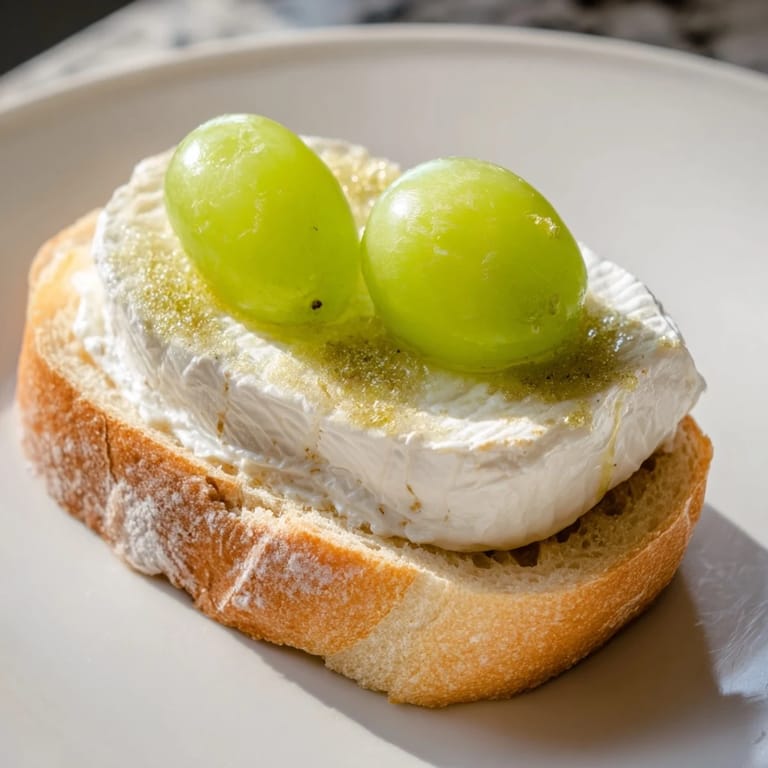
- Take a slice of your Brie or Camembert and layer it gently over the goat cheese. The warmth from the toast will soften it just enough to stay put without sliding. This combination of two cheeses is what makes people pause and say, "Wait, what is this?"
- Crown with a prosecco grape:
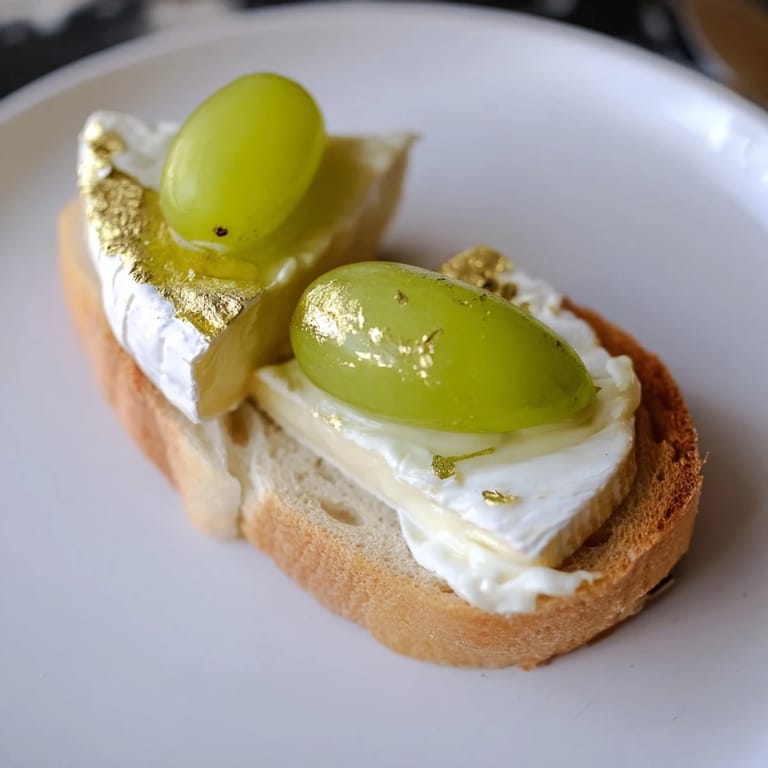
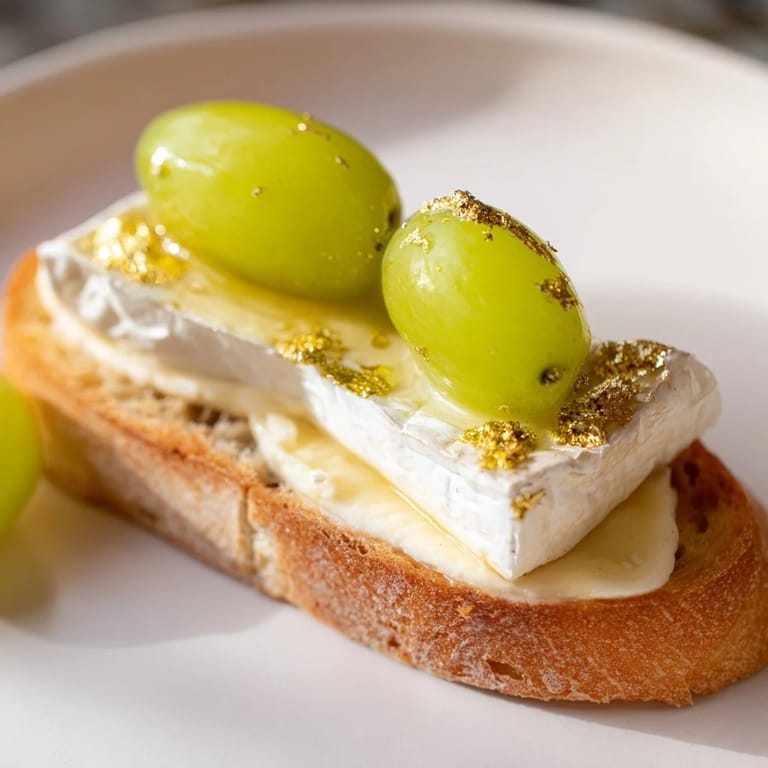
- Gently press one or two prosecco-soaked grapes into the top of the cheese stack. They should nestle in like tiny jewels. This is where the magic happens—the burst of grape flavor, the residual prosecco, the creaminess of the cheese all come together in one delicious moment.
- Dust with edible gold:
- Lightly sprinkle your edible gold dust or glitter over the top of each toast. If you're using a pinch of flaky sea salt, add it now—the salt and gold actually complement each other visually and flavor-wise. The gold catches the light and makes these toasts look like they belong on a fancy hotel menu.
- Optional finishing touches:
- If you're using honey, drizzle it very lightly across the tops—just a tiny amount. A whisper of honey, not a pour. This step is purely optional but transforms these into something almost dessert-like in their elegance.
- Arrange and serve immediately:
- Place your finished toasts on a beautiful serving platter as close to serving time as possible. These are best enjoyed within an hour of assembly, while the bread is still crisp and the cheese is still properly textured. Arrange them so the gold catches the light, and watch your guests' faces as they reach for that first bite.
 Save
Save Years later, I was catering a small wedding celebration in my friend's backyard garden, and I made dozens of these toasts. A grandmother who hadn't smiled much that day tried one, and suddenly her whole face lit up. She said it reminded her of her honeymoon in Paris, of sidewalk cafés and champagne toasts. In that moment, I understood that food is never just food—it's a vehicle for memory and joy. These little toasts had become my favorite thing to make not because they're complicated, but because they're simple enough to allow something bigger to happen.
The Art of Cheese Selection
Choosing the right cheeses for these toasts changed everything for me. I used to think any Brie would do, but I discovered that the texture and flavor profile vary dramatically between brands and regions. A truly creamy Brie should feel almost liquid under its rind, while a Camembert offers slightly more structure and a more herbaceous flavor. When shopping, ask the cheesemonger for recommendations—they'll steer you toward options that are at their peak. For the goat cheese, fresher is better; aged chèvre becomes chalky, while young goat cheese spreads like silk. I now visit my local cheese shop specifically for these toasts, and it's become part of the ritual I love.
Prosecco vs. Champagne: Why It Matters
I used to think prosecco and Champagne were interchangeable, but soaking fruit revealed the difference. Prosecco has a softer, fruitier quality that pairs beautifully with the grapes without overpowering them, while true Champagne brings a drier, more complex minerality. For this recipe, I actually prefer prosecco—it's more forgiving, less expensive, and the flavor profile works better with the delicate sweetness of the fruit. That said, if you're already opening a bottle of Champagne for the celebration, use it. The gesture matters more than the technical perfection. And remember, sparkling grape juice or even a good quality sparkling apple cider works for non-alcoholic versions; I've made these with apple cider for a holiday brunch and they were just as celebratory.
Presentation and Serving Wisdom
These toasts deserve better than a regular plate, and I've learned that presentation truly affects how people experience food. I always use my nicest serving platter and arrange the toasts with intention—creating little clusters of gold-dusted bites that look intentional and special. If you have any edible flowers on hand, a tiny nasturtium or pansy next to each toast adds another layer of elegance without complicating the recipe. Serve these alongside the same wine you used to soak the grapes; the repetition of flavor creates a beautiful harmony. And here's a secret: these are perfect for parties where you want to impress without spending hours cooking, for intimate gatherings where you want each bite to say you care, or for quiet moments when you want to treat yourself to something special.
- Arrange the toasts in a casual but intentional pattern on your platter, leaving just enough space between them so they feel like separate bites, not a solid mass.
- If you're making these ahead of a party, assemble them no more than thirty minutes before guests arrive; keep the components separate until the last moment.
- Have champagne or sparkling wine chilled and ready when you serve these—the pairing elevates everything, and timing the toast with serving these bites creates a beautiful moment of celebration.
 Save
Save These Champagne toasts have become my answer to the question "What should I bring?" or "I want to make something special but I'm running out of time." They're proof that the most memorable food often comes from the simplest ideas, prepared with care and served with genuine warmth.