 Save
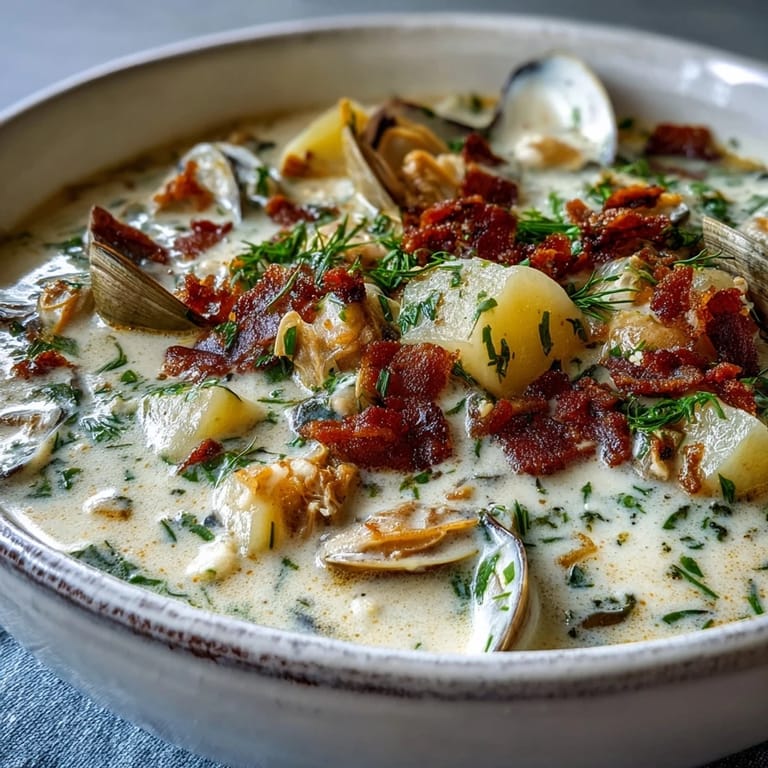
Save My first real clam chowder arrived on a foggy October afternoon at a weathered seafood shack near Boston Harbor, and I remember the spoon hitting the bottom of the bowl before I even realized I'd finished it. The broth was so silky it felt luxurious, and each spoonful delivered this perfect surprise of tender clam, creamy potato, and the gentle snap of celery. Years later, I attempted to recreate that moment in my own kitchen, and after a few attempts, I discovered the secret wasn't complexity but respect for each ingredient and knowing exactly when to stop cooking.
I made this chowder for my neighbor Tom during a particularly harsh winter, and watching him taste it brought back that same wonder I felt years ago. He closed his eyes for a moment, then looked up and asked if I'd actually steamed real clams or taken a shortcut with canned ones. When I admitted the canned variety, he shrugged and said it didn't matter, the soup tasted like home anyway.
Ingredients
- Fresh clams or canned clams: Fresh littlenecks deliver briny, sweet flavor and a tender chew, but canned clams work beautifully too and save time, plus you get the bonus of their juice for extra depth.
- Yukon Gold potatoes: They hold their shape better than russets and have a waxy texture that creates a naturally creamy broth without breaking down into mush.
- Salt pork: This ingredient is the secret to authentic flavor, rendering pure pork fat that carries flavor in a way butter alone cannot, though quality bacon works if that's what you have.
- Heavy cream and whole milk: The combination gives you richness without the heaviness of cream alone, creating that signature silky mouthfeel.
- Clam juice: Bottled clam juice is reliable and consistent, or use the precious liquid from steaming fresh clams or opening canned ones.
- Fresh parsley: A handful stirred in at the end brightens everything and reminds you that soup is alive, not just sustenance.
Tired of Takeout? 🥡
Get 10 meals you can make faster than delivery arrives. Seriously.
One email. No spam. Unsubscribe anytime.
Instructions
- Prepare Your Clams:
- If you're using fresh clams, scrub them under cold water until they feel gritty-clean, then steam them with just a cup of water in a covered pot over medium heat. They'll open in about 6 to 8 minutes, and you'll hear them click shut then open again. Let them cool, chop the meat, and save every drop of that liquid.
- Render the Salt Pork:
- Dice your salt pork into small cubes and cook it slowly in your Dutch oven over medium heat, letting the fat melt into the pot while the meat crisps up golden. This takes patience, but it's building the foundation of flavor for everything that follows.
- Build Your Aromatic Base:
- After removing the crispy pork, melt butter into that rendered fat, then add your diced onion and celery. Cook them gently until they're soft and fragrant but not browned, about 5 minutes. Add minced garlic in the last minute so it doesn't burn.
- Make a Roux:
- Sprinkle flour directly over your vegetables and stir constantly for about 2 minutes. This thickens your chowder and gives it that authentic, creamy body, and you'll feel it happening as the mixture transforms.
- Whisk in the Liquids:
- This is where you slow down and whisk slowly to avoid lumps. Pour in your clam juice, milk, and cream in a steady stream while stirring, creating a smooth, silky base.
- Simmer the Potatoes:
- Add your diced potatoes along with a bay leaf and dried thyme, then let everything bubble gently uncovered for 12 to 15 minutes. Stir occasionally and watch for the potatoes to become tender but still hold their shape.
- Add the Clams Last:
- This is crucial and learned the hard way: add your chopped clams and cooked bacon back to the pot in the final 3 to 5 minutes and keep the heat gentle. Boiling clams after they go in will make them tough and ruin the whole effort.
- Finish with Brightness:
- Remove the bay leaf, stir in fresh parsley, and taste before seasoning with salt and pepper. Remember that clam juice is salty, so taste first before adding more.
 Save
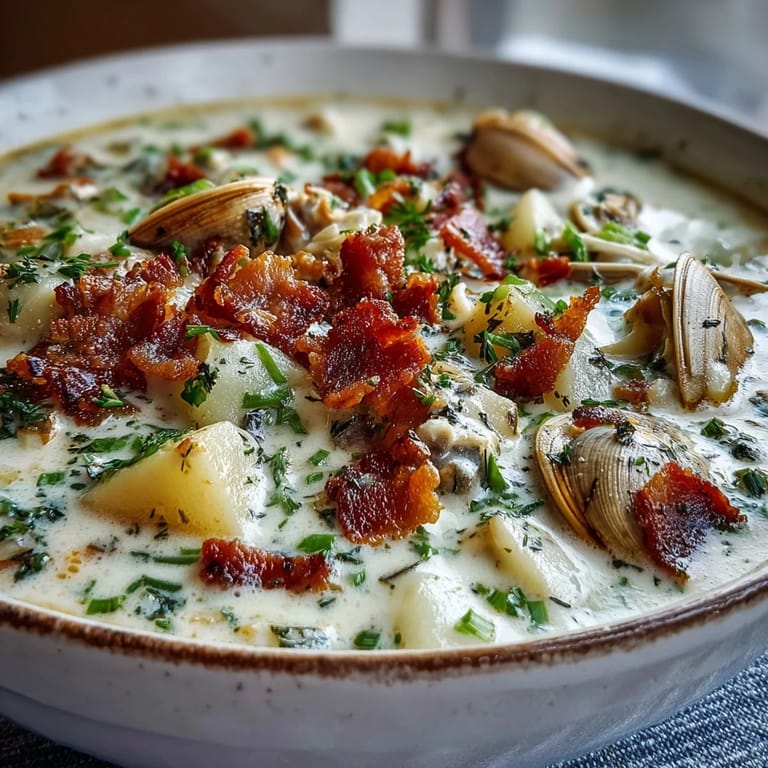
Save There's a moment in cooking this chowder when all the separate elements suddenly come together into something greater than their parts, and it happens the instant you stir in those clams and smell the briny sweetness mingling with cream and thyme. That's when you know you've done something right, something worth repeating.
The Potato Question
I've tested this soup with russets, reds, and Yukon Golds, and each one behaves differently. Russets are starchy and break apart, which some people love for a thicker chowder, while Yukon Golds hold their shape and give you these tender bites throughout. The texture of your finished soup depends entirely on this choice, so think about what you want your bowl to feel like before you peel.
Fresh Versus Canned Clams
Fresh clams are spectacular if you have access to them and don't mind the work of steaming and chopping, but honestly, good canned clams deliver consistent, reliable flavor and save you at least thirty minutes. The briny juice they come in is liquid gold for your soup base. I've stopped feeling like canned is a shortcut and started thinking of it as a smart choice.
Variations and Serving Ideas
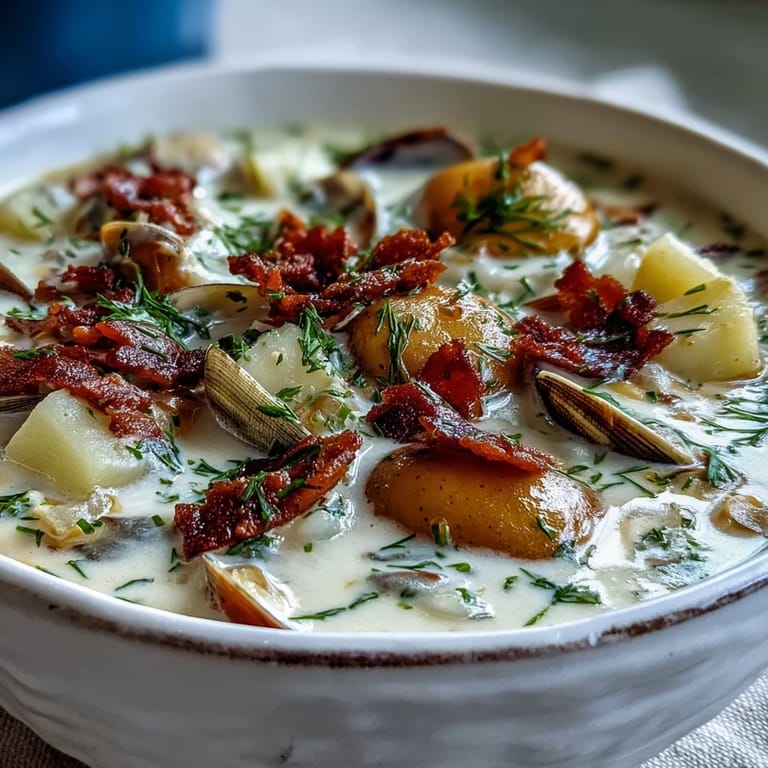
This chowder is endlessly adaptable once you understand the method. I've made it lighter by swapping cream for half-and-half when I wanted something less rich, added a splash of white wine for brightness, or even thrown in diced fennel to change the aromatic profile. Serve it in bread bowls if you're feeling fancy, or just with crusty bread and butter if you're feeling real.
- For a lighter version, substitute half-and-half for the heavy cream without sacrificing creaminess.
- A crisp white wine like Sauvignon Blanc or Pinot Grigio becomes part of the meal, not just a pairing.
- Oyster crackers are traditional, but buttered toast rounds feel more grown-up somehow.
 Save
Save New England clam chowder rewards patience and attention, and once you've made it a handful of times, it becomes the kind of comfort you reach for without thinking. There's something deeply satisfying about ladling a bowl of something so nourishing that it feels like liquid warmth.
Recipe FAQs
- → Can I make this chowder with canned clams?
Absolutely. Canned chopped clams work beautifully and actually save significant preparation time. Use the juice from the cans as part of your clam liquid for maximum flavor. Simply drain and reserve the juice, then add both clams and their liquid during the final simmering stage.
- → How do I prevent the dairy from curdling?
The key is tempering your dairy products and avoiding boiling after they're added. Whisk the clam juice into the roux first to create a smooth base, then gradually incorporate milk and cream while stirring constantly. Once dairy is added, maintain a gentle simmer rather than a rolling boil.
- → Can I freeze leftover chowder?
While possible, freezing can affect the creamy texture. If freezing, skip adding the cream and milk. Cool the base completely, freeze, then when reheating, whisk in fresh dairy. The potatoes may become slightly softer after freezing, but flavor remains excellent.
- → What's the difference between salt pork and bacon?
Salt pork is cured pork fat with minimal meat, providing pure fat without smokiness. Bacon offers both fat and smoky flavor. Traditional New England versions use salt pork for authenticity, but bacon adds delicious depth and creates a nice crisp garnish. Both work wonderfully.
- → How do I know when fresh clams are done cooking?
Steam fresh clams just until their shells pop open, typically 6-8 minutes. Discard any clams that remain closed after cooking—they're unsafe to eat. Immediately remove the meat from shells, chop into bite-sized pieces, and reserve the flavorful cooking liquid for your chowder base.
- → Can I make this lighter?
Certainly. Replace half or all of the heavy cream with half-and-half or whole milk. You can also reduce the butter slightly and increase vegetables. While the texture will be less velvety, you'll still enjoy satisfying flavor with significantly fewer calories.