 Save
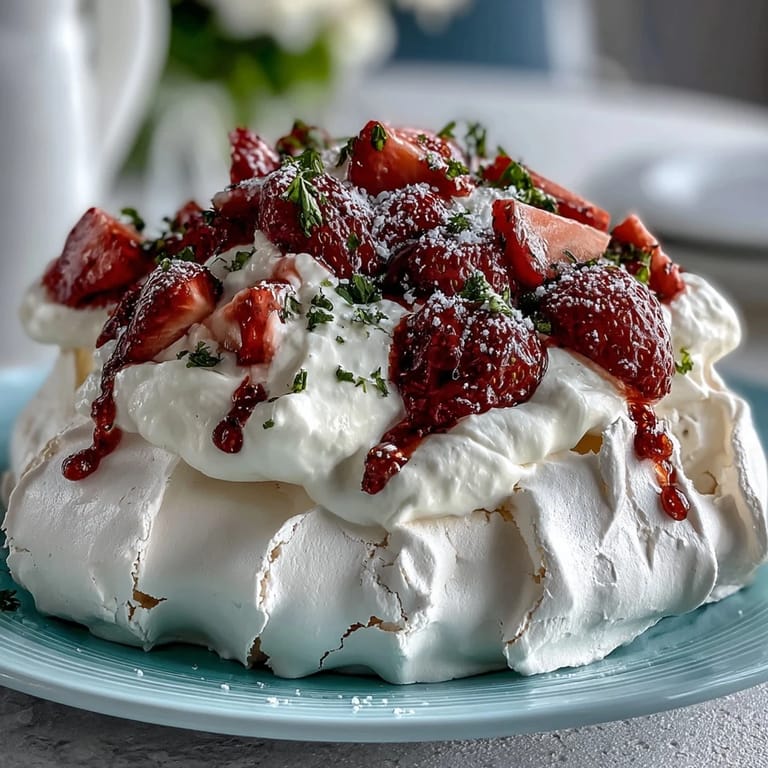
Save There's something almost magical about watching egg whites transform into clouds of meringue, and I discovered this magic on a sunny afternoon when my neighbor challenged me to make something that looked fancy but wouldn't stress me out. Mini pavlovas seemed impossible until I realized they're actually forgiving little treats that reward patience more than precision. That first batch came out crispy on the outside, marshmallowy within, and I became instantly obsessed with how such simple ingredients could create something so elegant. Now whenever spring arrives and strawberries hit their peak, these are what I reach for.
I'll never forget bringing these to a spring potluck where everyone assumed I'd bought them from a fancy bakery. One friend took a bite and just closed their eyes, and I realized then that pavlovas aren't just dessert—they're a moment of unexpected joy wrapped in crispy sweetness. The way the meringue cracks under your fork and releases that pillowy interior is the kind of simple pleasure that makes people feel special, which is honestly why I keep making them.
Ingredients
- Egg whites (4 large, room temperature): Cold eggs won't whip properly, so take them out about 30 minutes before you start—this is the single most important step, even though it sounds boring.
- Superfine sugar (1 cup/200 g): This dissolves completely into the egg whites, creating that glossy, stable meringue that holds its shape; regular sugar leaves graininess.
- Cornstarch (1 teaspoon): This tiny bit prevents the meringues from weeping or cracking as they cool, and it's become my secret weapon in every batch.
- White vinegar (1 teaspoon): It stabilizes the meringue structure and adds just enough acidity to keep everything stable during baking.
- Vanilla extract (1 teaspoon for meringue): A small touch of warmth that balances the pure sweetness without overpowering anything.
- Heavy whipping cream (1 cup/240 ml, cold): Cold cream whips into fluffy peaks much faster and holds its shape beautifully; warm cream just becomes a disappointing mess.
- Powdered sugar (2 tablespoons): Finer texture than granulated sugar, so it dissolves smoothly into the whipped cream without any grittiness.
- Fresh strawberries (1½ cups/225 g, hulled and sliced): The macerating step with sugar and lemon juice draws out their juices and creates a light syrup that soaks into the cream, amplifying flavor.
- Granulated sugar and lemon juice for strawberries: Together they brighten the berries and prevent them from becoming mushy, while the citrus cuts through all the sweetness.
Tired of Takeout? 🥡
Get 10 meals you can make faster than delivery arrives. Seriously.
One email. No spam. Unsubscribe anytime.
Instructions
- Set your oven and prepare:
- Preheat to 250°F (120°C) and line your baking sheet with parchment paper so the meringues won't stick and brown on the bottom.
- Start the meringue magic:
- In a completely clean, dry bowl (any moisture ruins everything), beat your room-temperature egg whites on medium speed until soft peaks form—this takes about 2 minutes and you'll see them go from foamy to pillowy. Stop when you can lift the mixer and the peaks gently fold over.
- Add sugar gradually:
- This is where patience matters: add sugar one tablespoon at a time, beating between each addition for about 20 seconds. This slow approach dissolves the sugar completely instead of making grainy meringue, and after 10-12 tablespoons you'll have stiff, glossy peaks that look like marshmallow fluff.
- Fold in the stabilizers:
- Gently fold cornstarch, vinegar, and vanilla into your meringue using a spatula—fold, don't stir, keeping as many air bubbles as possible. This takes about 10 folds and you want to see streaks still visible when you're done.
- Shape your nests:
- Spoon or pipe the meringue into 6 small mounds on the parchment, then use the back of a spoon to create a shallow indent in the center of each one. Leave a little rim around the edges so the cream and berries don't overflow.
- Bake low and slow:
- Bake for exactly 1 hour at the low temperature—this dries them out rather than browning them, keeping them white and delicate. When the hour is up, turn off the oven and crack the door open just an inch, letting them sit inside and cool completely for another 30 minutes to an hour.
- Macerate the strawberries:
- While meringues cool, toss your sliced strawberries with sugar and lemon juice in a small bowl, then let them sit for 15 minutes. You'll watch the juice slowly pool at the bottom—this is exactly what you want.
- Whip the cream:
- In a chilled bowl, beat cold heavy cream with powdered sugar and vanilla until soft peaks form—this takes about 3 minutes and you want it slightly fluffy but still spoonable, not stiff and buttery. Overbeating is the enemy here.
- Assemble just before serving:
- Place each cooled meringue nest on a plate, dollop the whipped cream into the center, and top with the macerated strawberries and a spoonful of their juices. Serve immediately while the meringue is still crispy on the outside and the cream is cold.
 Save
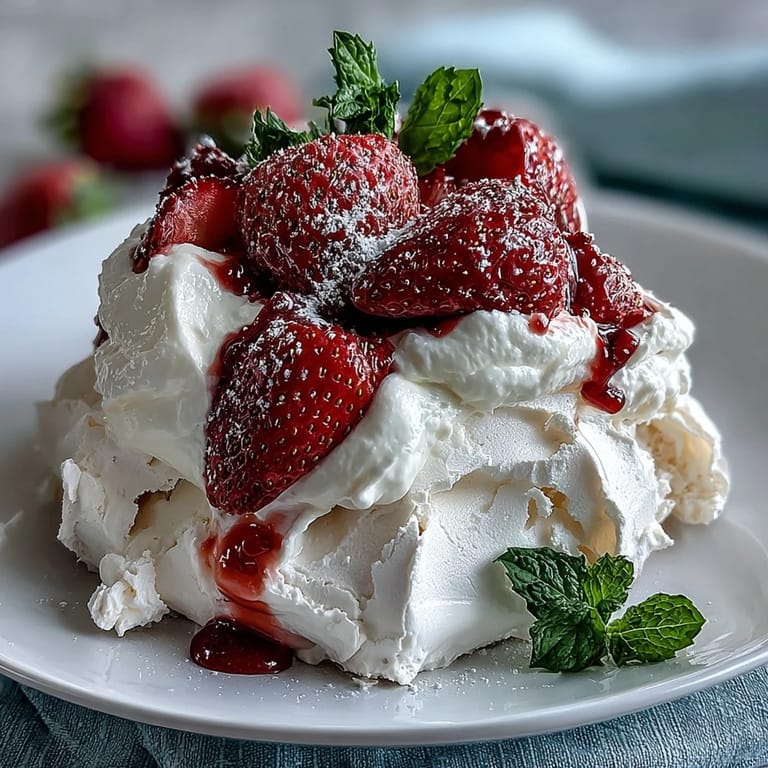
Save There was an afternoon when my daughter helped me make these and she got to pipe the meringue, making these hilariously lopsided nests that somehow baked up perfectly. We sat on the porch eating them with our fingers while she told me about her day, and I realized the imperfect shapes were the most beautiful part because they were hers. That's when desserts stop being about technique and become about memory.
Why the Low and Slow Method Works
Baking pavlovas at such a low temperature is counterintuitive until you realize the goal isn't browning—it's drying. High heat would bake them too fast, trapping steam inside and creating cracks, while this gentle 250°F treatment removes moisture slowly and evenly, leaving you with that signature crispy-outside, tender-inside texture. The oven cooling step is equally important because sudden temperature changes cause that crackling inside the meringue to become visible cracks on the surface.
Timing Your Assembly
The gap between finishing the meringues and serving them matters more than you'd think. If you assemble too early, the cream softens and the meringue absorbs moisture from the air, losing that satisfying crispness that makes people actually enjoy the texture contrast. I learned this the hard way at a brunch where everything was assembled two hours early and turned into a soggy disappointment, so now I treat assembly like the final act of a play—timed to happen right as people are sitting down to eat.
Variations and Personal Touches
Once you master the basic meringue nests, the toppings become your playground. I've done them with raspberries and passion fruit coulis, with whipped mascarpone instead of cream, with a tiny drizzle of dark chocolate—each version feels new and exciting while the foundation stays reliably perfect. The beauty is that pavlovas are forgiving enough to let your creativity run wild without ever disappointing, which is why I keep coming back to this recipe even after making it dozens of times.
- Try mixing in edible flowers like candied violets or rose petals into the whipped cream for an extra elegant touch.
- A tiny spoonful of lemon curd under the strawberries adds brightness and prevents the cream from feeling one-note.
- Make the meringues a full day ahead and store them in an airtight container—they actually get more crispy overnight as any residual moisture evaporates.
 Save
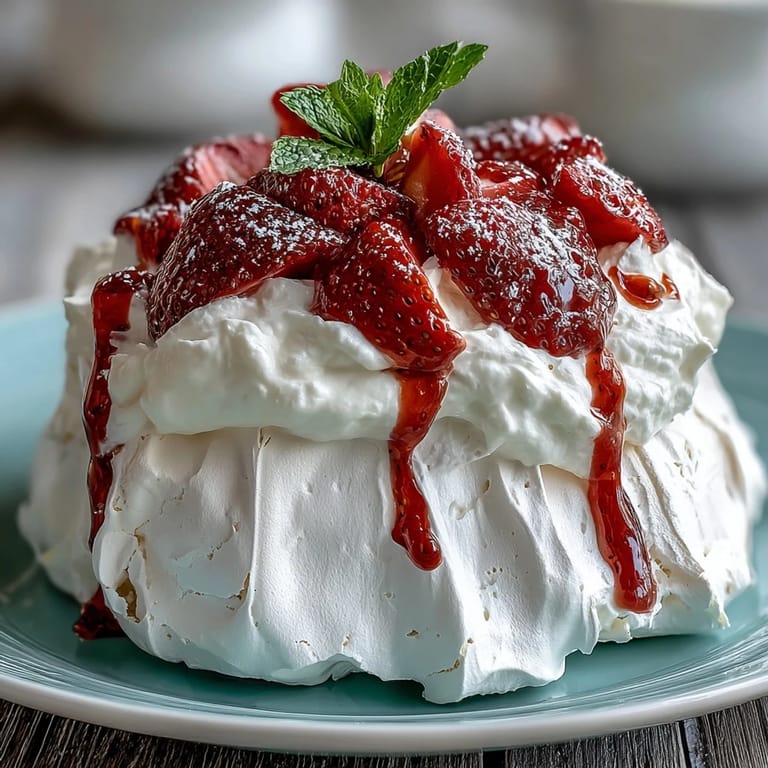
Save These little pavlovas remind me that sometimes the most impressive things come from understanding a few simple principles rather than mastering complicated techniques. Make them whenever you want people to feel special without telling them how much effort—or honestly, how little effort—went into making their dessert memorable.
Recipe FAQs
- → How do I achieve crisp meringue nests?
Bake the meringues at a low temperature of 250°F (120°C) for about an hour, then leave them to cool inside the oven with the door slightly ajar. This helps dry out the nests without browning.
- → Can I use other berries instead of strawberries?
Yes, you can substitute strawberries with other fresh berries or a berry mix to vary the flavors and colors.
- → How should the whipped cream be prepared for filling?
Whip cold heavy cream with powdered sugar and vanilla extract until soft peaks form for a billowy texture that contrasts nicely with the crisp meringue.
- → Is it possible to make these ahead of time?
The meringue nests can be prepared a day in advance and stored in an airtight container. Assemble with cream and berries just before serving to maintain texture.
- → What allergens are present in this dish?
The dish contains eggs and dairy products. It's gluten-free but always check ingredient labels if allergies are a concern.