 Save
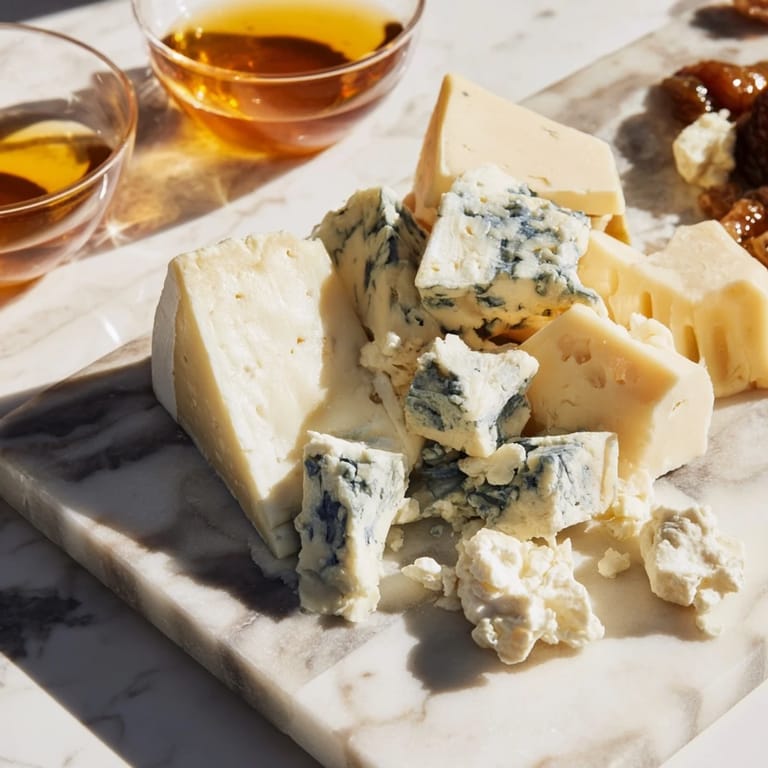
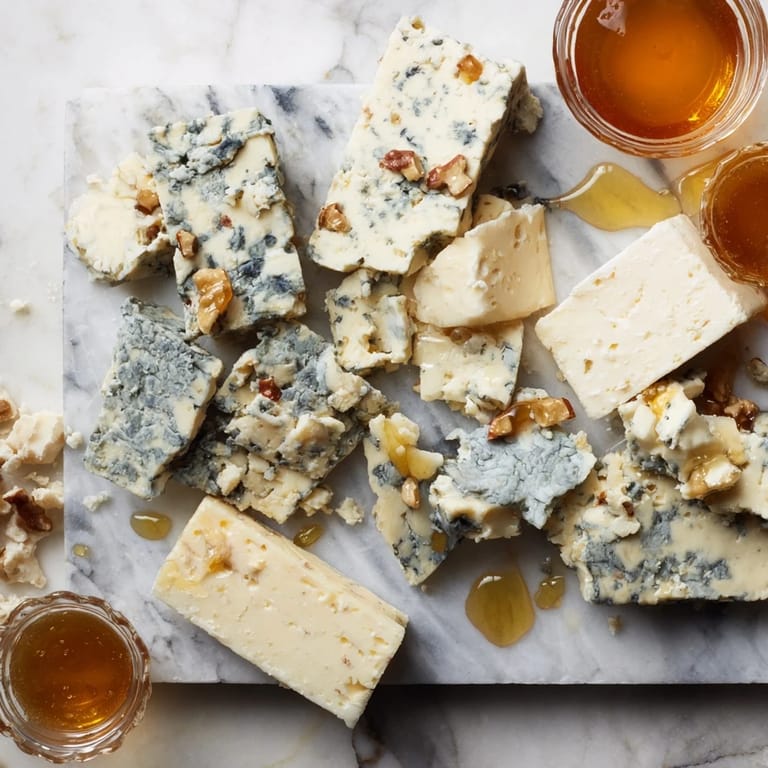
Save There's something about the weight of a piece of blue cheese on your tongue that demands respect. I discovered The Marble Quarry one evening when I realized I had these two beautiful blocks of cheese—one deeply veined and pungent, the other pale and sharp—sitting on my counter, and I wanted them to matter, to be seen. The marble slab my grandmother left me seemed like the obvious stage for this drama. What started as a simple arrangement became a meditation on contrast: the visual theatricality of irregular chunks scattered like a excavation site, the interplay of creamy and crystalline textures, the way the cool stone seemed to amplify the cheeses' personalities.
My friend Sarah arrived for wine one Thursday, and I'd thrown this together that afternoon almost as an afterthought. She stopped mid-sentence when she saw it—that moment when someone understands without words that you've put thought into the small details. We ended up sitting there longer than planned, talking and picking at the cheeses, the marble slab slowly warming between us, the flavors somehow deepening as it did.
Ingredients
- Blue cheese (Roquefort, Gorgonzola, or Stilton), 200g: Cut into large, uneven pieces that catch the light differently—the veining is part of the visual drama, and bigger chunks let you taste the funky complexity without overwhelming the palate.
- Aged white cheddar, 200g: Look for something with real bite and crystalline texture; the sharp minerality balances the blue's intensity and adds a textural contrast that makes each bite interesting.
- Fresh grapes or sliced pears (optional): These aren't just garnish—they're palate cleansers that make people want to come back for another piece of cheese.
- Crackers or crusty bread: Choose something sturdy enough not to crumble but neutral enough not to compete with the cheeses' personalities.
- Honey or fig jam (optional): A single drizzle creates these little moments of sweetness and richness that elevate the whole experience.
Tired of Takeout? 🥡
Get 10 meals you can make faster than delivery arrives. Seriously.
One email. No spam. Unsubscribe anytime.
Instructions
- Set the stage:
- Place your marble slab on the serving surface and take a moment to feel its cool weight. If you have time, chill it for twenty minutes—this keeps the cheeses firm and makes the whole thing feel intentional rather than rushed.
- Scatter with intention:
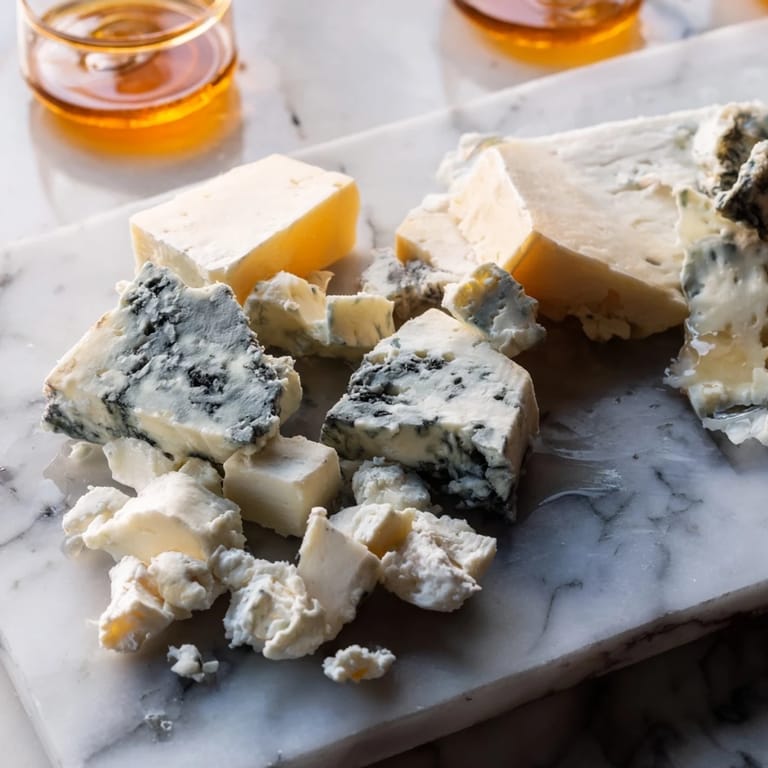
- Arrange your cheese chunks across the slab with deliberate spacing, as if you're mapping a landscape. Leave gaps between pieces so the white marble shows through; this is what creates that quarry effect, that sense of excavation and discovery.
- Add the supporting cast:
- Nestle grapes or pear slices among the cheeses and position small bowls of honey or jam where they'll catch light and invite people in. Think about the flow of the board—where will someone's hand reach first?
- Bring it to the table:
- Serve the slab with crackers and bread alongside, letting people compose their own bites rather than dictating them.
 Save
Save I realized one afternoon, watching people hover around this board at a gathering, that cheese stops being just sustenance when you present it as something worth pausing for. The arrangement, the negative space, the choice of stone—these details transform a simple assembly into a moment.
Why Contrast Creates Magic
The reason this works is the conversation between two very different cheeses. The blue is loud and demanding, with those dark veins and that funky, almost ammonia-like intensity that some people love immediately and others need time with. The white cheddar is quieter but persistent, offering a sharp, almost nutty backbone that doesn't retreat. Together they're like two strong personalities in a room—each makes the other more interesting.
The Power of Negative Space
There's a temptation to pack a board completely, to make sure every inch is covered. I learned the hard way that restraint is what makes this actually work. The empty marble between chunks isn't wasted space—it's what makes you see the cheese clearly and lets your eye rest. It also makes people slower down and actually taste instead of just picking mindlessly.
Scaling and Customization
This board works beautifully for six people, but you can easily adjust the amounts based on your crowd or mix in a third cheese if you want to deepen the complexity. A golden washed-rind cheese like Taleggio adds warmth, or creamy goat cheese gives you a completely different textural journey. The marble slab is really the anchor here; everything else is flexible.
- For a smaller gathering, cut quantities in half but keep the same arrangement philosophy—scale down the spacing, not the drama.
- If you're adding a third cheese, choose one that contrasts in both color and texture, and limit yourself to three total so the board doesn't become a cacophony.
- Always taste your cheeses a few hours before guests arrive so you can anticipate how they'll perform temperature-wise and pair them intentionally with crackers.
 Save
Save The Marble Quarry isn't really a recipe—it's an argument for treating simple ingredients with visual and sensory care. When you do that, even a cheese board becomes memorable.
Recipe FAQs
- → What cheeses work best for this marble slab display?
Large chunks of blue cheese and aged white cheddar create a striking contrast in color and flavor, perfect for this presentation.
- → Can I add other accompaniments?
Yes, fresh grapes, sliced pears, honey or fig jam, and assorted crackers enhance both the visual appeal and flavor variety.
- → Why use a marble slab for serving?
Marble keeps cheeses cool, helping maintain texture and flavor while providing an elegant surface that highlights the cheeses' colors.
- → How should I cut the cheeses?
Cut cheeses into large, irregular chunks to create a natural, quarry-like effect that is visually engaging.
- → Is chilling the marble slab necessary?
Chilling the marble slab before arranging the cheeses helps keep them cool and fresh during serving.