 Save
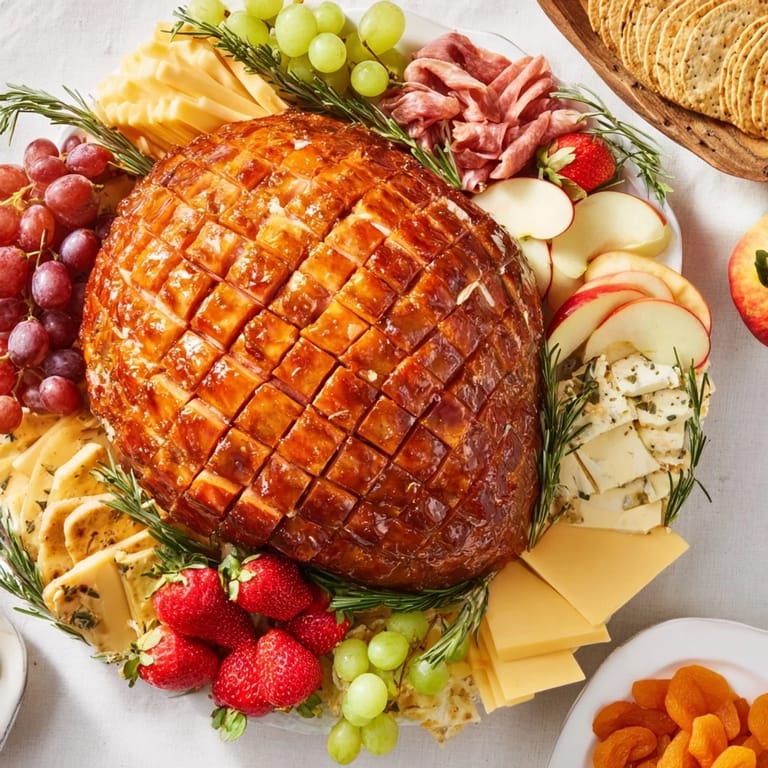
Save I still remember the first time I created a glazed ham board for a holiday gathering—it was that moment when I realized entertaining didn't have to mean slaving away in the kitchen all day. I'd spent the morning caramelizing a beautiful ham with a sticky brown sugar glaze, and by afternoon, I was arranging cheeses, fruits, and breads around it like I was designing edible art. Watching guests circle that board, building their own perfect bites with aged cheddar, fresh strawberries, and slices of that glossy ham, I understood that sometimes the most memorable meals aren't about complexity—they're about creating a moment where everyone feels welcomed and celebrated.
The first time someone told me this board reminded them of a fancy restaurant spread, I felt like I'd cracked some secret code. That's when I knew this wasn't just dinner—it was about creating an experience where every element, from the glistening ham to the jewel-like grapes, made people feel special.
Ingredients
- Boneless ham (3-4 lbs): The star of your show—choose one that feels substantial enough to feed a crowd but still glazes beautifully. I've learned that a good ham needs those 1.5 hours in the oven to develop that caramelized exterior that catches everyone's eye.
- Brown sugar: This creates the base of your glaze, giving you that deep, molasses-forward sweetness that balances the salt of the ham.
- Honey: Adds glossiness and a subtle floral note that prevents the glaze from becoming one-note sweet.
- Dijon mustard: The secret ingredient that nobody guesses but everyone tastes—it adds tang and complexity that makes people wonder what makes this ham different.
- Apple cider vinegar: A few tablespoons is all it takes to brighten everything, cutting through the richness like a friend keeping you honest.
- Ground cloves (optional but encouraged): If you use them, they whisper rather than shout, adding a warmth that feels like home.
- Aged cheddar, brie, blue cheese, and gouda: These cheeses create a flavor journey—sharp, creamy, bold, and smooth—so every bite is different. Choose them with your hands; if the brie gives slightly, it's ready.
- Fresh grapes, strawberries, apple slices, cherry tomatoes, cucumbers, and dried apricots: The fresh fruits and vegetables are your color palette and your palate cleanser. The dried apricots add chewiness and a concentrated sweetness.
- Baguette, assorted crackers, and breadsticks: These are the vehicles for everything else—choose crackers you'd actually want to eat on their own, because someone definitely will.
- Whole grain mustard, fig jam, olives, cornichons, and roasted nuts: These are your flavor punctuation marks. Each one adds a complete thought to the conversation.
- Fresh rosemary and thyme: Scatter these around the board like you're cooking with intention, which you are.
Tired of Takeout? 🥡
Get 10 meals you can make faster than delivery arrives. Seriously.
One email. No spam. Unsubscribe anytime.
Instructions
- Preheat and prepare your glaze:
- Get your oven to 350°F—this moderate temperature lets the ham heat through gently without the outside burning before the inside warms. In a small saucepan, combine the brown sugar, honey, Dijon mustard, apple cider vinegar, and cloves if you're using them. Heat it gently, stirring occasionally, until the sugar dissolves completely and the mixture becomes syrupy and glossy. You'll know it's right when it coats the back of a spoon and smells like caramel kissed with mustard.
- Score and glaze your ham:
- Place your ham in a roasting pan and, using a sharp knife, score the surface in a diamond pattern—not too deep, just enough to create a network for the glaze to settle into. Brush that beautiful glaze generously all over the ham, getting into every scored line. This is where the magic happens: as it roasts, the glaze will caramelize and create this burnished, sticky exterior that catches the light.
- Roast with love and attention:
- Pop it into the oven and set a timer for 20 minutes. When it goes off, pull the ham out, baste it with those pan drippings mixed with more glaze, and return it to the oven. Repeat this every 20 minutes for the next 1 to 1.5 hours. You're not just cooking; you're building layers of flavor and color. The ham is done when it's heated through and the exterior is deeply caramelized—almost mahogany colored.
- Let it rest and then shape:
- Remove the ham from the oven and let it rest for 15 minutes. This allows the juices to settle and makes slicing cleaner. You can slice it into neat rounds, or if you're feeling fancy, use a knife to gently curl slices into roses. Both are stunning; choose whichever feels right for your crowd.
- Arrange your board like you mean it:
- Use a large wooden board or platter as your canvas. Place the glazed ham or your beautiful ham roses at the center. Then, radiating outward, arrange your cheeses in their own section, fruits in theirs, and so on. Keep similar items together—this isn't chaotic; it's organized abundance. The goal is visual harmony with enough variety that every reach feels exciting.
- Finish with intention:
- Once everything is arranged, scatter fresh rosemary and thyme sprigs around the board. They add aroma, beauty, and a reminder that you put thought into this. Serve immediately while the ham is still warm and the board is at its peak of inviting beauty.
 Save
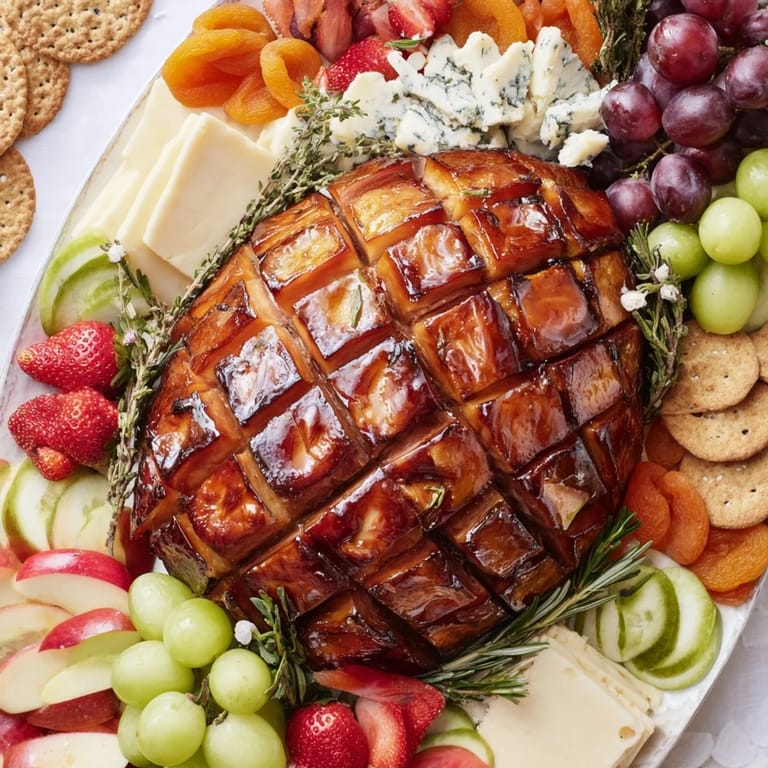
Save I'll never forget watching my grandmother's face when she saw this board for the first time. She was a woman who'd fed crowds for fifty years, and she got tears in her eyes because she said it looked like love arranged on a board. That's when I realized this recipe is really about gathering people and saying without words: you matter, and I want you to feel celebrated at my table.
Building the Perfect Board
The secret to a board that looks like it belongs in a magazine is thinking about color, texture, and balance. I've found that if you look at your board and see clumps of the same color, rearrange until your eye travels happily across the landscape. A pile of dark olives next to blue cheese next to dark bread can disappear visually—break it up with something bright. Think of it like dressing; you wouldn't wear all black with all black shoes. The same principle applies here. The red grapes next to the aged cheddar, the pale brie next to the dark bread—these combinations create visual interest that makes people want to eat with their eyes first.
Timing and Make-Ahead Magic
One of the greatest gifts this recipe gives you is flexibility. You can prepare components a full day ahead: slice your cheeses, wash and dry your fruits, arrange your crackers in a container. On the day of, all you need to do is glaze and roast the ham—about two hours of active cooking time, most of which is hands-off while the oven works. I slice my apples just before serving to prevent browning, and I arrange everything on the board about 30 minutes before guests arrive. This gives me time to take a breath, change my shirt if needed, and greet people without feeling rushed. The board stays fresh and beautiful for several hours, so there's no pressure to serve immediately.
Pairing and Serving
This board is forgiving and pairs beautifully with almost any beverage you'd serve at a celebration. Sparkling wine cuts through the richness of the cheese and ham with elegance. A dry cider echoes the apple notes in the glaze. Even a light-bodied red wine feels right alongside it. For non-alcoholic options, sparkling apple cider or a good ginger ale work wonderfully. I've learned to set out small plates and cocktail napkins—people want to eat this, and they want to do it gracefully. A few small forks scattered around help with the cheeses and pickles, but mostly, this is finger food that brings people together around a table.
- Chill your board in the freezer for 15 minutes before arranging if it's a warm day; this keeps cheeses firmer longer
- Place a small bowl of extra glaze on the side for anyone who wants to brush more on their ham slice
- Let cheeses sit out for 10 minutes before serving so the flavors truly shine instead of tasting muted and cold
 Save
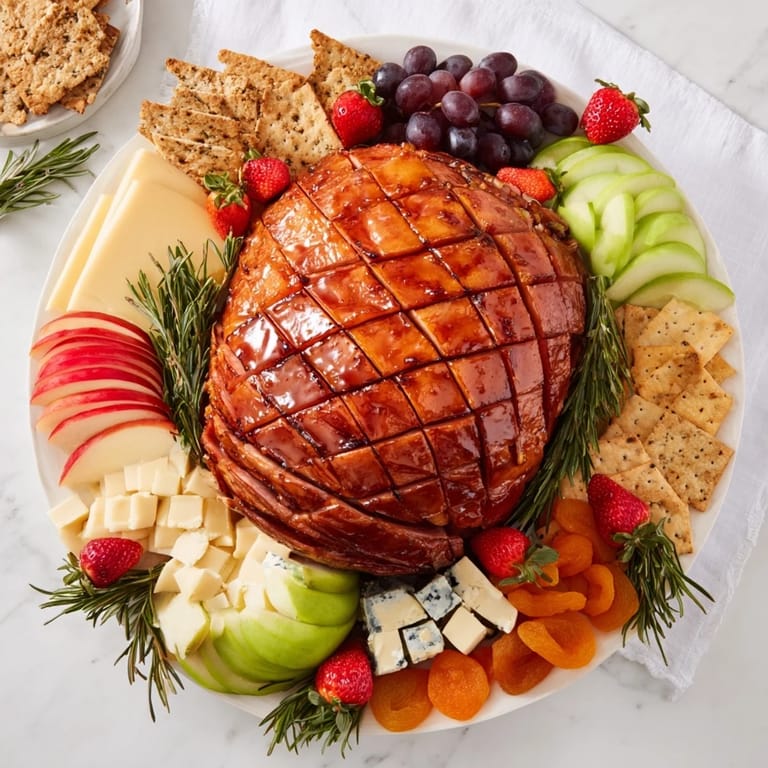
Save Entertaining is really just about gathering people you care about and making sure they feel welcomed. This glazed ham board does that effortlessly, looking like you spent all day cooking when really you just spent two hours with a beautiful ham in the oven and fifteen minutes arranging magic on a board.
Recipe FAQs
- → How do I make the glaze for the ham?
Combine brown sugar, honey, Dijon mustard, apple cider vinegar, and ground cloves in a saucepan. Heat gently until the sugar dissolves and the mixture turns syrupy.
- → What is the best way to roast the ham?
Preheat oven to 350°F (175°C), score the ham surface, brush with glaze, and roast for 1 to 1.5 hours, basting every 20 minutes for a caramelized finish.
- → How should I arrange the board for visual appeal?
Place the glazed ham or slices at the center, then arrange cheeses, fruits, vegetables, breads, and accompaniments evenly around to create a balanced, inviting presentation.
- → Can I substitute ingredients for dietary preferences?
Yes, turkey ham can replace pork ham, and adding pickled vegetables or deviled eggs provides variety while accommodating different diets.
- → What drinks pair well with this spread?
Sparkling wine, dry cider, or a light-bodied red wine complement the sweet and savory flavors of the glazed ham and accompaniments.