 Save
Save There was a Thursday evening when my kitchen felt too quiet, the kind of night where the radiator clanked and outside the window, the first real snow was falling. I'd been craving something warm but didn't want to fuss, so I opened the pantry and found potatoes, onions, and cream looking back at me like they'd been waiting for exactly this moment. Within an hour, my small apartment smelled like butter and earth, and somehow that simple soup became the thing I reached for every cold night after.
I made this for my neighbor one January when she'd just moved in, and watching her face light up as she tasted it reminded me that sometimes the most meaningful meals are the quietest ones. She asked for the recipe that night, and we've been trading soups ever since.
Ingredients
- Russet potatoes (900 g or 2 lbs), peeled and diced: These older potatoes have high starch content, which gives the soup its naturally creamy texture when blended, so resist the urge to use waxy varieties.
- Yellow onion (1 medium), chopped: The sweetness develops as it softens, becoming the aromatic backbone of everything that follows.
- Celery stalks (2), chopped: They contribute subtle depth that makes people pause and ask what that flavor is.
- Garlic (2 cloves), minced: Add this when the onions and celery are already softened, otherwise it can turn bitter.
- Carrot (1 medium), peeled and chopped: A touch of natural sweetness that balances the earthiness of potatoes.
- Vegetable or chicken broth (1 L or 4 cups): Use homemade if you have it, but a good store bought broth works just fine and saves you hours.
- Whole milk (240 ml or 1 cup): This prevents the soup from becoming too rich, adding body without heaviness.
- Heavy cream (120 ml or ½ cup): Whisper thin if you want, pour generously if you don't; it's your bowl.
- Unsalted butter (2 tbsp): It carries flavor in a way oil never quite manages.
- Salt (1 tsp) and freshly ground black pepper (½ tsp): Taste as you go because broth brands vary wildly in their saltiness.
- Ground nutmeg (¼ tsp, optional): Just a whisper of this spice elevates potato soup from everyday to memorable.
Tired of Takeout? 🥡
Get 10 meals you can make faster than delivery arrives. Seriously.
One email. No spam. Unsubscribe anytime.
Instructions
- Soften the aromatics:
- Melt butter in your pot over medium heat and add onions, celery, carrot, and garlic. You're looking for the vegetables to turn translucent and smell sweet, which takes about 5 to 7 minutes. Open a window if you want to fill your home with that golden aroma.
- Build the base:
- Add the diced potatoes along with broth, salt, pepper, and nutmeg if you're using it. Bring everything to a boil, then lower the heat and let it simmer uncovered for about 20 minutes until the potatoes are so tender a fork collapses through them.
- Blend to silky smoothness:
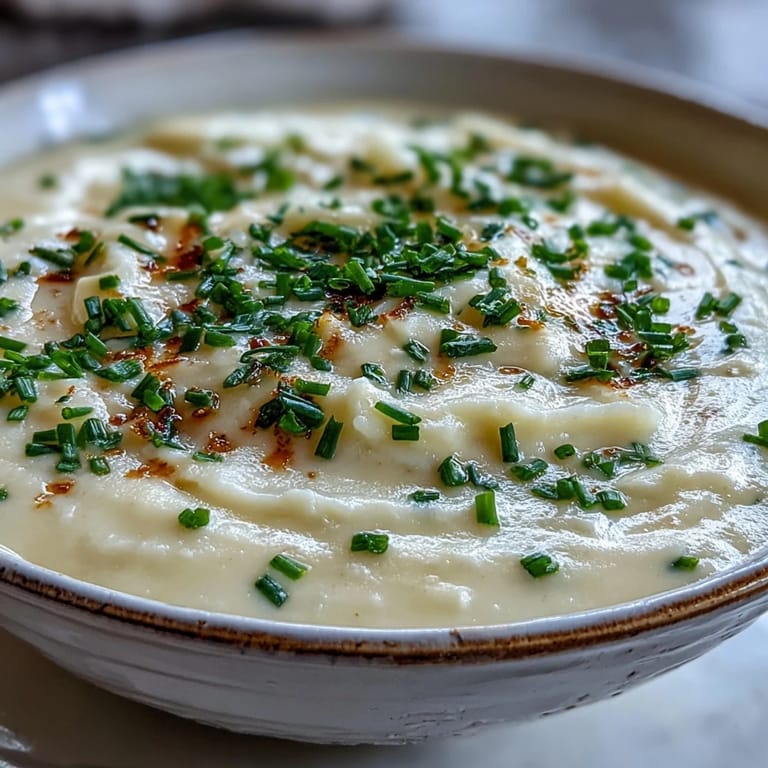
- Take the pot off the heat and use an immersion blender to puree the soup until it's velvety. If you prefer texture, leave some chunks; the soup doesn't care about your choices here.
- Finish with cream:
- Stir in the milk and heavy cream, then gently warm the pot over low heat, stirring now and then. Never let it boil once the dairy goes in, or you'll end up with a grainy, disappointed soup.
- Taste and serve:
- Season once more if needed, then ladle into bowls and add whatever garnish speaks to you today.
 Save
Save My grandmother taught me that soup is the thing you make when you want to say something without words, and this particular one has become my love language for friends going through quiet seasons. There's something about a warm bowl that does more listening than talking ever could.
On Texture and Preference
Some people want their soup so smooth it coats the spoon like silk, while others prefer to feel the potato pieces and texture. You're in control here, so blend as much or as little as your mood requires. I've learned that adding a pinch more nutmeg makes even a slightly-too-thick soup feel intentional rather than regretted.
Customizing Your Soup
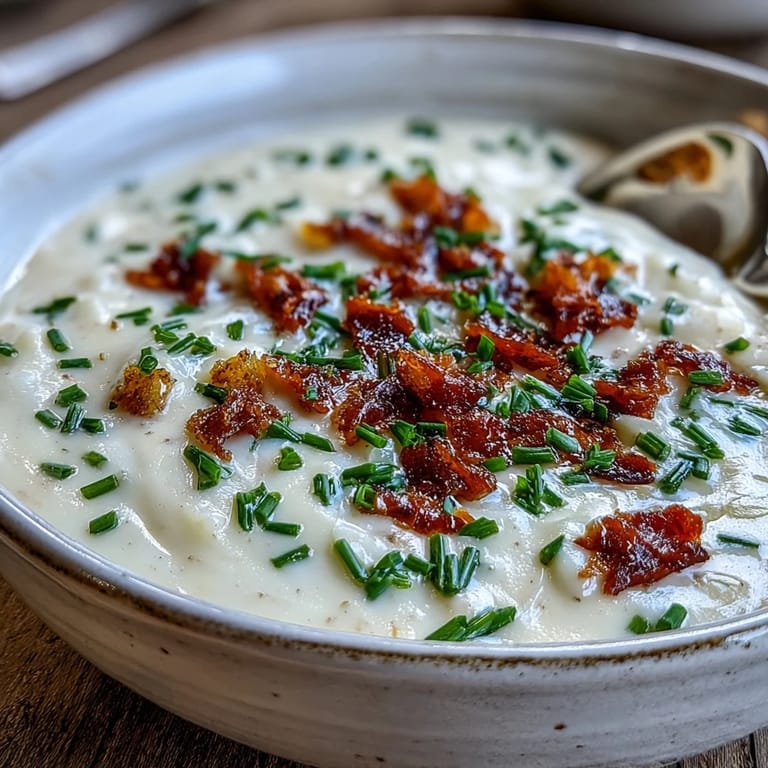
This soup is wonderfully forgiving about additions and substitutions. I've added fresh thyme, a handful of kale toward the end, crispy bacon for texture, or even a splash of white wine to deepen things. The vegan version with plant-based cream and butter works beautifully too, and honestly, many people can't taste the difference.
Storage and Leftovers
This soup keeps in the refrigerator for about four days and freezes wonderfully for up to three months, though I tend to eat it before it gets that far. When reheating, warm gently over low heat with a splash of extra broth if it's thickened up in storage.
- Freeze soup in individual portions using ice cube trays, then pop cubes into freezer bags for grab-and-go meals.
- Leftovers transform into a creamy potato gratin or shepherd's pie base when you add cheese and breadcrumbs on top.
- A thin slice of crusty bread does more for this soup than any fancy garnish ever could.
 Save
Save There's an old comfort in a bowl of potato soup that asks nothing of you except to sit for a moment and let it warm you from the inside. Make it once, and you'll find yourself making it again.
Recipe FAQs
- → Can I freeze this creamy potato soup?
Freezing may cause the dairy to separate slightly upon reheating. For best results, freeze the soup before adding milk and cream, then stir in fresh dairy when reheating.
- → What potatoes work best for smooth soup?
Russet or Yukon Gold potatoes are ideal. Their high starch content creates a naturally creamy texture when blended, resulting in velvety smooth results.
- → How can I make this soup vegan?
Replace butter with plant-based alternative, swap whole milk for unsweetened almond or oat milk, and use coconut cream or cashew cream instead of heavy cream.
- → Why add nutmeg to potato soup?
A pinch of nutmeg enhances the earthy potato flavor and adds subtle warmth that complements the cream. It's a classic French technique for creamy soups.
- → Can I make this soup chunky instead of smooth?
Absolutely. Simply skip blending or puree only half the mixture for a chunky texture. You can also mash some potatoes against the pot side for rustic texture.
- → What should I serve with potato soup?
Crusty bread, dinner rolls, or oyster crackers are classic accompaniments. A simple green salad with vinaigrette balances the richness beautifully.