 Save
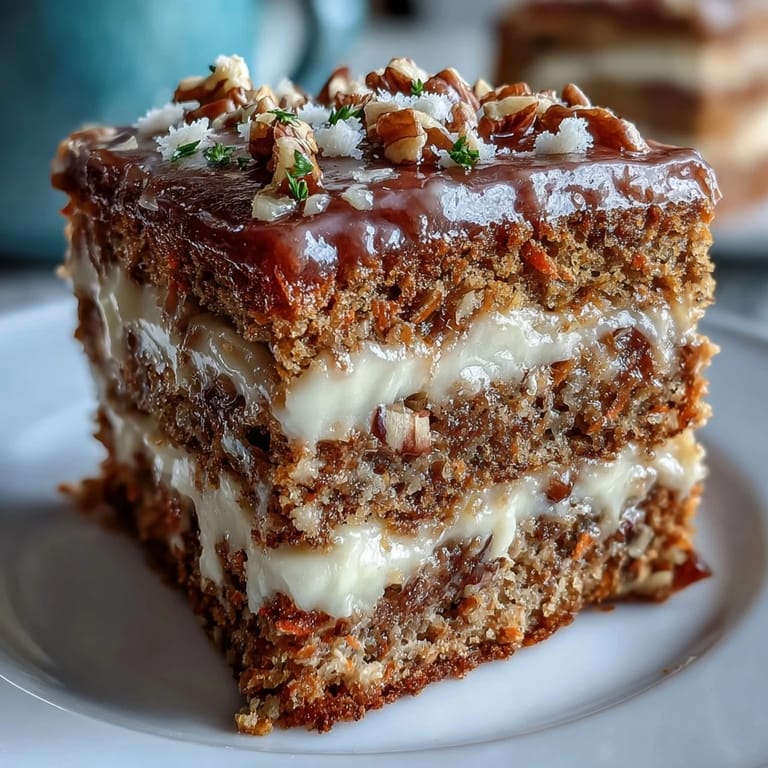
Save My neighbor knocked on my door one April morning with a bunch of fresh carrots from her garden, still wearing bits of soil, and asked if I could do something special with them for her daughter's birthday party. I'd made carrot cake before, but nothing that felt worthy of those perfect vegetables and the trust she was placing in me. That's when I decided to build something in layers—literally and figuratively—creating a cake that would let those carrots shine while the spices whispered in the background. The result was this spring layer cake, and watching her daughter's face light up when we cut into those three moist, walnut-studded layers made me understand why people bake for moments that matter.
I made this cake for my book club once, and someone asked for the recipe before they'd even finished their slice. That moment—when someone wants to recreate something you've made—is when cooking stops feeling like a chore and starts feeling like a gift you can pass along. Now whenever spring arrives and the farmers market fills with fresh produce, I think about that afternoon and how a simple cake can become a memory.
Ingredients
- All-purpose flour (2 1/2 cups): The foundation that holds everything together; make sure it's fresh because old flour absorbs moisture differently and can throw off your cake's texture.
- Baking powder and baking soda (2 tsp and 1 1/2 tsp): This combination creates lift without relying solely on eggs, giving you a tender crumb that stays moist for days.
- Ground cinnamon, nutmeg, and ginger (1 tsp, 1/2 tsp, and 1/2 tsp): These three spices are the secret language of carrot cake; don't skip the ginger because it adds a subtle warmth that makes people wonder what makes this cake different.
- Eggs (4 large, room temperature): Room temperature eggs incorporate more smoothly into your batter and create a more cohesive structure.
- Granulated and brown sugar (1 1/2 cups and 1/2 cup): The brown sugar adds molasses depth while granulated sugar provides structure; together they create balanced sweetness.
- Vegetable oil (1 cup): Oil keeps this cake tender and moist far longer than butter alone would, and it distributes evenly throughout the batter.
- Unsweetened applesauce (1/2 cup): This is the moisture secret that lets you use less oil while maintaining that signature tender crumb.
- Vanilla extract (2 tsp): Use real vanilla because the flavor matters in a cake this delicate.
- Finely grated carrots (3 cups): Grate them just before mixing so they stay bright and fresh; don't squeeze out the liquid because you need that moisture in your batter.
- Chopped walnuts (1 cup): Toast them lightly first if you have time—it deepens their flavor and makes them taste less like an afterthought and more like an intention.
- Cream cheese (16 oz, softened): Cold cream cheese will fight you during mixing, so let it sit on the counter for at least an hour before you start.
- Unsalted butter (1/2 cup, softened): Softened butter blends with cream cheese to create a frosting that's spreadable but stable, unlike all-cream-cheese frosting which can be temperamental.
- Powdered sugar (4 cups, sifted): Sifting removes lumps and helps you avoid overbeating, which can make frosting grainy and separated.
Tired of Takeout? 🥡
Get 10 meals you can make faster than delivery arrives. Seriously.
One email. No spam. Unsubscribe anytime.
Instructions
- Prepare your pans:
- Preheat your oven to 350°F and grease three 8-inch round pans thoroughly with butter or cooking spray, then line the bottoms with parchment paper cut to fit. This double insurance means your cakes won't stick to the sides or bottom, and you'll actually be able to turn them out without prayers or frustration.
- Mix your dry ingredients:
- In a medium bowl, whisk together flour, baking powder, baking soda, cinnamon, nutmeg, ginger, and salt until everything is evenly distributed and looks like sandy flour. This prevents lumps and ensures your spices are balanced throughout the cake rather than clumped in one spot.
- Cream your eggs and sugars:
- In a large bowl, beat eggs with both sugars until the mixture is noticeably lighter in color and slightly thickened—this usually takes 3 to 4 minutes with an electric mixer. You're incorporating air and dissolving sugar granules, which helps create a tender cake structure.
- Add your wet ingredients:
- Pour in the oil, applesauce, and vanilla, mixing until everything is smooth and combined with no streaks of oil or applesauce remaining. The applesauce won't fully blend at first, but keep mixing gently until it's integrated throughout.
- Fold in the dry ingredients:
- Add the flour mixture to the wet ingredients in two additions, stirring with a spatula just until combined after each addition—don't use the electric mixer for this step. Overmixing develops gluten, which makes cake tough instead of tender, so stop mixing the moment you don't see dry flour anymore.
- Fold in carrots and walnuts:
- Gently fold the grated carrots and chopped walnuts into the batter using a spatula, turning the bowl and using a scooping motion rather than stirring, until they're evenly distributed. The carrots add moisture and texture, while the walnuts give you little bursts of nutty flavor in every bite.
- Divide and bake:
- Spoon the batter evenly among your three prepared pans and smooth the tops with a spatula so they bake evenly. Bake for 30 to 35 minutes, until a toothpick inserted in the center comes out clean with just a few moist crumbs clinging to it; if you see wet batter, give it another 2 to 3 minutes.
- Cool the layers:
- Let the cakes cool in their pans for 10 minutes—this gives them time to set enough to handle without falling apart. Then turn them out onto wire racks and let them cool completely to room temperature, which usually takes about 2 hours; you can speed this up by placing racks in front of a fan.
- Make the frosting:
- Beat softened cream cheese and butter together until smooth and creamy, then gradually add the sifted powdered sugar a cup at a time, beating on low speed between additions to avoid sending sugar clouds everywhere. Once all the sugar is incorporated, add vanilla and salt, then beat on medium speed for about a minute until the frosting is light and fluffy.
- Level and layer:
- If your cake layers have domed tops, use a serrated knife to level them so you have flat surfaces for stacking, then place the first layer on your serving plate and spread a generous layer of frosting over the top. Repeat with the second and third layers, then frost the top and sides of the entire cake with frosting, creating swirls and texture if that makes you happy.
- Decorate and chill:
- Sprinkle extra chopped walnuts over the top and sides, and add edible flowers or carrot curls if you want something that looks intentional and beautiful. Refrigerate the finished cake for at least an hour before serving so the frosting sets and the layers have time to settle together.
 Save
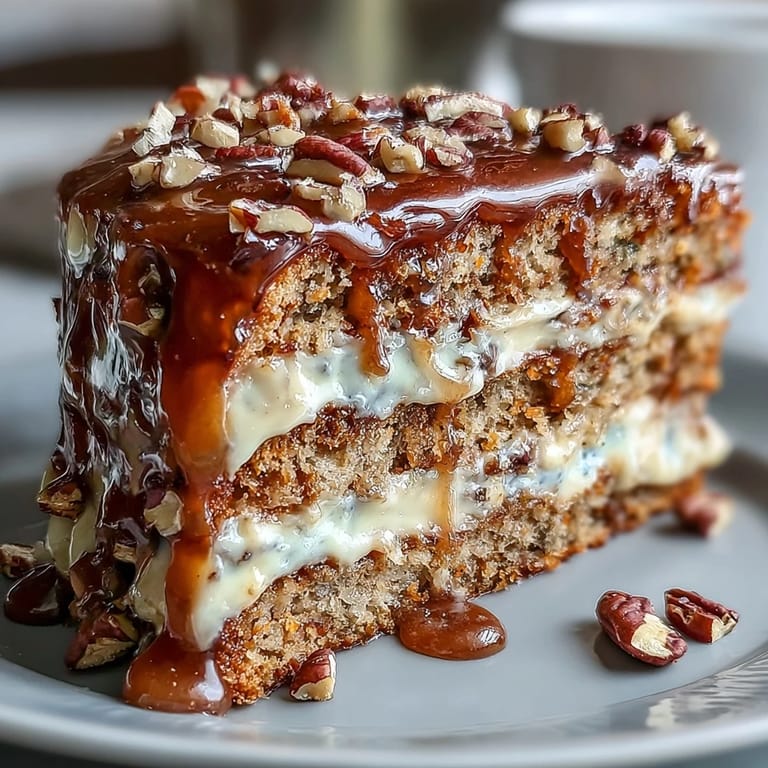
Save Years later, that neighbor's daughter came home from college and asked me to make this cake for her welcome-back dinner, which meant I got to see how a simple recipe had become part of her family's celebrations. That's when I realized baking isn't just about following steps—it's about creating something that tastes like care tastes like being remembered.
Why Carrots Make Better Spring Cake Than You'd Think
Carrots aren't a hiding place for vegetables in dessert; they're actually bringing real flavor and moisture to the table. Their natural sweetness means you don't need as much sugar as you would in a regular layer cake, and that finely grated texture dissolves into the crumb so completely that you get flavor without texture interruption. I used to think carrot cake was a clever way to sneak health into dessert, but once I tasted a really good one, I understood it was just a delicious cake that happened to contain carrots. The spices amplify the carrots' natural earthiness, creating something that tastes like spring feels—warm, alive, and ready for celebration.
The Frosting Matters More Than You Think
The difference between good cream cheese frosting and mediocre frosting is usually in the ratio of cream cheese to butter and in how much you beat it. All cream cheese frosting breaks if you overmix it, but butter stabilizes it and lets you beat it until it's light and fluffy instead of dense and heavy. I learned this after making a frosting that looked separated and grainy because I beat it too aggressively, and now I always add the butter as a buffer. The tanginess of the cream cheese balances the sweetness of the cake perfectly, and if you're the kind of person who thinks frosting matters, this cake will confirm everything you've ever believed.
Making This Cake Your Own
Once you've made this cake once, you'll start imagining variations, and that's exactly when baking gets fun. Some people add crushed pineapple or raisins to the batter for extra moisture and sweetness, while others swear by a splash of rum in the frosting. I've added walnuts to the frosting itself before, creating a nutty thickness that some people loved and others found overwhelming, so trust your own taste and adjust accordingly.
- Raisins or chopped dried pineapple can be folded into the batter along with the carrots to add pockets of sweetness and chewiness.
- A pinch of cardamom added to the spice mix creates an unexpected flavor that feels very grown-up and sophisticated.
- If you want to make this cake in two layers instead of three, just increase the baking time by 5 to 10 minutes and watch for doneness carefully.
 Save
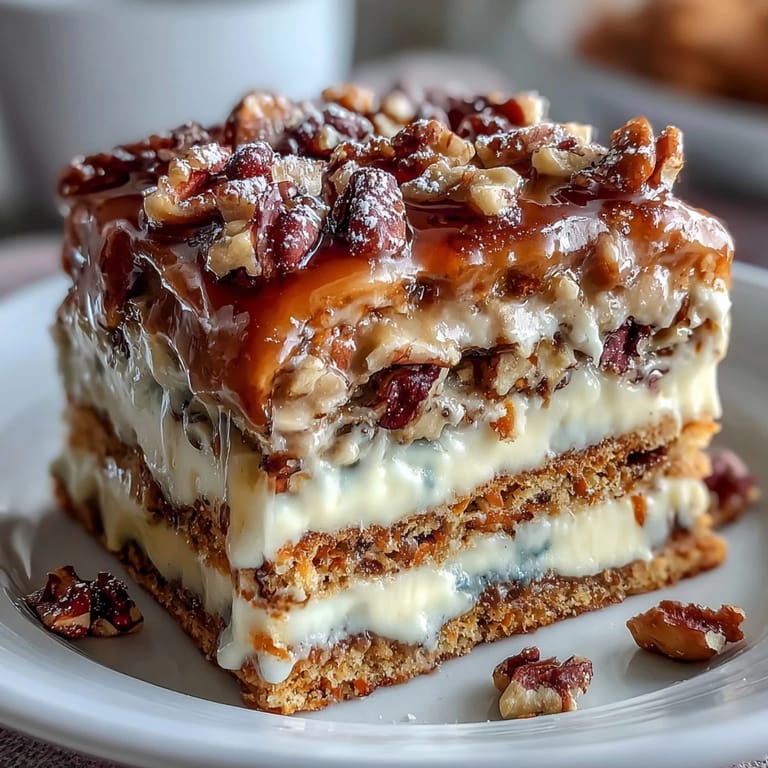
Save This cake has become my answer to spring gatherings, teacher appreciation, and moments when someone needs to feel celebrated. Bake it once and it becomes yours—a recipe that tastes like home the first time you make it.
Recipe FAQs
- → What spices enhance the flavor of this cake?
Cinnamon, nutmeg, and ginger provide warm and aromatic notes, enhancing the cake's depth.
- → How are the walnuts incorporated into the layers?
Chopped walnuts are folded into the batter for crunch and also used as decoration between and atop the layers.
- → Can this cake be made ahead of time?
Yes, it can be prepared a day in advance and refrigerated; bring to room temperature before serving.
- → What frosting technique is used?
A smooth cream cheese frosting is spread evenly between each layer and around the sides for a creamy finish.
- → Are there any suggested beverage pairings?
This layered cake pairs well with lightly sweet Riesling wine or a warm chai tea.