 Save
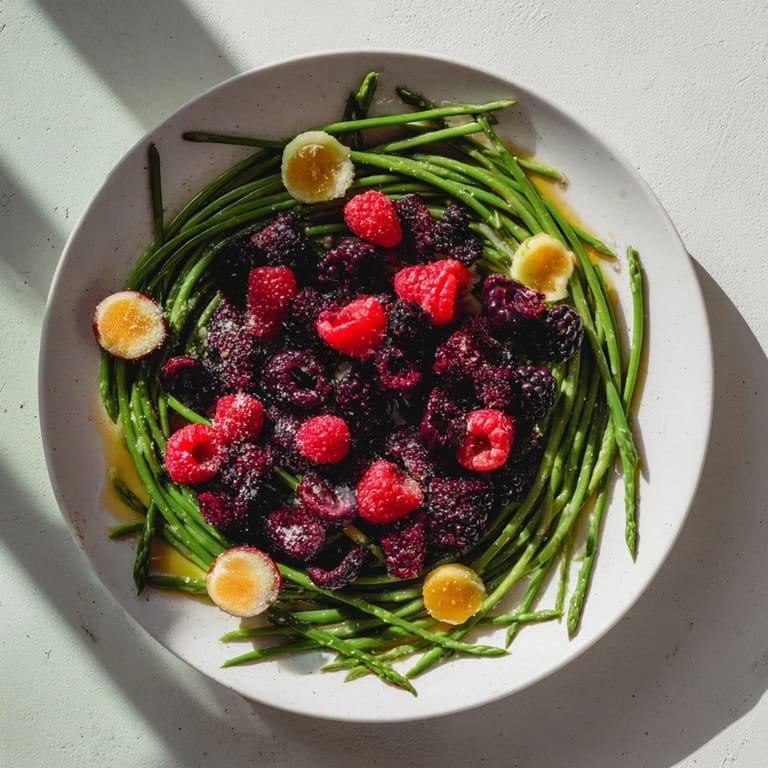
Save The first time I tried arranging vegetables like a puzzle, I was stressed about impressing guests at a spring dinner party. My hands were shaking a little as I laid out those asparagus stalks, worried the whole thing would collapse the moment someone looked at it funny. But then something clicked—it felt less like cooking and more like creating something that belonged in a gallery, except you could actually eat it. That's when I understood why this dish has stayed in my rotation ever since.
I remember my neighbor peering over my shoulder as I was tying those chive knots, completely mesmerized by the geometry of it all. She asked if I'd learned it from some fancy culinary school, and I had to laugh—it was born from an afternoon when I had beautiful vegetables and decided to just... play with them. Her amazement made me realize that sometimes the most impressive dishes come from simple curiosity and not overthinking.
Ingredients
- Asparagus stalks: Choose medium-thickness ones so they're flexible enough to weave but sturdy enough to hold their shape; pencil-thin stalks will snap, and thick ones are harder to work with.
- Fresh chives: Their flexibility when briefly softened makes them the perfect edible twine—I've tried string before and it just felt wrong.
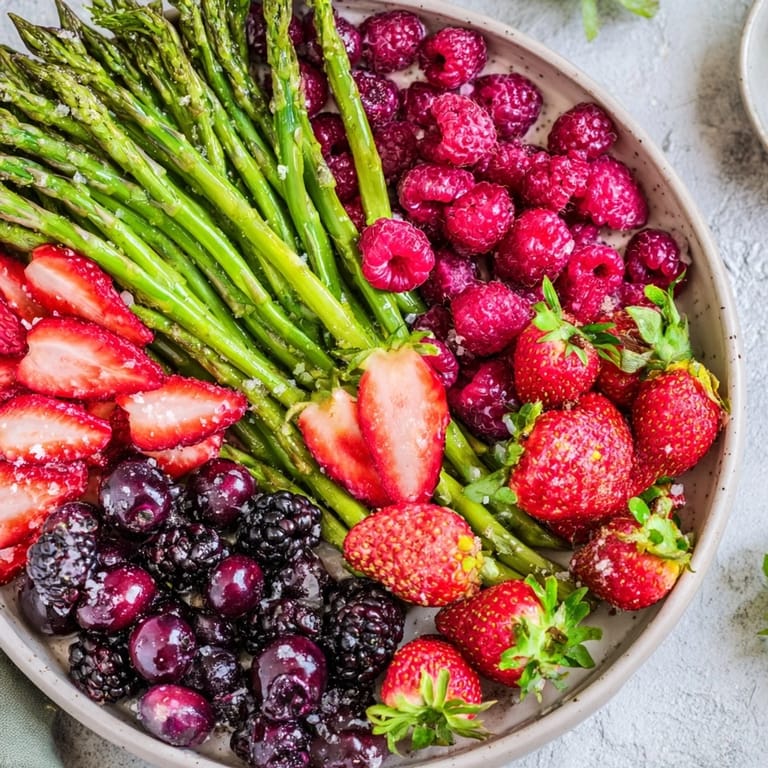
- Mixed berries: The variety of colors and textures is half the charm, but more importantly, each type brings different flavor notes that keep things interesting.
- Extra virgin olive oil: A good quality oil here actually matters because it's one of the few ingredients you taste directly; don't use the cheap stuff.
- Flaky sea salt: The crystals catch light and add visual texture, plus they don't dissolve into the vegetables the way fine salt does.
Tired of Takeout? 🥡
Get 10 meals you can make faster than delivery arrives. Seriously.
One email. No spam. Unsubscribe anytime.
Instructions
- Blanch the asparagus until it snaps back:
- Drop those stalks into boiling salted water and watch them go from dull to almost neon green—that's your signal they're done, usually around 90 seconds. The ice bath stops the cooking instantly and locks in that perfect tender-crisp texture that makes this whole dish work.
- Soften the chives gently:
- A quick dip in hot water makes them pliable without turning them into mush; you want them to bend, not break. Let them cool completely before you touch them or they'll snap.
- Weave the lattice with intention:
- Space your first layer of asparagus evenly on your platter, then weave the perpendicular stalks over and under like you're creating a checkerboard. It takes patience but the result is worth every second.
- Tie the intersections with chive stems:
- Gentle tension is all you need here—think of it like tying a shoelace, not strangling it. The chives add both function and a beautiful pop of green at each crossing point.
- Nestle the berries into their pockets:
- Fill each square with a mix of berries so there's color variation across the whole lattice. This is where you can get creative and make it visually your own.
- Finish with oil, salt, and pepper:
- Do this right before serving so the salt doesn't dissolve and the flavors stay bright. A light hand is everything here—you're enhancing, not drowning.
 Save
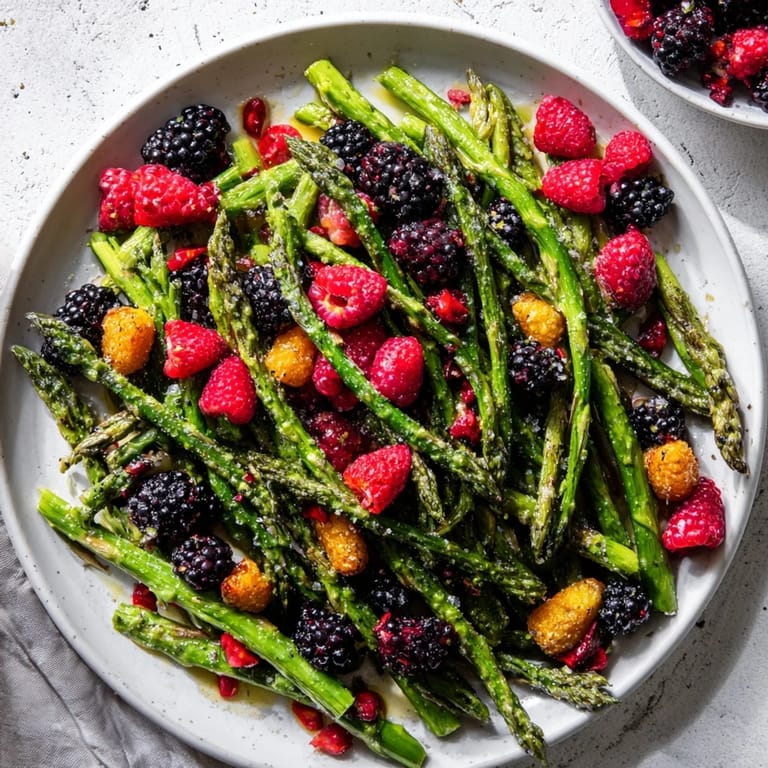
Save There was this moment at a brunch where someone I'd just met picked up one of these squares, tasted it, and their whole face lit up—not in an over-the-top way, but that quiet smile of genuine surprise. I realized then that a beautiful dish that also tastes good is its own kind of conversation starter.
The Geometry of Flavor
What makes this dish memorable isn't just the looks—it's how each element plays off the others. The sweetness of the berries cuts through the slight earthiness of the asparagus, while the chives add this delicate onion undertone that ties everything together. The peppery finish brings brightness without being spicy, and the olive oil coats your palate with something smooth and grounding.
Timing and Temperature
This dish sings when it's cold or at room temperature, which is part of why it works so well for spring gatherings. You can actually prep the lattice structure a few hours ahead and keep it covered in the fridge, then add the berries and final seasonings about 30 minutes before serving. The beauty of having some flexibility in timing is that you're not stressed in those final moments before guests arrive.
Variations Worth Trying
Once you've made this once, you'll start seeing possibilities everywhere. Green grapes instead of blueberries, pomegranate seeds scattered throughout, or even a light drizzle of aged balsamic if you want to go savory. Some nights I add microgreens or tiny leaves of mint for an herbaceous edge that feels fresh and unexpected. The core idea stays the same, but you're giving yourself permission to make it your own.
- Try blackberries or red currants if you want a tartness that plays differently against the asparagus.
- A whisper of honey drizzled at the last second adds richness without overwhelming the delicate balance.
- Serve it on a bed of arugula if you want to add another layer of texture and peppery depth.
 Save
Save This dish proved to me that food doesn't need to be complicated to be impressive, and sometimes the most memorable meals come from simple ingredients arranged with care. Keep making it, and someday someone will ask you how you came up with it.
Recipe FAQs
- → How do I prepare asparagus for the lattice?
Blanch the asparagus briefly in boiling salted water for 1-2 minutes until tender and bright green, then cool in an ice bath to stop cooking.
- → What is the best way to soften chive stems for weaving?
Dip chive stems in hot water for about 5 seconds, then immediately cool them in an ice bath to make them pliable.
- → Which fruits can be substituted in this dish?
Small, firm fruits like blackberries, red currants, or pomegranate seeds work well as alternatives to the berries listed.
- → How do I secure the lattice structure?
Use chive stems to gently tie the intersections of the asparagus stalks to hold the grid together firmly.
- → Can this dish be served warm?
It is best served chilled to maintain the crispness of the vegetables and the freshness of the fruit.