 Save
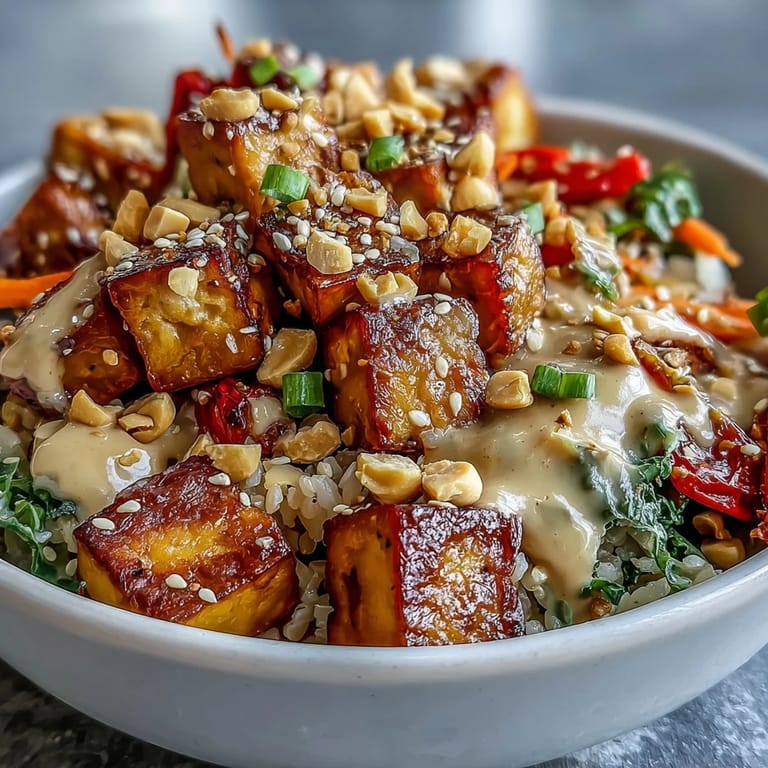
Save My friend Maya showed up at my door one Tuesday evening with a container of crispy tofu cubes and the announcement that she'd gone vegan. I was skeptical until she drizzled that peanut sauce over a bowl of grains and vegetables—the smell alone made me pause mid-eye-roll. That bowl somehow managed to be deeply satisfying without feeling like a compromise, and it's been in my regular rotation ever since.
I made this for a potluck where I was secretly the only vegan food option, and watching people go back for seconds—including my dad, who'd never tried tofu before—felt like a quiet victory. He called it addictive, which might be the highest compliment he's ever paid any vegetable-based dish.
Ingredients
- Extra-firm tofu, 400 g (14 oz), pressed and cubed: Pressing removes excess moisture so it crisps beautifully rather than steaming; I use a clean kitchen towel and let gravity do the work for fifteen minutes.
- Cornstarch, 2 tbsp: This is the secret to that crispy exterior—it creates a delicate crust that doesn't require deep frying.
- Olive oil, 2 tbsp: Keeps the tofu from sticking and contributes to that golden finish.
- Brown rice or quinoa, 200 g (1 cup) uncooked: Choose based on texture preference; quinoa adds earthiness while rice feels more neutral.
- Vegetable broth or water, 500 ml (2 cups): Broth adds subtle flavor if you have it on hand.
- Carrot, 1 medium, julienned: The bright color and gentle crunch matter more than you'd think in a bowl that's already packed with texture.
- Red bell pepper, 1, thinly sliced: Adds sweetness and visual pop without overwhelming the palate.
- Purple cabbage, 1 cup (100 g), shredded: Raw cabbage provides a satisfying crunch and earthy undertone that balances the sauce.
- Edamame, 1 cup (120 g), steamed: Frozen edamame works perfectly and adds protein without extra cooking fuss.
- Cucumber, 1 small, sliced: Cooling and refreshing, it cuts through the richness of the peanut sauce.
- Spring onions, 2, thinly sliced: A finishing touch that adds brightness and onion bite in its gentlest form.
- Creamy peanut butter, 60 g (1/4 cup): Use natural if possible—the cleaner flavor lets other ingredients shine.
- Soy sauce or tamari, 2 tbsp: Tamari keeps things gluten-free if that matters to you; both contribute umami depth.
- Maple syrup or agave, 1 tbsp: Balances the sauce's savory and salty notes with gentle sweetness.
- Rice vinegar or lime juice, 1 tbsp: Lime juice brightens everything; rice vinegar adds subtler complexity.
- Toasted sesame oil, 1 tsp: A small amount goes far—this is what makes the sauce taste genuinely finished and sophisticated.
- Warm water, 2 tbsp, plus more as needed: Adjusting consistency at the end matters; thick sauce clings to vegetables while thin sauce soaks into grain.
- Garlic clove, 1, minced: Raw garlic sharpens the sauce and prevents it from tasting one-dimensional.
- Ginger, 1 tsp grated: Fresh ginger adds warmth and complexity that dried ginger can't replicate.
- Chili flakes, a pinch, optional: Leave them out if you prefer mild, add a generous pinch if you like heat building gradually.
- Roasted peanuts, 2 tbsp chopped: Finishing touch that restores crunch you've given up by pouring sauce everywhere.
- Sesame seeds, 1 tbsp: Toasted sesame seeds add nutty depth and visual texture.
- Fresh cilantro or mint, a small handful: Mint feels lighter and brighter; cilantro adds earthiness—pick based on your mood.
Tired of Takeout? 🥡
Get 10 meals you can make faster than delivery arrives. Seriously.
One email. No spam. Unsubscribe anytime.
Instructions
- Get your grain cooking:
- Start rice or quinoa first since it takes the longest. Follow package instructions and let it steam off the heat for five minutes before fluffing—this prevents mushiness.
- Press and prepare the tofu:
- Wrap pressed tofu cubes in a clean kitchen towel and let them sit while you do other prep. The drier they are, the crispier they'll become.
- Coat the tofu:
- Toss cubes with cornstarch and salt in a bowl until every surface is lightly dusted. This coating is what creates that satisfying crispy exterior you're after.
- Crisp the tofu:
- If baking, spread on a oiled sheet, drizzle with olive oil, and roast at 200°C (400°F) for 20–25 minutes, stirring halfway through until golden on all sides. If pan-frying, heat oil in a skillet over medium-high heat and cook until browned and crispy, turning frequently.
- Mix the peanut sauce:
- While tofu roasts, whisk together peanut butter, soy sauce, maple syrup, vinegar, sesame oil, water, garlic, and ginger until smooth. The sauce should be pourable but coat a spoon; add more water if it's too thick.
- Prep your vegetables:
- Slice and julienne as directed, arrange on a board, and steam edamame if needed. This takes ten minutes and feels meditative.
- Assemble the bowls:
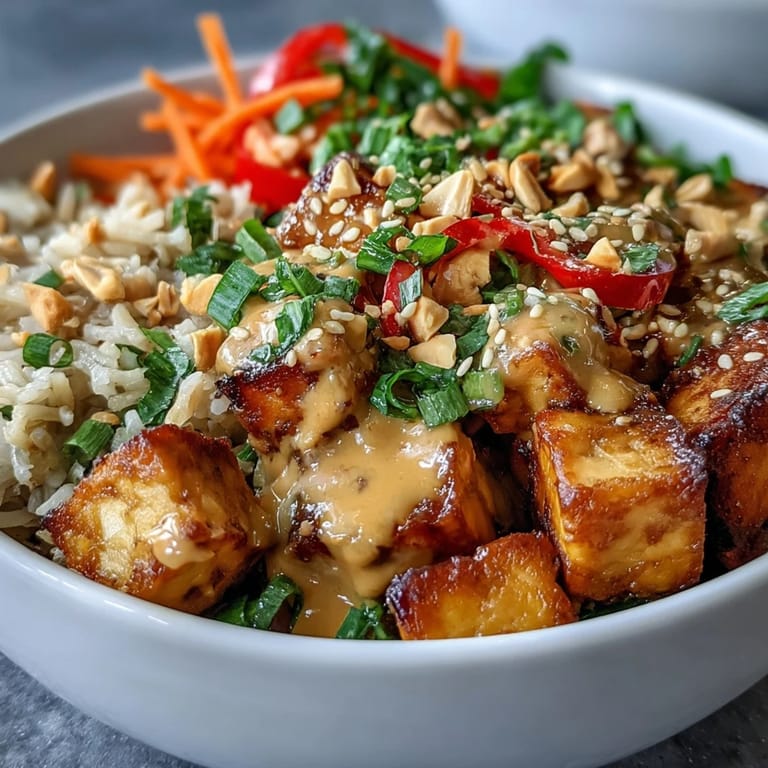
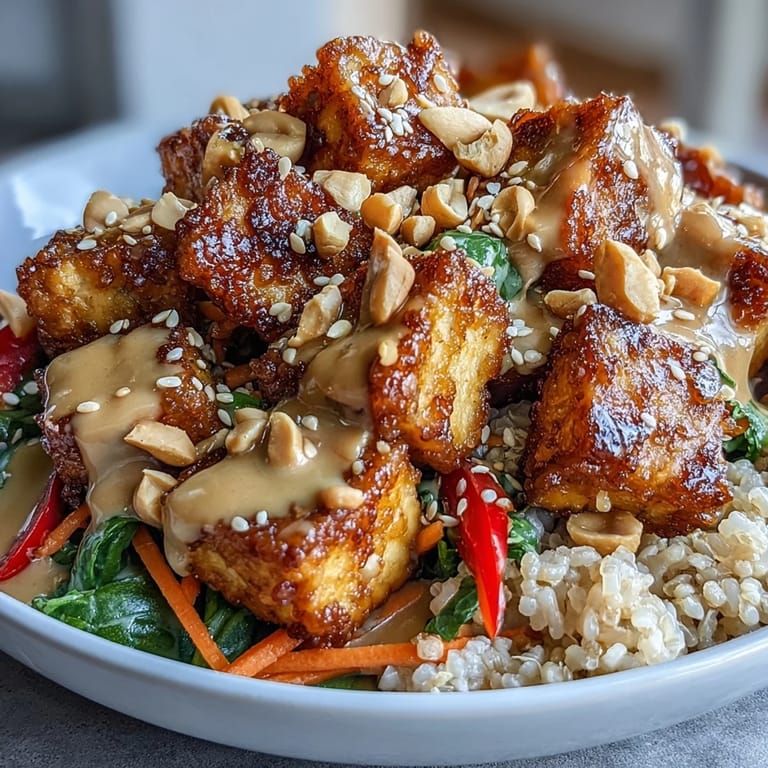
- Divide grain among four bowls, then arrange tofu, carrots, pepper, cabbage, edamame, cucumber, and spring onions on top in whatever pattern appeals to you. There's no wrong way to arrange a bowl.
- Sauce and garnish:
- Drizzle peanut sauce generously over everything, then scatter roasted peanuts, sesame seeds, and fresh herbs on top. Serve immediately while components are at their best temperatures.
 Save
Save My partner doesn't cook often, but he's made this bowl exactly three times now, each time getting slightly more confident with his knife skills. Watching someone discover that nourishing food doesn't have to be boring or difficult has its own kind of satisfaction.
Why This Bowl Works
There's something psychologically satisfying about deconstructed meals—you feel like you're building something rather than just eating what's served to you. The combination of textures matters as much as flavors: crispy tofu against creamy sauce, soft grain against crunchy vegetables, warmth against cool cucumber. Nothing in this bowl feels like a compromise or a sacrifice; everything is there because it genuinely contributes.
Customizing Your Bowl
This recipe is genuinely flexible, which is partly why it's become such a reliable standby. I've added roasted sweet potato chunks when I wanted something heartier, swapped quinoa for cauliflower rice when I was eating lighter, and thrown in steamed broccoli when I wanted extra green vegetables. The peanut sauce ties everything together regardless of what's underneath.
Making This Your Own
The best version of this recipe is the one that matches what you actually enjoy eating. I've made the peanut sauce spicier with sriracha, creamier with coconut milk, and tangier with lime juice instead of rice vinegar. Some versions feel Thai-inspired, others lean more toward Southeast Asian, and that variation is the whole point. Build your bowl around what's in your kitchen and what sounds good today, not what the recipe demands.
- Swap vegetables based on season and what you have available—roasted mushrooms work beautifully, as do shredded beets.
- If peanut allergies are a concern, tahini makes an excellent sauce base with the same flavor architecture.
- Leftover bowls don't reassemble well, but components keep separately for three days in the refrigerator.
 Save
Save This bowl has quietly become my answer to the question what should I make for dinner, and I suspect it might become yours too. There's real nourishment here, without the performance of sacrifice that often comes with plant-based cooking.
Recipe FAQs
- → Is this bowl gluten-free?
Yes, simply use tamari instead of soy sauce in the peanut sauce and ensure all packaged ingredients are certified gluten-free. The cornstarch, rice, quinoa, and fresh vegetables are naturally gluten-free.
- → Can I make the tofu crispy without an oven?
Absolutely. Heat a large non-stick skillet over medium-high heat, add the cornstarch-coated tofu with a drizzle of olive oil, and pan-fry until browned and crispy on all sides, about 5-7 minutes total.
- → How long does the peanut sauce keep?
The peanut sauce stores well in an airtight container in the refrigerator for up to one week. The sauce may thicken when cold—simply whisk in a small amount of warm water to reach your desired consistency again.
- → Can I prepare components ahead?
Cook grains up to 3 days in advance and store refrigerated. Press and cube tofu ahead, then coat with cornstarch just before cooking. Vegetables can be prepped 1-2 days ahead. Keep sauce separate until serving for best texture.
- → What protein options work besides tofu?
Try tempeh cubes, chickpeas roasted until crispy, or even grilled chicken strips if not following a plant-based diet. Adjust cooking times accordingly—tempeh and chickpeas need about 20-25 minutes at 200°C (400°F).
- → How can I reduce the carbohydrates?
Replace the brown rice or quinoa with cauliflower rice for a lighter bowl. You can also reduce the grain portion and increase the vegetables and tofu for a balanced, lower-carb version that remains satisfying.