 Save
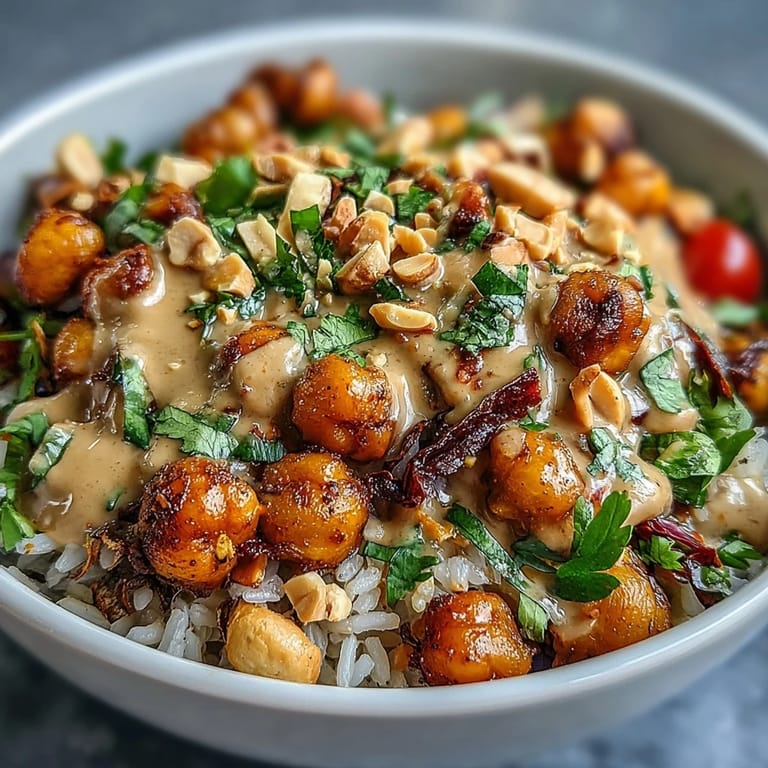
Save My friend Sarah showed up one Tuesday with a container of these bowls she'd made for meal prep, and I remember being skeptical—until I took one bite. The crispy chickpeas had this unexpected crunch, the peanut sauce was silky and bright, and somehow every vegetable tasted fresher than it had any right to. I spent the next week reverse-engineering her recipe in my kitchen, adjusting the spice levels and sauce consistency until I got it just right, and now it's become my go-to when I need something that feels indulgent but actually fuels my body.
I made these for a potluck last spring, and watching people come back for seconds—including someone who claimed they "didn't really do vegetarian food"—was oddly satisfying. There's something about a bowl this colorful and substantial that breaks down the barrier between what people think they want and what they actually need.
Ingredients
- Chickpeas (2 cans, drained and rinsed): These become your protein base and get their crispy texture from roasting, so don't skip the drying step or they'll steam instead of crisping up.
- Olive oil (1 tbsp), smoked paprika (1 tsp), ground cumin (1/2 tsp), garlic powder (1/2 tsp), salt (1/2 tsp), black pepper (1/4 tsp): This spice blend is what transforms simple chickpeas into something you'll actually crave.
- Brown rice or quinoa (2 cups cooked): Cook these ahead if you can—it saves precious time and the flavors meld better when the grain cools slightly before assembly.
- Red cabbage (1 cup shredded), carrots (1 cup julienned), cucumber (1 cup sliced), cherry tomatoes (1 cup halved), edamame (1/2 cup cooked and shelled): The vegetable mix is your chance to play with color and crunch, so use whatever's in season or calling to you.
- Fresh cilantro (1/4 cup chopped): This brightens everything at the very end—don't leave it out thinking it won't matter, because it absolutely will.
- Creamy peanut butter (1/3 cup), soy sauce (2 tbsp), maple syrup (1 tbsp), rice vinegar (1 tbsp), sriracha (1 tsp optional), minced garlic (1 clove), warm water (2-4 tbsp): The sauce is the soul of this bowl, so taste as you go and don't be afraid to adjust the heat or sweetness to match your mood.
- Roasted peanuts (2 tbsp chopped), lime wedges, sesame seeds (1 tbsp optional): These finishing touches add texture and brightness that make each bite feel intentional.
Tired of Takeout? 🥡
Get 10 meals you can make faster than delivery arrives. Seriously.
One email. No spam. Unsubscribe anytime.
Instructions
- Heat your oven and prep your workspace:
- Preheat to 425°F and line a baking sheet with parchment paper so cleanup is less of a headache. This simple step makes everything that follows feel smoother.
- Season and roast the chickpeas:
- Drain and rinse your canned chickpeas, then toss them with olive oil and all those spices until they're evenly coated. Spread them on the baking sheet and roast for 20-25 minutes, shaking the pan halfway through—you're waiting for that golden, crispy exterior that makes them irresistible.
- Make the peanut sauce while chickpeas roast:
- In a small bowl, whisk peanut butter with soy sauce, maple syrup, rice vinegar, sriracha if you're using it, and minced garlic. Start with 2 tablespoons of warm water and add more gradually until the sauce reaches a pourable consistency—it should flow gently but still coat a spoon.
- Prepare your vegetables and grains:
- If your rice or quinoa isn't already cooked, get it started now following package directions. While it cooks, slice and arrange your vegetables on a cutting board so they're ready to go—this prep work is satisfying and keeps things moving.
- Assemble the bowls:
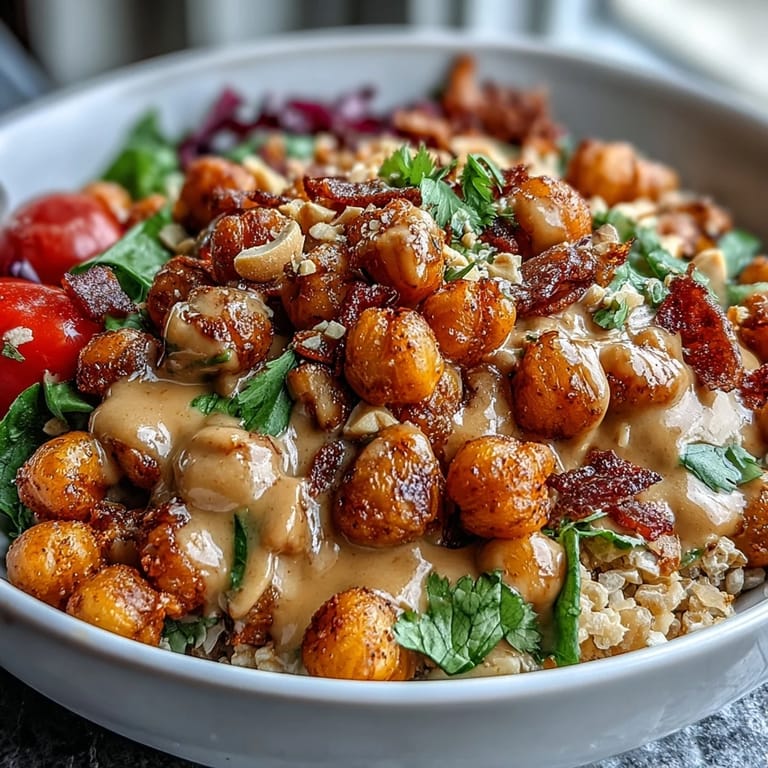
- Divide your cooked grain among 4 bowls, then top each one with a generous portion of roasted chickpeas, red cabbage, carrots, cucumber, tomato halves, edamame, and fresh cilantro, distributing everything evenly so each bowl looks as good as it tastes.
- Finish and serve:
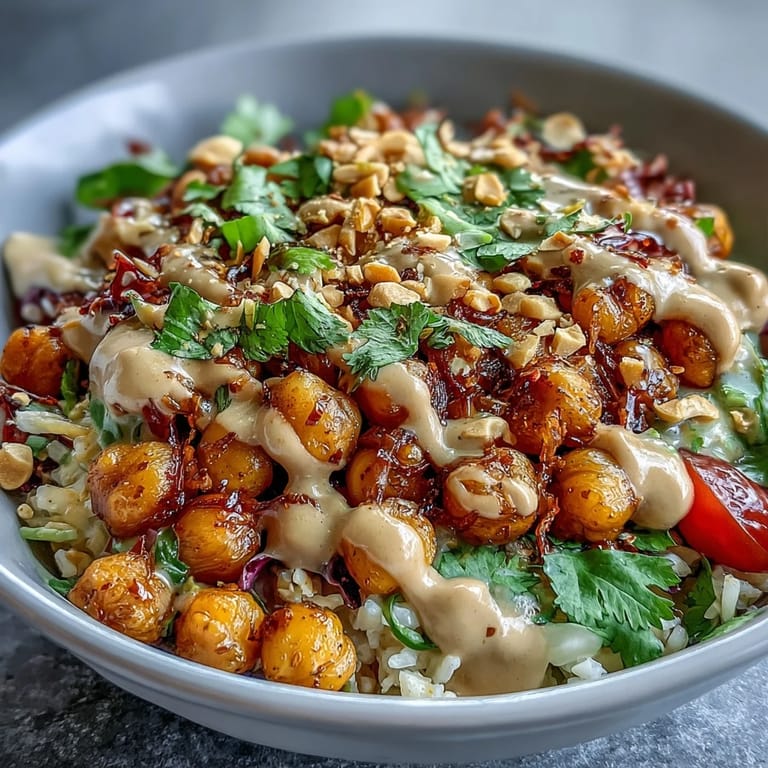
- Drizzle each bowl with that creamy peanut sauce, scatter some chopped peanuts and sesame seeds on top, and serve with lime wedges alongside. A squeeze of lime just before eating brightens everything and ties it all together.
 Save
Save My partner and I have been eating versions of this bowl at least twice a week for the last few months, and I love that it's become something we can make on autopilot while still feeling like we're taking care of ourselves. There's comfort in that kind of routine.
Why This Bowl Works as a Complete Meal
The beauty of this bowl is that it respects what your body actually needs—the chickpeas and grains provide sustained energy, the vegetables add fiber and micronutrients, and the peanut sauce brings in healthy fats that make everything taste luxurious. It's the kind of meal that leaves you satisfied without that heavy feeling, which is why I keep coming back to it even when I have other options.
Customizing Your Bowl
This recipe is honestly more of a template than a strict formula, and I've found that the best version is the one that speaks to whatever's in your kitchen or your mood that day. I've added crispy tofu, swapped the brown rice for farro, thrown in roasted beets, or stirred in some coconut milk to make the sauce richer. The core elements—the roasted chickpeas and peanut sauce—are non-negotiable, but everything else is fair game.
Storage and Make-Ahead Tips
This is where the bowl really shines as a practical meal for busy weeks—you can prep almost everything the night before and still have something fresh and crunchy when you assemble it. The roasted chickpeas keep in an airtight container for about four days, the vegetables can be prepped and stored separately, and the sauce lives happily in the fridge for up to five days. The only thing I'd suggest not doing ahead is combining everything, since the sauce softens the vegetables over time and you lose some of that textural contrast that makes the bowl so satisfying.
- Store roasted chickpeas and peanut sauce separately to maintain their best textures.
- Cut vegetables the morning of eating for maximum crispness, or store them in water if you prep them the night before.
- If you're doing this as a real meal-prep situation, keep the grain and sauce together in a container and add fresh vegetables and chickpeas just before eating.
 Save
Save This bowl has become my favorite kind of cooking project because it proves that nourishing food doesn't have to be complicated or time-consuming. Make it once, and I promise you'll understand why I'm so fond of it.
Recipe FAQs
- → Can I make the peanut sauce ahead of time?
Yes, the peanut sauce keeps well in the refrigerator for up to one week. Store it in an airtight container and thin with warm water before serving if it thickens.
- → What can I substitute for peanut butter?
Almond butter, cashew butter, or sunflower seed butter work well as alternatives. Tahini also creates a delicious, slightly different flavor profile.
- → How do I store leftovers?
Store components separately in airtight containers for up to 4 days. Keep the sauce separate and drizzle just before eating to maintain texture.
- → Is this bowl gluten-free?
Yes, simply use tamari instead of soy sauce in the peanut dressing. Ensure all other ingredients, especially the roasted chickpea seasonings, are certified gluten-free.
- → Can I use canned chickpeas without roasting?
Roasted chickpeas provide essential crispy texture, but you can substitute with pan-fried chickpeas or crispy baked tofu for similar crunch.