 Save
Save There was a Tuesday afternoon when I opened the fridge to find two perfect avocados staring back at me, and suddenly the craving for something light but completely satisfying took over. I'd been thinking about pasta all week, but the usual heavy cream sauces felt wrong for the warmth of that day. It hit me then—blend that avocado into silk, toss it with hot pasta, and let the whole thing come together in the time it takes to boil water. That simple idea became something I make whenever I want to feel like I'm eating something special without spending the evening in the kitchen.
I made this for friends one evening when they showed up unexpectedly around dinner time, and I watched their faces when they tasted it—that moment of surprise when something so simple turned out to be exactly what they needed. One friend asked if I'd been hiding cooking skills all along, and I laughed because the truth is simpler: good ingredients and ten minutes is sometimes all you need. We sat there with our bowls, picking at basil leaves and talking until the light faded, and that's when I knew this recipe had earned its place in my regular rotation.
Ingredients
- Spaghetti or linguine, 350 g: The shape matters less than getting pasta that's just barely al dente—that's where the sauce clings best and every bite feels intentional.
- Ripe avocados, 2: This is where everything hinges; avocados that yield slightly to pressure will blend into something silky, while hard ones fight back and turn grainy.
- Fresh basil leaves, 20 g: Tear them in by hand rather than chopping if you can—it releases the oils more gently and keeps the flavor brighter.
- Garlic clove, 1: Just one, peeled and ready to blend; a little goes an enormous way in something this delicate.
- Fresh lemon juice, 2 tbsp: Squeeze it yourself if you can—bottled juice tastes like a memory of lemon, not the real thing.
- Extra-virgin olive oil, 60 ml: The good stuff matters here since it's not getting cooked down; taste your oil before you buy it if the store lets you.
- Grated Parmesan cheese, 30 g: Worth grating fresh if you have time, though pre-grated works when life is busy.
- Chili flakes, 1/4 tsp (optional): A whisper of heat that wakes up the richness without announcing itself.
- Salt and black pepper, to taste: Season thoughtfully as you go; you're building layers, not fixing things at the end.
Tired of Takeout? 🥡
Get 10 meals you can make faster than delivery arrives. Seriously.
One email. No spam. Unsubscribe anytime.
Instructions
- Boil the pasta water and cook the pasta:
- Fill a large pot with water, salt it generously (it should taste like the sea), and bring it to a rolling boil. Drop in the pasta and stir immediately so nothing sticks; set a timer for a minute less than the package suggests, because you want to pull it out when there's still a hint of resistance when you bite it. Before draining, scoop out a big mugful of that starchy water and set it aside—this is liquid gold for loosening the sauce later.
- Blend the avocado sauce:
- While the pasta is cooking, halve your avocados and scoop the flesh into a food processor or blender along with the garlic, basil, lemon juice, olive oil, Parmesan, and those optional chili flakes. Pulse until it comes together into something smooth and creamy, then taste and season with salt and pepper. If it's thicker than you want, add a splash of that reserved pasta water and blend again until it's the consistency of thick cream.
- Bring it all together:
- Drain the hot pasta and immediately pour it into the avocado mixture, then toss everything gently with tongs or two spoons, adding more pasta water a tablespoon at a time if needed. The heat from the pasta will warm the sauce just enough without cooking away that fresh, alive flavor.
- Serve with intention:
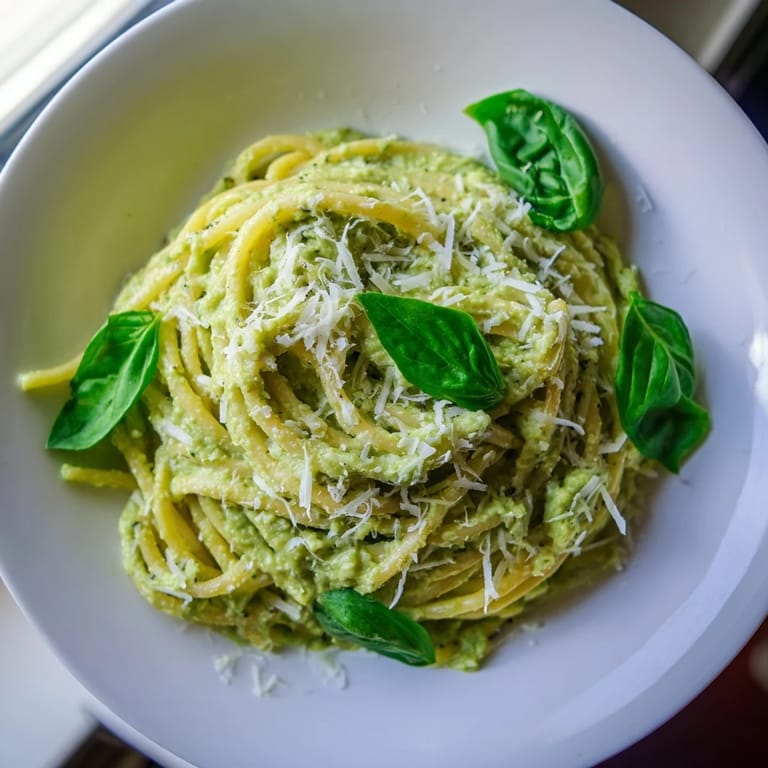
- Divide the pasta among warm bowls, then scatter fresh basil leaves and extra Parmesan on top, maybe a grind of black pepper and a shower of lemon zest if you have it on hand. Eat it right away while it's warm and the flavors are bright.
 Save
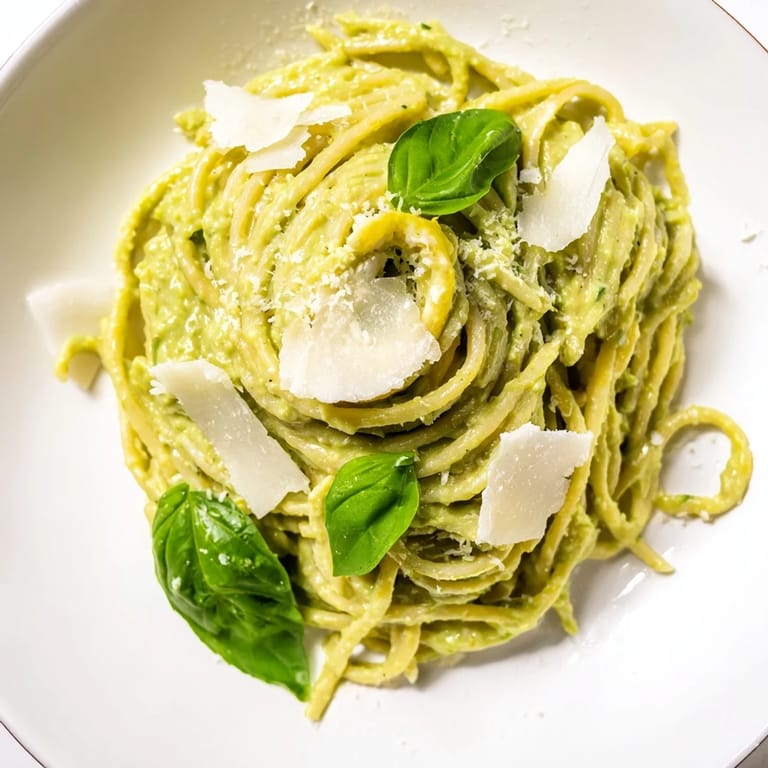
Save There's something about the way a plate of green pasta catches the light that makes you want to eat it slowly, even though you're hungry. I remember setting it down in front of someone once and watching them breathe in the scent of basil and lemon before they even took a bite—that's the moment I understood it wasn't just food, it was an invitation to slow down.
On Choosing Your Avocados
The secret to this dish living up to its promise is picking avocados that are actually ripe, not the hard ones sitting on the supermarket shelf looking lonely. A ripe avocado yields gently to the pressure of your thumb, and when you cut into it the color is a pale, buttery green all the way through. I learned this lesson the expensive way after buying three avocados that turned out to be weeks away from ready, so now I always visit the farmer's market or the produce section knowing exactly what to look for—and I'm not shy about squeezing a few to find the right ones.
Why This Works as a Weeknight Dinner
There's real peace in knowing you can have something that tastes like a restaurant meal on a random Tuesday without any fuss or fanfare. This pasta asks for so little time and so few ingredients that you can make it on nights when you're tired, when your kitchen is small, when your skill level is still growing—and it still shows up on the plate looking and tasting like something you meant to make. I've brought it to potlucks, served it to guests who eat only vegetables, and made it for myself on nights when I just wanted something that felt a little bit luxurious without the weight.
The Small Touches That Change Everything
It's the basil you scatter at the very end that makes someone ask for the recipe, not the avocado that does the heavy lifting. It's the lemon zest that transforms a bowl of green pasta into something that tastes like it came from somewhere specific and intentional. Cooking is so often about understanding that the last things you add are sometimes the most important ones, and this dish is a perfect, simple example of that truth.
- Tear your basil by hand just before serving so it stays green and fragrant instead of bruised and dark.
- A microplane zester makes lemon zest almost effortless, and the difference between rough shreds and fine zest is surprisingly noticeable on the plate.
- If you're not sure whether to add the chili flakes, start with half and taste as you go—heat is easier to add than to take away.
 Save
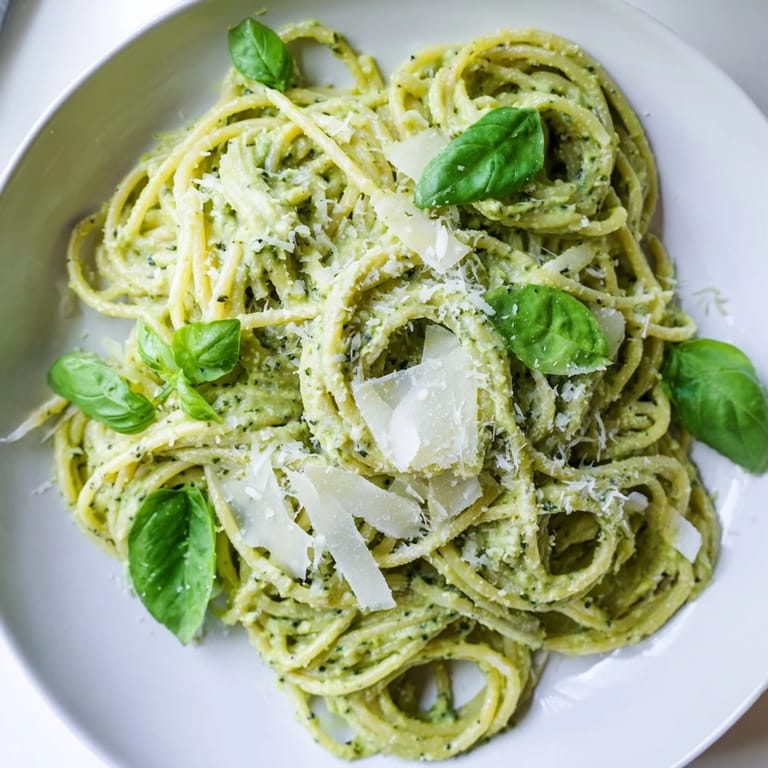
Save Make this on a day when you want something good but not complicated, when you want to feed people without spending your whole evening in the kitchen. This pasta reminds me why simple cooking is often the most satisfying kind.
Recipe FAQs
- → What type of pasta works best with avocado sauce?
Long strands like spaghetti or linguine hold the creamy avocado sauce nicely, allowing even coating and a smooth bite.
- → How can I adjust the sauce consistency?
Add reserved pasta cooking water gradually while blending to reach a creamy yet pourable texture that clings well to the noodles.
- → Can I make this dish vegan?
Omit Parmesan or replace it with nutritional yeast to maintain a cheesy flavor without dairy, perfect for vegan diets.
- → What garnishes enhance the flavor profile?
Fresh basil leaves, extra grated Parmesan, and a sprinkle of lemon zest add brightness and complementary herbal and citrus notes.
- → Are there ingredient substitutions for dietary needs?
Use gluten-free pasta for gluten intolerance and a vegan Parmesan alternative for dairy-free requirements, ensuring allergen-safe options.