 Save
Save There's something magical about the moment when a bowl comes together—when you realize that the quiet hum of the oven, the smell of cumin and paprika, and the promise of something genuinely nourishing are all happening at once. I discovered this chickpea power bowl on an ordinary Tuesday when I was tired of the same lunch rotation and wanted something that felt both comforting and alive. The first time I assembled one, my partner walked into the kitchen mid-drizzle of tahini sauce and asked if I'd become a chef when they weren't looking. It wasn't fancy, but it felt intentional in a way that mattered.
I made this for a small potluck last spring, and I remember being surprised at how many people circled back asking for the recipe—not out of obligation, but genuine curiosity. Someone mentioned they'd never considered combining chickpeas and grains like this, and it sparked a whole conversation about food we think is complicated but really isn't. That's when I realized this bowl works because it respects each component while letting them shine together.
Ingredients
- Quinoa or brown rice: The grain base matters less than treating it with respect—rinsing quinoa removes bitterness, and giving rice enough liquid prevents the kitchen from smelling like burned toast.
- Chickpeas: Canned is perfectly fine, but draining and rinsing them really does change the texture when roasted.
- Smoked paprika, cumin, and garlic powder: This trio is what makes plain chickpeas taste like they've been slow-cooked all day.
- Sweet potato, bell pepper, zucchini, and red onion: Choose vegetables that are firm enough to hold their shape when roasted—softer ones will turn to mush.
- Tahini: Buy the good stuff if you can; cheap tahini can taste bitter, and you'll notice it immediately in the sauce.
- Lemon juice: Fresh is non-negotiable here; bottled won't give you that bright, living quality the sauce needs.
- Toppings: Fresh herbs and seeds aren't decoration—they're the final note that makes each bite interesting.
Tired of Takeout? 🥡
Get 10 meals you can make faster than delivery arrives. Seriously.
One email. No spam. Unsubscribe anytime.
Instructions
- Get your oven ready:
- Preheat to 425°F while you gather everything else. A hot oven is the secret to vegetables that actually caramelize instead of steaming into submission.
- Cook your grains with intention:
- Rinse quinoa or rice under cold water first—this step matters, even though it feels small. Combine with liquid in a saucepan, bring to a boil, then reduce heat, cover, and let it simmer quietly until the grains are tender and the liquid is absorbed. Fluff with a fork before moving on.
- Roast the vegetables until they're golden:
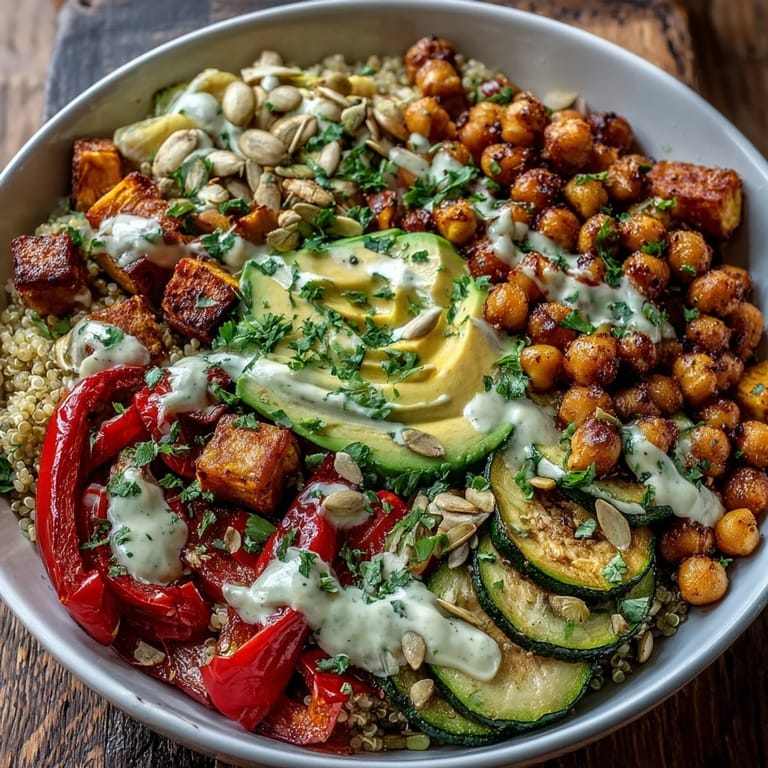
- Toss sweet potato, bell pepper, zucchini, and red onion with olive oil, salt, and pepper. Spread them in a single layer on a baking sheet and roast for 20–25 minutes, stirring halfway through, until the edges are slightly browned and the insides are tender. This is when the kitchen starts to smell incredible.
- Crisp up the chickpeas:
- Drain and rinse your chickpeas, then toss them with olive oil, smoked paprika, cumin, garlic powder, and salt. Spread on a second baking sheet and roast alongside the vegetables for 15–20 minutes until they're slightly crispy on the outside. They should sound like little dried beans when you shake the pan.
- Build your tahini sauce:
- In a small bowl, whisk together tahini, fresh lemon juice, minced garlic, and salt. Slowly add water, whisking constantly, until you reach a consistency that's pourable but still has body—this takes patience and tasting as you go.
- Assemble each bowl with care:
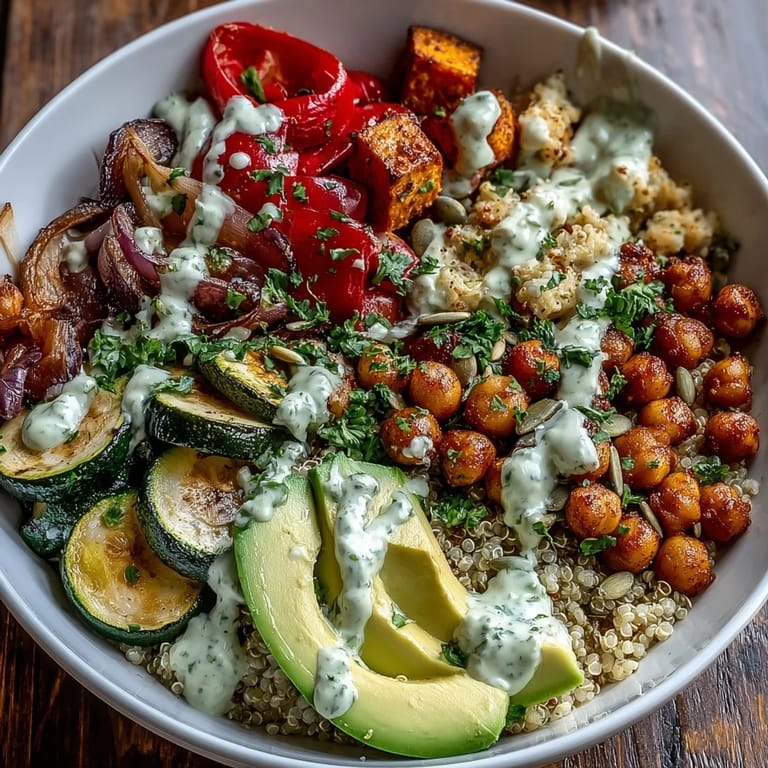
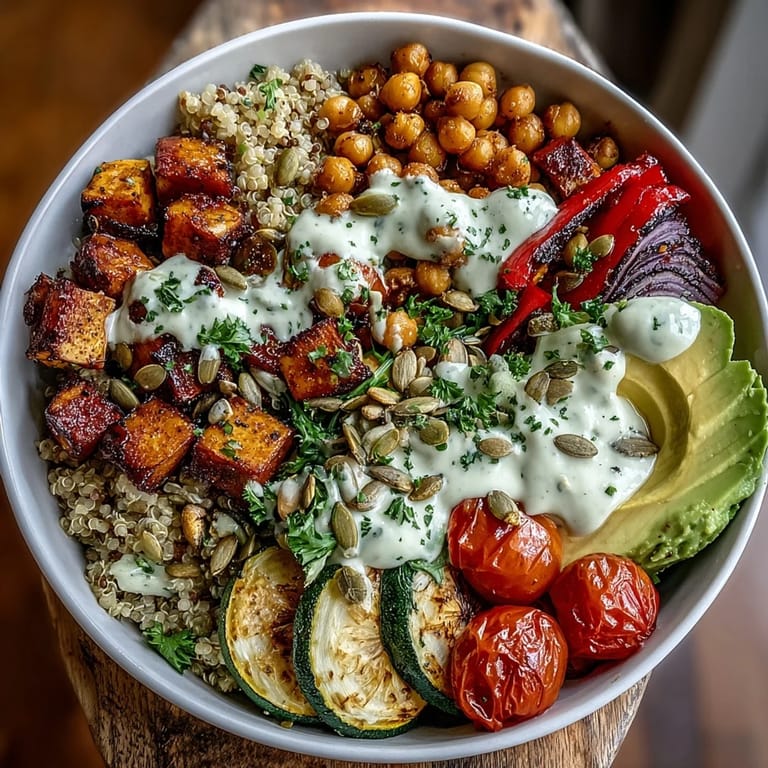
- Divide the cooked grains among four bowls as your base. Layer the roasted vegetables and crispy chickpeas on top, then add fresh cherry tomatoes and avocado slices. Finish with a generous handful of fresh parsley or cilantro and a sprinkle of toasted seeds if you have them. Drizzle the tahini sauce all over, letting it pool in the corners where the flavors mingle.
 Save
Save There was an evening last month when I made these bowls for myself and a friend who was going through a rough time, and watching them eat slowly, deliberately, and then ask for seconds felt like quiet magic. Food like this reminds me that nourishment isn't just about nutrition—it's about taking time to care for yourself and the people around you.
Timing and Prep Strategy
The beauty of this bowl is that most of the work happens simultaneously in your oven. While the vegetables and chickpeas roast, your grains cook on the stovetop, and you're free to make the tahini sauce or prep your toppings. In reality, everything comes together in about 45 minutes start to finish, which is faster than most delivery orders. If you're meal-prepping, cook the grains, vegetables, and chickpeas ahead, then assemble fresh bowls as needed—just keep the avocado and fresh herbs separate until the moment you eat.
Flavor Balancing and Customization
This bowl works because of balance—the earthiness of the grains, the smoky spice of the chickpeas, the brightness of the tahini, and the freshness of the herbs all play different roles. If you want more heat, a pinch of cayenne pepper mixed into the chickpea seasoning transforms the whole thing. For a completely different direction, try swapping the grains for farro or even cauliflower rice, or adding handfuls of spinach or arugula to make it more of a salad situation. The tahini sauce is flexible too—a touch of maple syrup makes it richer, while more lemon juice pushes it brighter.
Make It Your Own
The most important thing I've learned making this bowl repeatedly is that it's forgiving, which is why it works for weeknight dinners and dinner parties alike. There's no single way to make it—your kitchen, your vegetables, your taste buds are all factors that matter more than following instructions exactly. Trust your instincts when something smells ready, when a vegetable looks done, or when you think the sauce needs another squeeze of lemon.
- Roast extra vegetables and keep them in the fridge for snacking or topping salads throughout the week.
- Make a double batch of tahini sauce and use it on everything from roasted vegetables to grain bowls to simple toast.
- Don't skip the toasted seeds—they add a texture contrast that makes the whole bowl feel more intentional.
 Save
Save This bowl has become my answer to the question of what feels both indulgent and wholesome at the same time. Make it once and it becomes part of your regular rotation; make it for others and it quietly becomes something they come back and ask you to make again.
Recipe FAQs
- → Can I make this bowl ahead of time?
Yes! The grains, roasted vegetables, and chickpeas can be prepared up to 3 days in advance. Store components separately in airtight containers and assemble when ready to serve. The tahini sauce can also be made ahead and kept refrigerated for up to a week.
- → What grains work best in this bowl?
Quinoa and brown rice are excellent choices that provide great texture and nutrition. For variety, try farro for a chewy bite, cauliflower rice for a lighter option, or even couscous for quicker cooking time.
- → How do I get crispy roasted chickpeas?
Ensure chickpeas are thoroughly dried before tossing with spices. Spread them in a single layer on the baking sheet without overcrowding, and roast at 425°F until golden and slightly crispy, about 15-20 minutes. They'll continue to crisp slightly as they cool.
- → Can I make this gluten-free?
Absolutely! Use certified gluten-free grains like quinoa, brown rice, or certified GF farro. The tahini sauce is naturally gluten-free, but always check your spice labels to ensure no additives contain gluten.
- → What can I substitute for tahini?
If you have a sesame allergy, try cashew butter, almond butter, or Greek yogurt for a creamier sauce. You can also make an avocado-based sauce or use a dairy-free creamy dressing alternative.
- → How can I add more protein?
Increase protein by adding hemp seeds, chopped nuts, or a dollop of Greek yogurt. For non-vegan options, grilled chicken, hard-boiled eggs, or feta cheese work beautifully with these Mediterranean flavors.