 Save
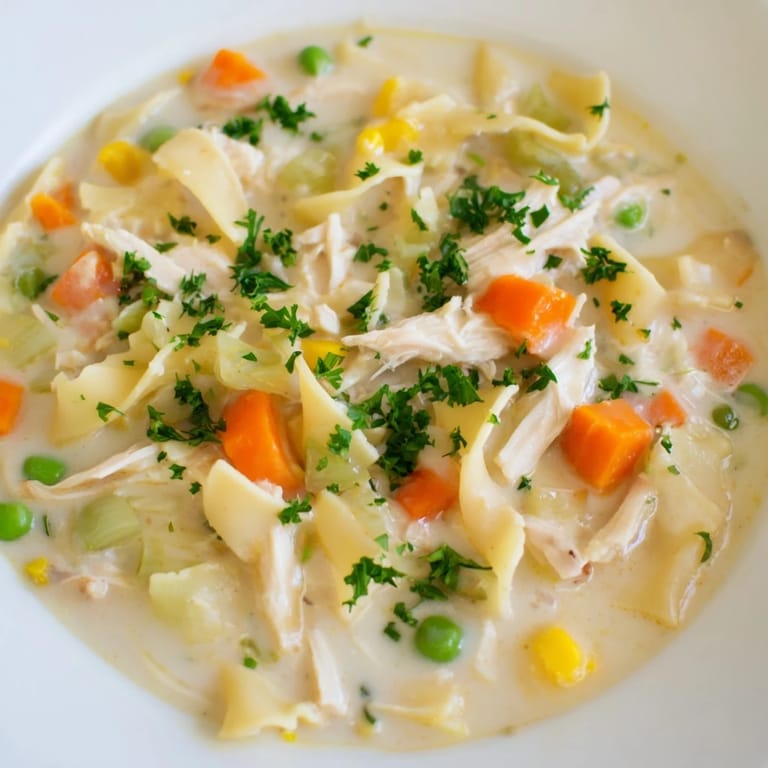
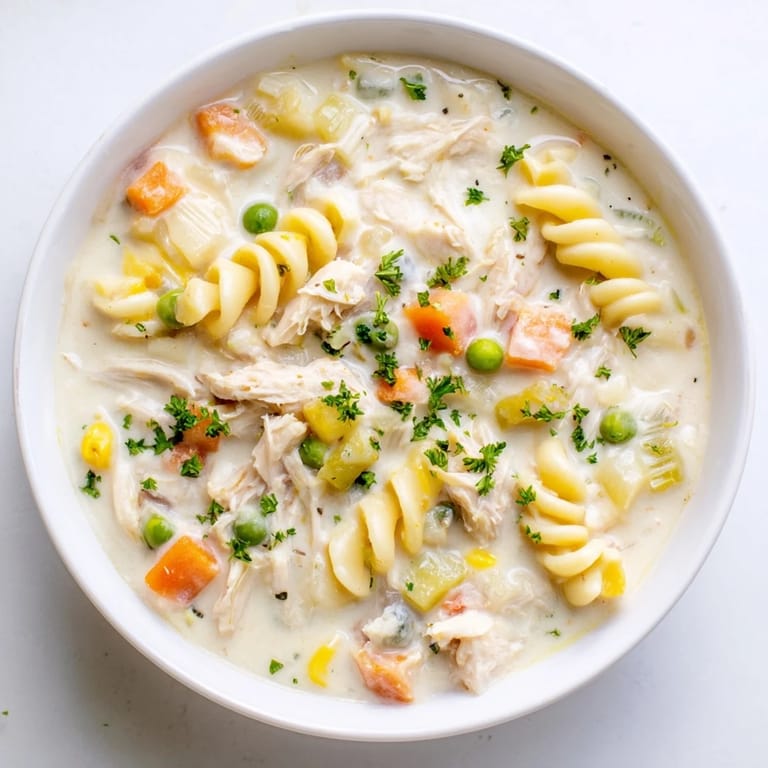
Save I stumbled into this recipe on a Wednesday night when I had leftover chicken and no energy for anything fussy. The idea hit me while staring into the freezer: what if pot pie didnt need a crust? What if it could be warm, spoonable, and ready in under an hour? I tossed everything into one pot and by the time the pasta softened, the kitchen smelled like my grandmas house in winter.
The first time I made this for my family, my sister looked up mid spoonful and said it reminded her of sick days home from school. That kind of warmth you cant fake. Since then, its become my go to whenever someone needs comfort that doesnt come with a pep talk.
Ingredients
- Cooked chicken breast: Rotisserie works beautifully here and cuts your prep time in half, plus the seasoned skin adds a little extra flavor if you shred it in.
- Carrots: Dice them small so they cook evenly and release their sweetness into the broth without turning mushy.
- Celery: Dont skip this, it adds a quiet earthy backbone that balances the richness of the cream.
- Frozen peas: They go in at the very end so they stay bright green and just barely tender, not gray and sad.
- Yellow onion: A small one is plenty, it melts into the base and becomes almost invisible but you taste it everywhere.
- Garlic: Two cloves minced fine, added after the vegetables soften so it blooms without burning.
- Fresh parsley: Chop it right before stirring in, the brightness cuts through all that cream and makes the whole bowl feel alive.
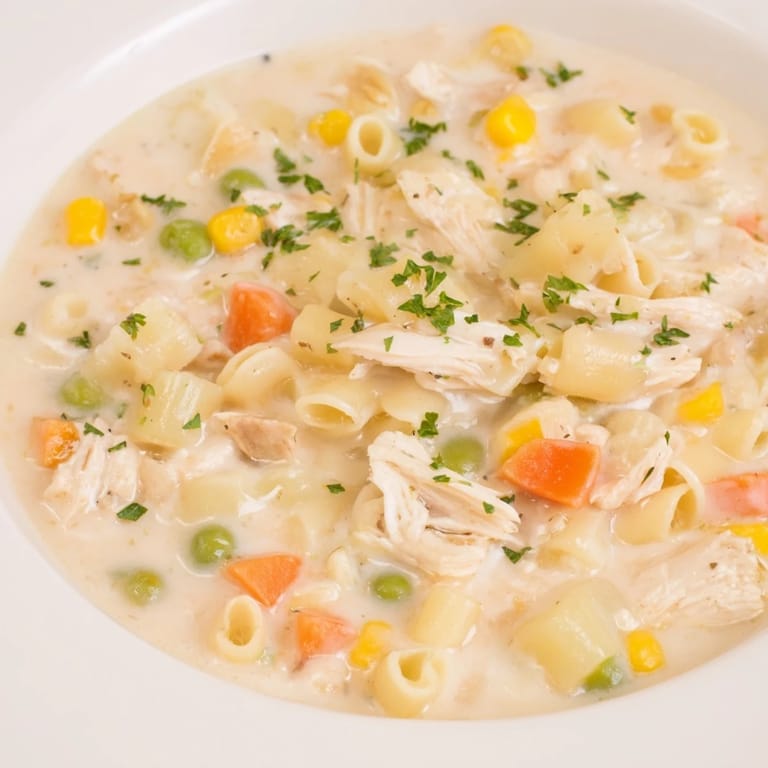
- Ditalini pasta: These little tubes catch the broth perfectly, but any small shape like shells or elbows works if thats what you have.
- Chicken broth: Low sodium lets you control the salt, especially if youre using store bought rotisserie chicken which is already seasoned.
- Whole milk: It adds body without making the soup too heavy, though you can swap for two percent if you prefer.
- Heavy cream: This is what makes it feel like pot pie filling, rich and velvety and worth every calorie.
- Unsalted butter: Melts into the vegetables at the start and carries the flavor of everything that follows.
- All purpose flour: Whisked in early, it thickens the broth just enough so it coats the back of your spoon.
- Salt, black pepper, thyme, sage: Classic pot pie flavors, the sage is optional but it adds a cozy herbal note that feels very autumn.
Tired of Takeout? 🥡
Get 10 meals you can make faster than delivery arrives. Seriously.
One email. No spam. Unsubscribe anytime.
Instructions
- Start with the vegetables:
- Melt butter in a large pot over medium heat, then add onion, carrots, and celery. Let them sizzle gently for five minutes until the onion turns translucent and the kitchen starts to smell like Sunday dinner.
- Add garlic and flour:
- Stir in minced garlic and let it cook for just a minute until fragrant. Sprinkle flour over everything and stir constantly for two minutes, this step cooks out the raw taste and builds the base for a silky broth.
- Whisk in the liquids:
- Pour in chicken broth slowly while whisking to avoid clumps, then add milk and cream. Bring it all to a gentle simmer, stirring occasionally so nothing sticks to the bottom.
- Simmer the pasta:
- Add ditalini, thyme, sage, salt, and pepper. Let it simmer uncovered for ten minutes, stirring now and then, until the pasta is tender but still has a little bite.
- Finish with chicken and peas:
- Stir in cooked chicken and frozen peas, then simmer for another three to five minutes. The soup will thicken as it sits, and the peas will turn tender without losing their color.
- Taste and garnish:
- Adjust salt and pepper to your liking, then stir in fresh parsley. Serve hot with extra parsley on top if you want it to look as good as it tastes.
 Save
Save One rainy Saturday I made a double batch and froze half, thinking it would save me later. It did, but the pasta got a little soft after thawing. Now I freeze the soup base without the pasta and cook it fresh when I reheat. That small change made all the difference.
How to Store and Reheat
Let the soup cool completely before transferring it to an airtight container. It keeps in the fridge for up to three days, though the pasta will continue to absorb liquid so you may need to add a little broth when you warm it up. Reheat gently on the stovetop over low heat, stirring often to keep the cream from separating.
Make It Your Own
This soup is forgiving and takes well to small changes based on what you have or what you crave. Swap ditalini for egg noodles if you want it to feel more like chicken noodle, or use half and half instead of heavy cream to lighten it slightly. A splash of dry white wine stirred in with the broth adds a subtle brightness that makes the whole pot taste a little more grown up.
What to Serve Alongside
I usually set out a basket of crusty bread or buttermilk biscuits for dipping, the kind that soaks up every last bit of creamy broth. A simple green salad with lemon vinaigrette balances the richness, or you can go full comfort and serve it with buttered crackers on the side.
- Crusty sourdough or French bread, toasted and rubbed with garlic if youre feeling fancy.
- A crisp salad with arugula, shaved parmesan, and a squeeze of lemon to cut through the cream.
- Buttery crackers or oyster crackers scattered on top right before serving for a little crunch.
 Save
Save This soup has gotten me through cold nights, last minute dinners, and moments when I just needed something that felt like a hug in a bowl. I hope it does the same for you.
Recipe FAQs
- → What pasta works best in this dish?
Ditalini pasta is ideal here for its small size and ability to hold the creamy broth, but other small pasta shapes like elbow macaroni or small shells can also be used.
- → Can I use leftover chicken for this dish?
Yes, shredded cooked chicken or rotisserie chicken can be added towards the end to quickly incorporate protein without extra cooking time.
- → How do I achieve a creamy texture without lumps?
Sprinkle flour over the sautéed vegetables and cook briefly before gradually whisking in the broth. This technique gently thickens the base and prevents lumps from forming.
- → What herbs enhance the flavor in this preparation?
Thyme and sage add warmth and depth, complementing the chicken and vegetables for a well-rounded taste profile.
- → Can this be adapted for gluten-free diets?
Yes, substitute regular pasta and flour with gluten-free alternatives. Ensure all other ingredients comply with gluten-free standards.
- → What sides pair well with this dish?
A crisp green salad or crusty bread are excellent accompaniments to balance the creamy texture and add freshness.